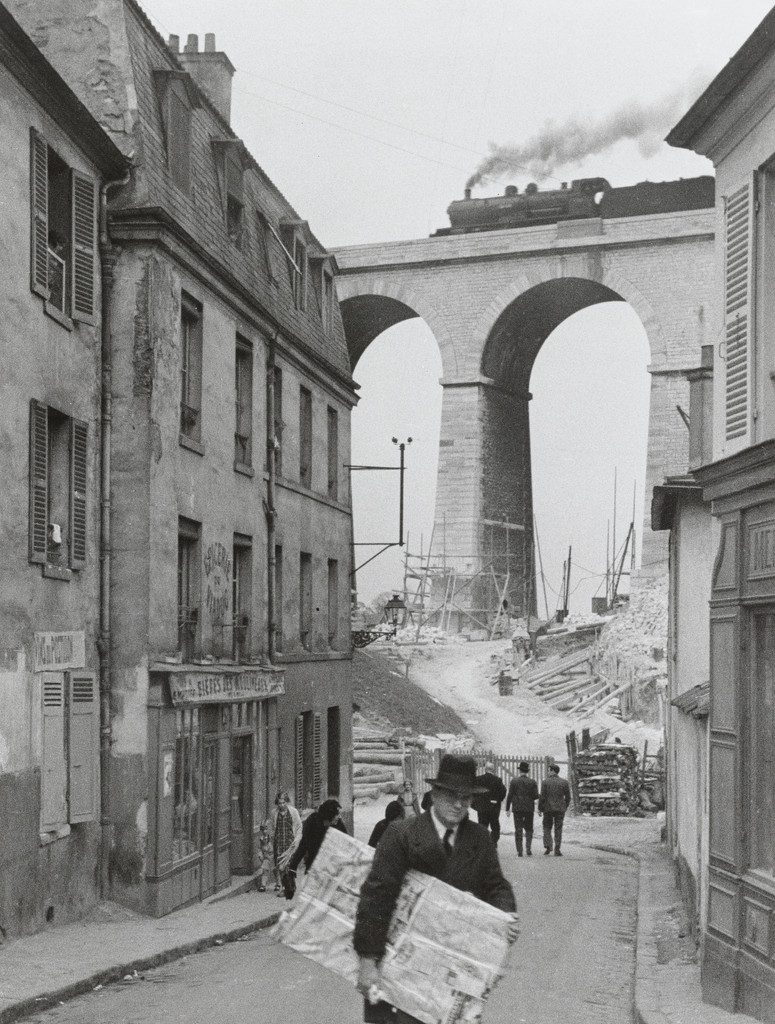
 André KertészAmerican, 1894–1985
Meudon
Can I see it?
Yes, on view now
Where is “Meudon” now? The Museum of Modern Art, MoMA, Floor 5, 517, New York. Yes, on view now. Checked November 17, 2026.

Closed· opens tomorrow at 10:30 AM
On public display.
- Checked
- In this state since
- Source
- The museum
About the work
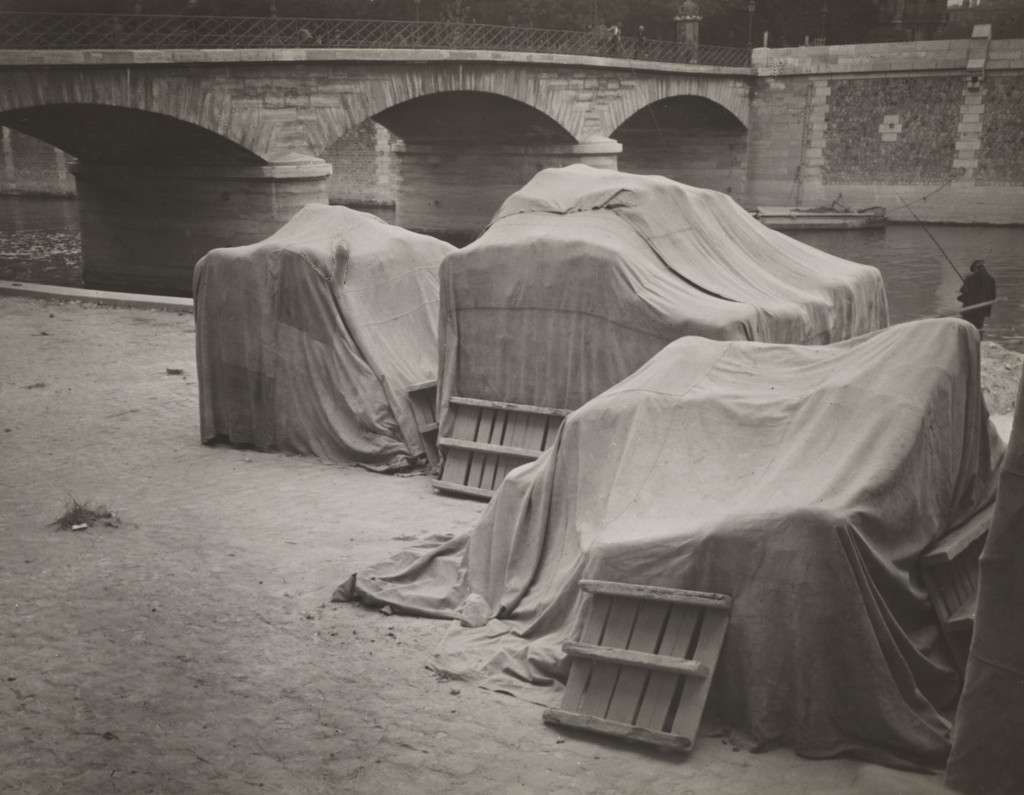
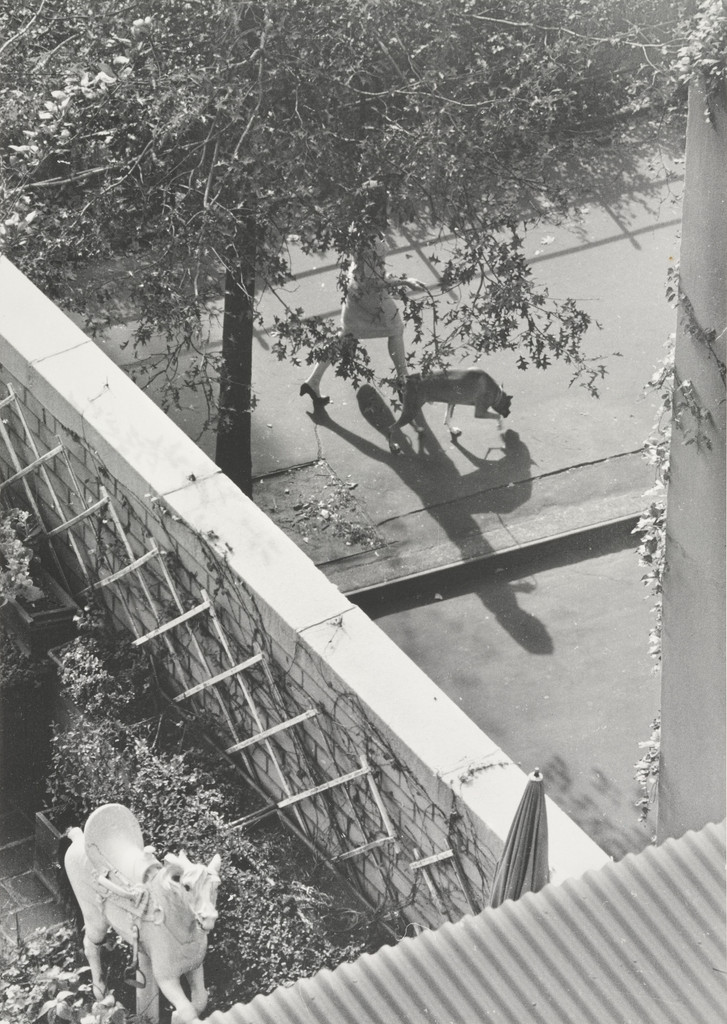
André Kertész took Meudon in 1928; MoMA in New York holds a later gelatin silver print of the photograph. Kertész gave this impression himself. Measuring 41.8 by 31.8 centimetres, it is displayed on the fifth floor, in gallery 517 of the Alfred H. Barr, Jr. Galleries.
Details
- Accession number
- 985.1969
In the catalog
Display history
On view · MoMA, Floor 5, 517
The Museum of Modern Art · Oct 12, 2026 — now · Verified
Was not on view
The Museum of Modern Art · Verified
Sources
- The Museum of Modern Art
- Image: The Museum of Modern Art — © the artist or rights holder
In the life of André Kertész
The whole life1925–1936
The circle of Hungarian émigrés and portraits of friends
In Paris he is among numerous Hungarian artists, including François Kollar, Robert Capa, Emeric Fehér, Brassaï and Julia Bathory, as well as Man Ray, Germaine Krull and Lucien Aigner, who also emigrated there, and becomes involved with the Dada movement; visiting his sculptor friends, he is fascinated by Cubism. He makes photo portraits of the painters Piet Mondrian and Marc Chagall, the writer Colette and the film-maker Sergei Eisenstein.
1927
His first solo exhibition at the Au Sacre du Printemps gallery
Jan Slivinsky presents 30 of his photographs at the “Sacre du Printemps Gallery”, and Kertész becomes the first photographer to have a one-man exhibition. At the show Paul Dermée dubs him “Brother Seer” and “Brother Seeing Eye”, alluding to a medieval monastery where all the monks were blind but one; Kertész has become connected with members of the growing Dada movement.
late 1920s
A secret marriage to Rosza Klein (Rogi André)
He secretly marries the French portrait photographer Rosza Klein, who worked under the name Rogi André; the marriage is short-lived and he never speaks about it.
1928
Switches to a Leica
He switches from plate-glass cameras to a Leica; this period is one of his most productive, with daily photographing divided between magazine commissions through the late 1920s and his personal pieces.
1930
A silver medal at the Exposition Coloniale
At the Exposition Coloniale in Paris he is awarded a silver medal for services to photography.
early 1930s
Cartier-Bresson: “We all owe him a great deal”
Henri Cartier-Bresson says of Kertész that they all owe him a great deal; he later comes to be considered the father of photojournalism, and other photographers cite him as an inspiration.