Claude LorrainFrench, 1600–1682
Mercurius en Argus
May one see it?
Unknown

Amsterdam, Netherlands
The owner is known; whether it is on view today is not.
- Source
- The museum
About the work
In the museum's own words — in Dutch
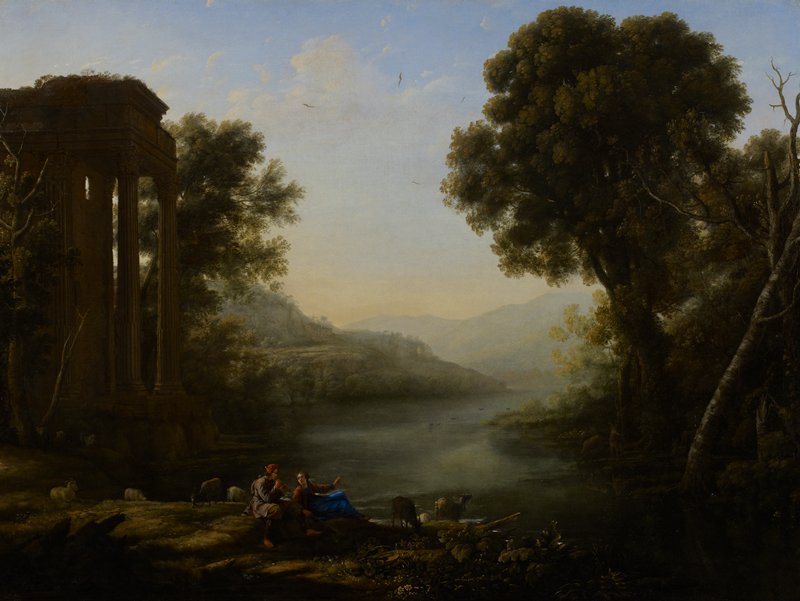
Argus zit op een steen bij de ingang van een tempel. Voor hem ligt de in een koe veranderde Io. Mercurius staat naast Argus en speelt op een blaasinstrument om hem in slaap te sussen.
Rijksmuseum
Particulars
- Accession number
- RP-P-1965-1029
What it shows
In the catalog
Sources
- Rijksmuseum
- Image: Rijksmuseum — public domain
Meanwhile, in the life of Claude Lorrain
The whole life1660s
Visits his neighbour Nicolas Poussin
Claude’s neighbour was Nicolas Poussin, whom he visited in the 1660s.
1660–1680
Works more slowly, but still with success
In his last two decades (1660–80) Claude worked more slowly but always with success; to this period belongs the series of the “Moments of the Day”: “Noon”, “Evening”, “Night” and “Morning in the Harbour”.
1662
Nephews join the household
In 1662 a nephew, Jean, son of Denis Gellée, joined the household, and around 1680 another, Joseph, son of Melchior; Baldinucci took much of his information about Claude from a nephew who lived with the artist.
1663
A grave illness: a will drawn up, then recovery
Claude, who suffered badly from gout, fell so gravely ill in 1663 that he drew up a will, but he recovered.