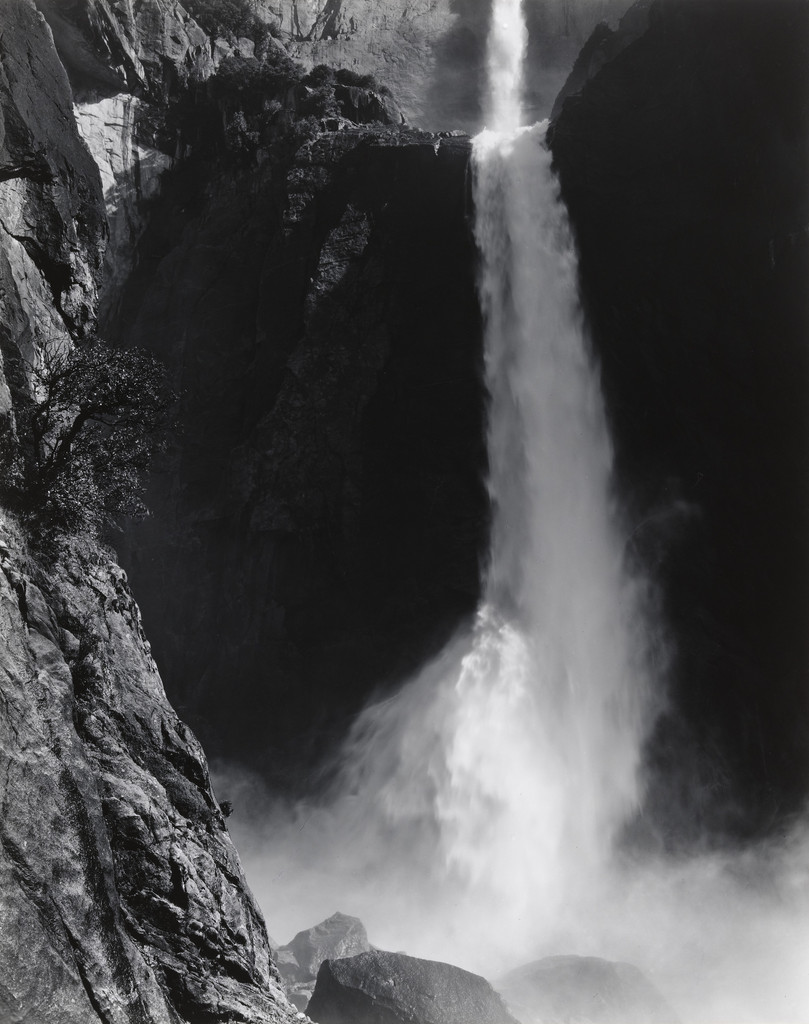
 Ansel AdamsAmerican, 1902–1984
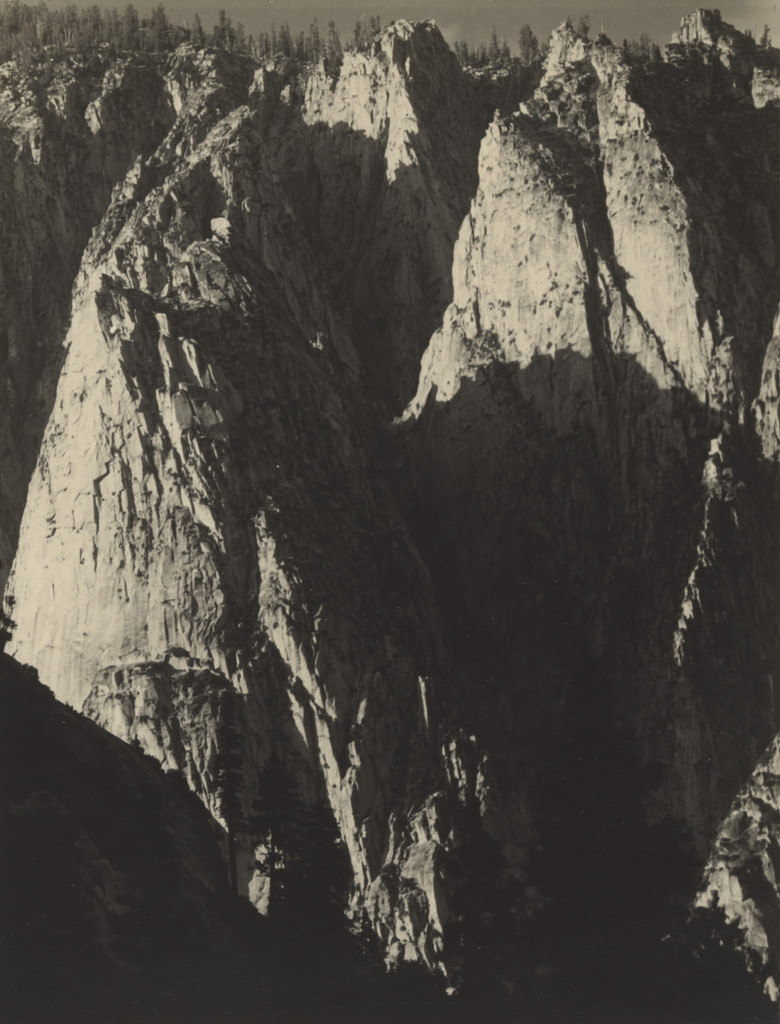
Lower Yosemite Fall
May one see it?
Not receiving at present

The Museum of Modern Art
New York, United States
It belongs to the collection, but is not on display at present.
- Checked
- 11 days ago
- Source
- The museum's own collection data
Particulars
- Accession number
- 1683.1968
Sources
- The Museum of Modern Art: the museum's own open data · fetched 11 days ago
- Image: The Museum of Modern Art — © the artist or rights holder
Meanwhile, in the life of Ansel Adams
The whole life1943–1944
“Moonrise”: first publication and first exhibition
“Moonrise, Hernandez, New Mexico” is first published in the U.S. Camera 1943 annual, chosen by the magazine's “photo judge,” Edward Steichen, so the picture finds an audience before its first formal exhibition at the Museum of Modern Art in 1944. Over the next nearly forty years Adams re-interprets it, making more than 1,369 unique prints.
c. 1944
Manzanar: a photo-essay on the internees
Distressed by the internment of Japanese Americans after Pearl Harbor, Adams requests permission to visit the Manzanar War Relocation Center in the Owens Valley. The resulting photo-essay first appears in an exhibition at the Museum of Modern Art and is later published as the book “Born Free and Equal,” which many rejected as disloyal; it was a significant departure, in style and philosophy, from the work for which Adams is generally known.
1945–1946
The first fine-art photography department in the US
Adams is asked to form the first fine-art photography department in the United States at the California School of Fine Arts (now the San Francisco Art Institute) — in 1945 or 1946. He invites Dorothea Lange, Imogen Cunningham and Edward Weston as guest lecturers and Minor White as principal instructor.
1946
Photographing the national parks on a Guggenheim Fellowship
The first of Adams's three Guggenheim Fellowships, awarded in 1946, is meant for photographing every national park. Of the twenty-eight parks he photographs twenty-seven, missing only Everglades in Florida, and the series yields memorable images of Old Faithful Geyser, Grand Teton and Mount McKinley.
1946 · Award
Guggenheim Fellowship