ART WIKI32,963 on view
MapCollectionArtistsMuseumsExhibitionsJournal
Sign in

ART WIKI

Where the masterpiece hangs, and when they let you in.

Collections: Art Institute of Chicago, Getty Villa, Harvard Art Museums, Hirshhorn Museum and Sculpture Garden, J. Paul Getty Museum, Minneapolis Institute of Art, Musée du Louvre, National Gallery of Art, National Museum of Asian Art, National Portrait Gallery (Smithsonian), Pushkin State Museum of Fine Arts, Rijksmuseum, Smithsonian American Art Museum, SMK — National Gallery of Denmark, State Hermitage Museum, State Russian Museum, The Cleveland Museum of Art, The Metropolitan Museum of Art, The Museum of Modern Art, Tretyakov Gallery, Victoria and Albert Museum, Whitney Museum of American Art, State Catalogue of the Museum Fund of Russia (274 museums), Europeana (19 museums), Wikidata (6 museums), Paris Musées (12 museums), and Joconde, the French Ministry of Culture's museum database (495 museums). Images belong to their rights holders.

Sections

  • Map
  • Search
  • Collection
  • Masterpieces
  • On view now
  • Artists

More

  • Museums & galleries
  • Exhibitions
  • Journal
  • Where the data comes from
  • Privacy & cookies
HomeMapBrowse
  1. Collection/
  2. Minneapolis Institute of Art/
  3. Linen Relief
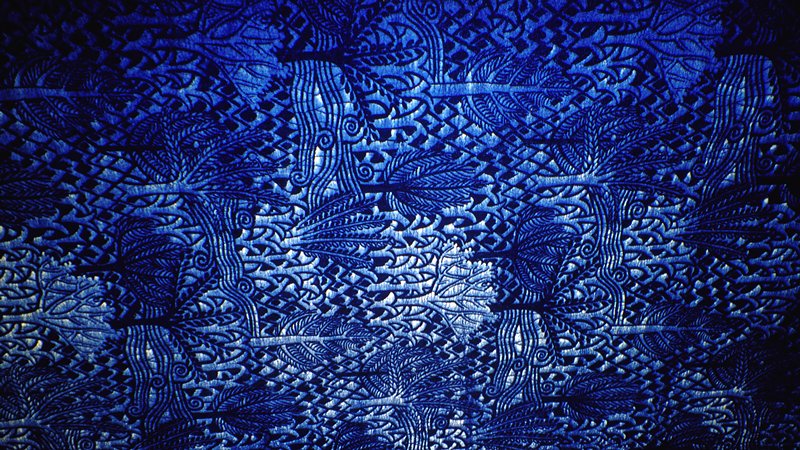
Linen Relief, Jack Lenor Larsen, 1967
Jack Lenor Larsen, portraitJack Lenor LarsenAmerican, 1927–2020

Linen Relief

1967 · Textiles · 294.64 × 126.37 cm

May one see it?

Not receiving at present

Minneapolis Institute of Art

Minneapolis, United States

It belongs to the collection, but is not on display at present.

Checked
3 days ago
In this state since
Sep 25, 2026
Source
The museum
On the mapMuseum page

About the sculpture

Sometimes the possibilities of a particular technique inspired design ideas. The subtle spontaneity that batik wax-resist processes offered had intrigued the Larsen team but posed a challenge to consistent production. In the mid-1960s, the company purchased equipment originally used to create sarongs that Dorothy Lamour wore in her movie roles. Win Anderson, head of the design studio at the time, modified the machine so it accepted yard-long design repeats and accommodated 54-inch-wide velvet.

Read on

The resist-dye process involves printing cloth with a wax pattern that acts as a resist when the fabric is put into a dye bath. For a two-color pattern, the wax is applied and cracked, then the fabric dyed. Then the wax is removed and the fabric dyed again. Total dye saturation enables designers to achieve nuances not possible with printed patterns. Larsen varied the process for Linen Relief using linen velvet and natural indigo dye, and had that fabric hand block printed in Switzerland with a resin resist, then finished in Holland.

Minneapolis Institute of Art

Particulars

1967 · aged 40
19272020
Accession number
99.1.446.1

In the catalog

SculpturePost-war art20th centuryNetherlands, United States

Sources

  • Minneapolis Institute of Art
  • Image: Minneapolis Institute of Art — © Jack Lenor Larsen, Inc., Jack Larsen
More by Jack Lenor Larsen

All works
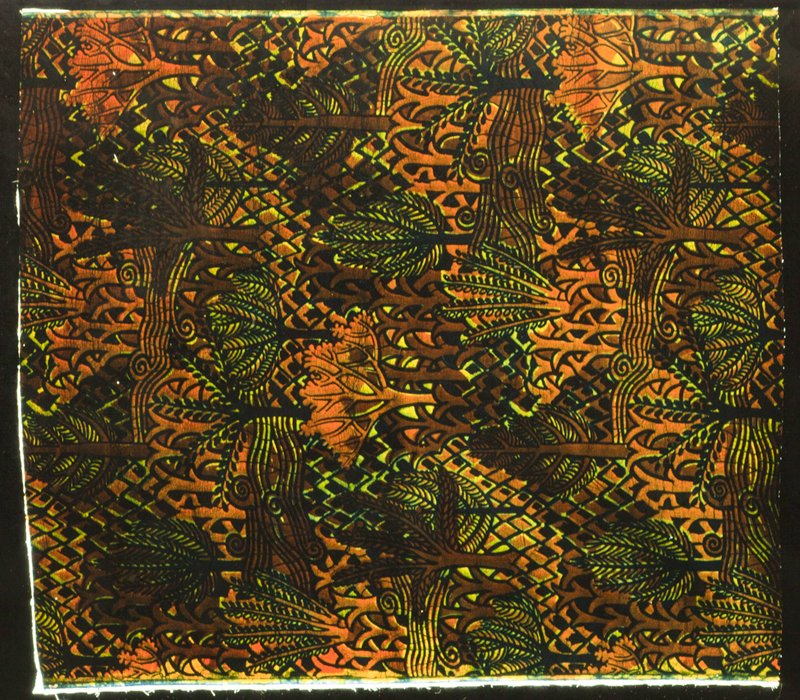
Bas Relief, Jack Lenor Larsen, 1963

Bas Relief

1963 · Not on view · Minneapolis Institute of Art

Neighbors at Minneapolis Institute of Art

Museum page
Olive Trees, Vincent van Gogh, 1889

Vincent van Gogh

Olive Trees, 1889

Grainstack, Sun in the Mist, Claude Monet, 1891

Claude Monet

Grainstack, Sun in the Mist, 1891

Lucretia, Rembrandt van Rijn, 1666

Rembrandt van Rijn

Lucretia, 1666

Self-Portrait with Dr. Arrieta, Francisco José de Goya y Lucientes, 1820

Francisco de Goya

Self-Portrait with Dr. Arrieta, 1820

Study for Improvisation V, Vassily Kandinsky, 1910

Vasily Kandinsky

Study for Improvisation V, 1910

Tahitian Landscape, Paul Gauguin, 1891

Paul Gauguin

Tahitian Landscape, 1891

Chestnut Trees at Jas de Bouffan, Paul Cézanne, c. 1885–86

Paul Cézanne

Chestnut Trees at Jas de Bouffan, c. 1885–86

The Union of England and Scotland (Charles I as the Prince of Wales), Peter Paul Rubens, 1633–34

Peter Paul Rubens

The Union of England and Scotland (Charles I as the Prince of Wales), 1633–34







