 Charles François DaubignyFrench, 1817–1878
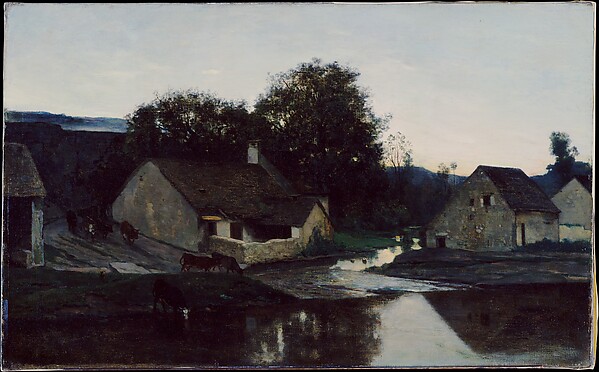
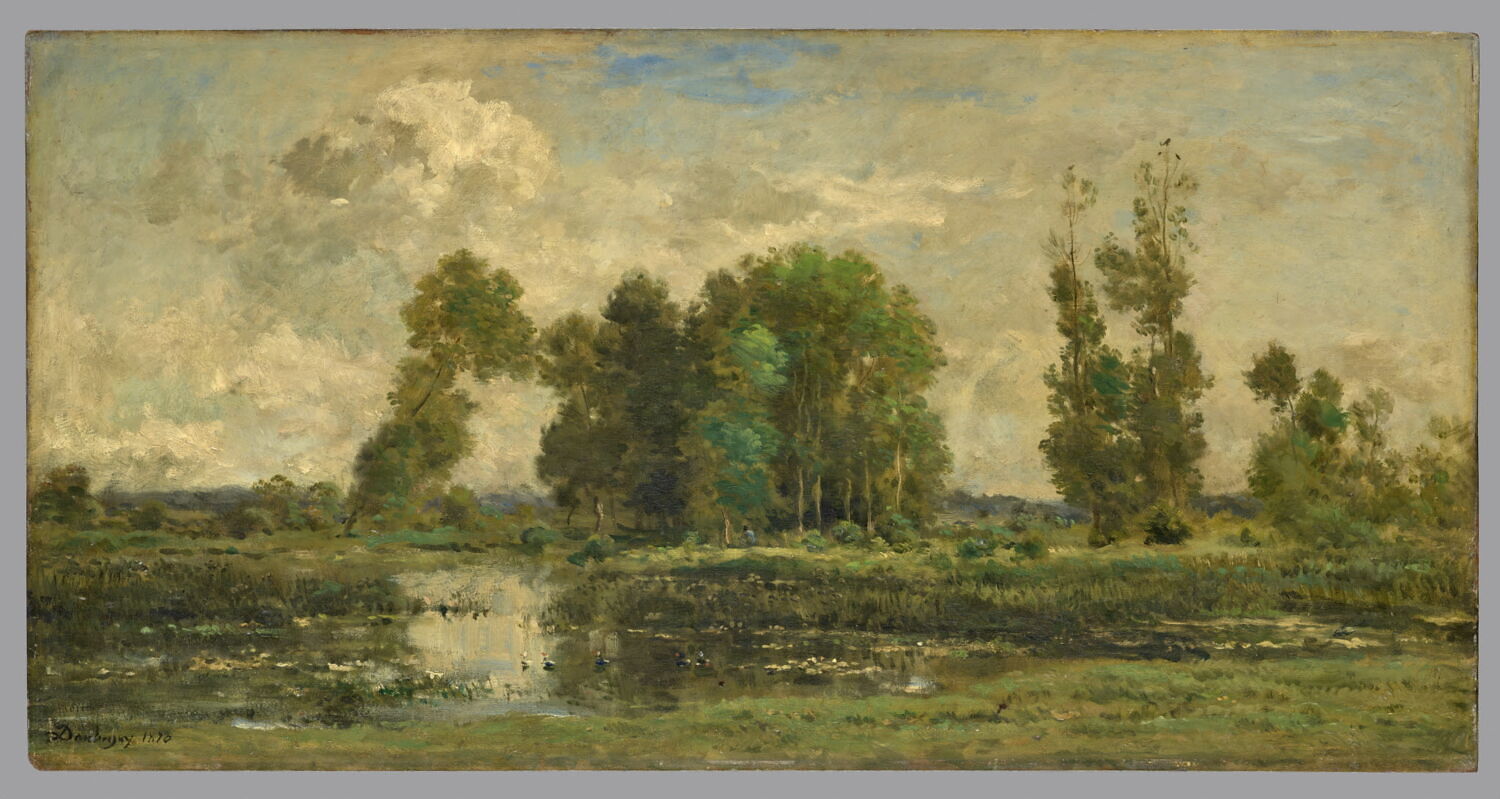
L'étang
Can I see it?
Not on view at present
Where is “L'étang” now? Collection: Musée du Louvre, Paris. Not on view at present. Checked September 26, 2026.

Paris, France
It belongs to the collection, but is not on display at present.
- Checked
- In this state since
- Source
- The museum
Details
- Accession number
- RF 1372
In the catalog
Sources
- Musée du Louvre
- Image: Musée du Louvre — © 2026 GrandPalaisRmn (musée du Louvre) / Stéphane Maréchalle
In the life of Charles François Daubigny
The whole life1860s
His technique influences the future Impressionists
Daubigny's impasto in the lights, translucent glazes in the shadows and small separate strokes, which earned him both praise and harsh criticism, influenced the future Impressionists in the 1860s. Like them, he cared little for crisp contours and favoured a broad manner.
1864–1874
A decade of his finest pictures: forests and lakes
Daubigny's best-known paintings date from 1864 to 1874 and depict mostly forests and lakes. He was disappointed that the works he considered his finest were not understood by his contemporaries, yet by the end of his life he remained a sought-after and esteemed artist.
1868
Helps Monet and Renoir into the Salon
It was Daubigny who helped young artists, among them Claude Monet and Auguste Renoir, to show their work at the Salon of 1868: his own art had much in common with the younger generation.
1870
Franco-Prussian War: back in England
Because of the Franco-Prussian War, Daubigny went to England again in 1870, where he found his friend Julien de La Rochenoire.
1870
Meets Claude Monet in London
In London Daubigny met Claude Monet, and the two left together for the Netherlands. Back in Auvers-sur-Oise he met Paul Cézanne and other artists later associated with the Impressionists.