ART WIKI33,040 on view
MapCollectionArtistsMuseumsExhibitionsJournal
Sign in

ART WIKI

Where the masterpiece hangs, and when they let you in.

Collections: Art Institute of Chicago, Getty Villa, Harvard Art Museums, Hirshhorn Museum and Sculpture Garden, J. Paul Getty Museum, Minneapolis Institute of Art, Musée du Louvre, National Gallery of Art, National Museum of Asian Art, National Portrait Gallery (Smithsonian), Pushkin State Museum of Fine Arts, Rijksmuseum, Smithsonian American Art Museum, SMK — National Gallery of Denmark, State Hermitage Museum, State Russian Museum, The Cleveland Museum of Art, The Metropolitan Museum of Art, The Museum of Modern Art, Tretyakov Gallery, Victoria and Albert Museum, Whitney Museum of American Art, State Catalogue of the Museum Fund of Russia (274 museums), Europeana (19 museums), Wikidata (6 museums), Paris Musées (12 museums), and Joconde, the French Ministry of Culture's museum database (495 museums). Images belong to their rights holders.

Sections

  • Map
  • Search
  • Collection
  • Masterpieces
  • On view now
  • Artists

More

  • Museums & galleries
  • Exhibitions
  • Journal
  • Where the data comes from
  • Privacy & cookies
HomeMapBrowse
  1. Collection/
  2. Musée Condé/
  3. LE DUC D'ALENÇON
LE DUC D'ALENÇON, Antoine Caron, 1572
Antoine Caron, portraitAntoine CaronFrench, 1521–1599

LE DUC D'ALENÇON

1572 · Drawing · 48.6 × 36.5 cm

May one see it?

Unknown

MC
Musée Condé

Chantilly, France

The owner is known; whether it is on view today is not.

In this state since
Oct 5, 2026
Source
The museum
On the mapMuseum page

Particulars

1572 · aged 51
15211599
Accession number
DE PD IV ; p 397 (ancien numéro)

What it shows

Portrait (France François Hercule de, Alençon duc d', homme, en buste, de trois-quarts, couvre-chef, épée, plume)

In the catalog

Drawings & watercolorsRenaissance16th centuryFrance

Sources

  • Musée Condé
  • Image: Musée Condé — © musée Condé; Ministère de la Culture (France), base Joconde

More by Antoine Caron

All works
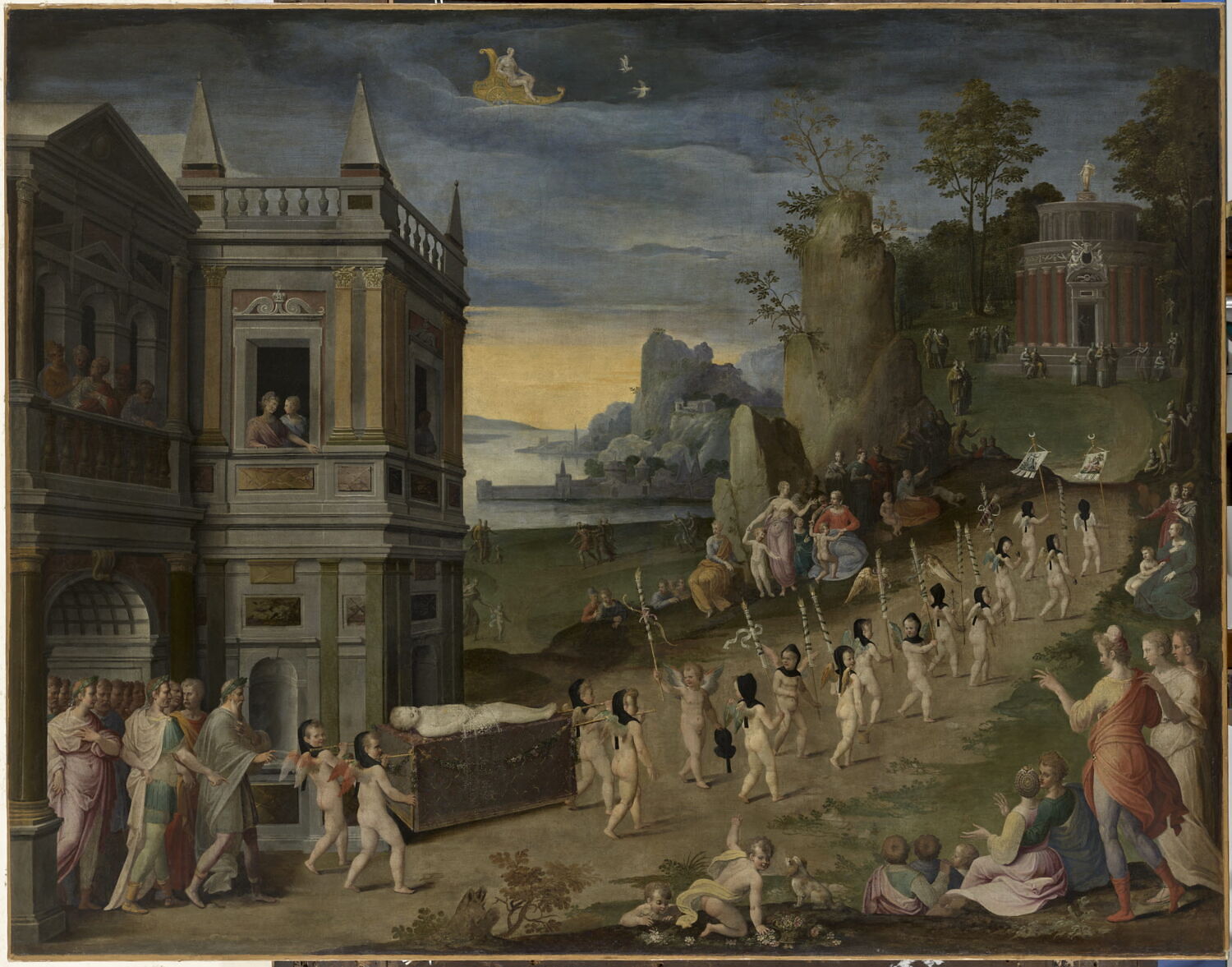
Allégorie. Les funérailles de l'Amour, Caron, Antoine, 3e quart du XVIe siècle (1550 - 1575)

Allégorie. Les funérailles de l'Amour

third quarter of the 16th century (1550–1575) · Musée du Louvre

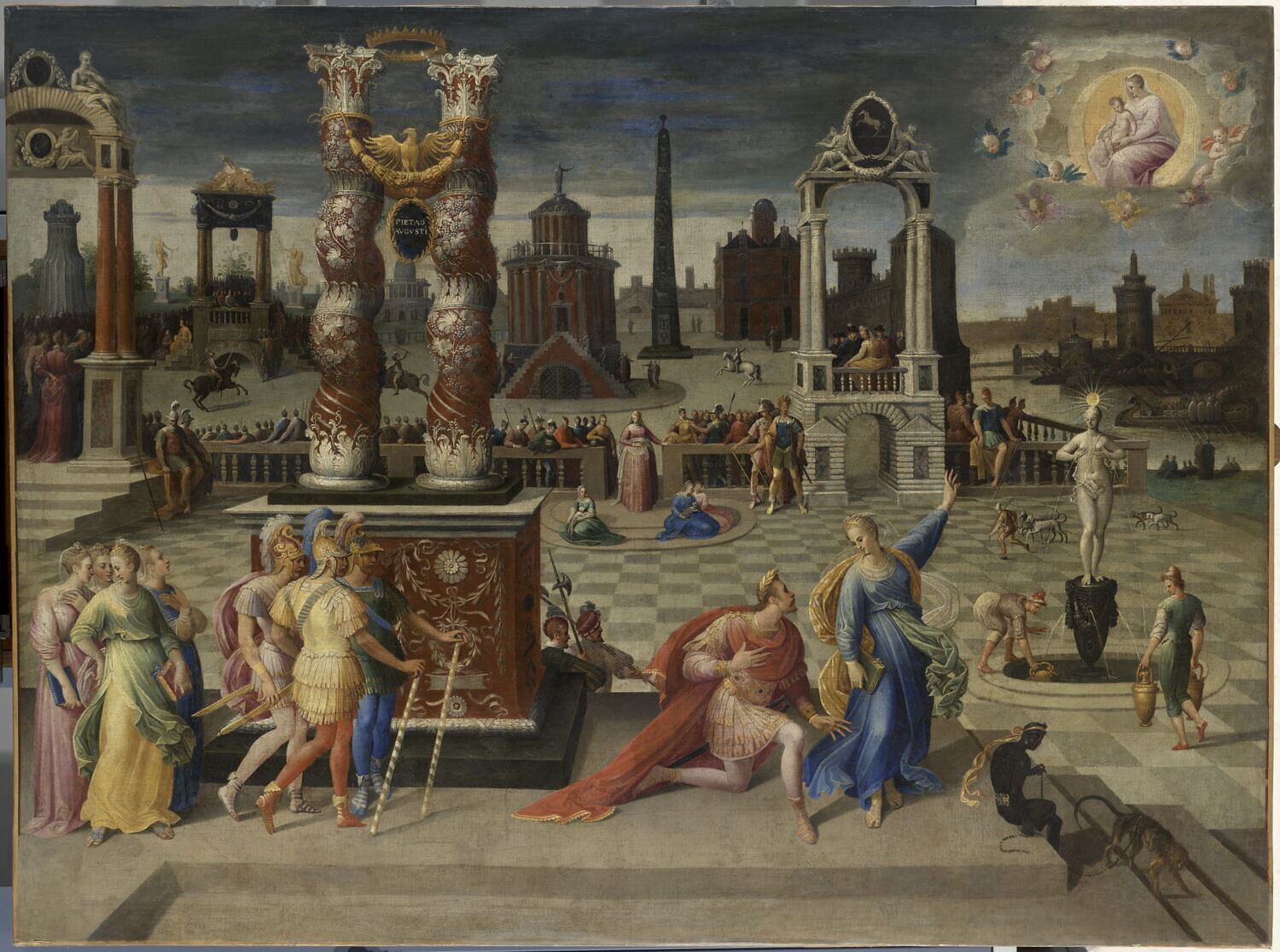
Les massacres du Triumvirat, Caron, Antoine, 3e quart du XVIe siècle (1566)

Les massacres du Triumvirat

third quarter of the 16th century (1566) · Musée du Louvre

La Sibylle de Tibur, Caron, Antoine, 4e quart du XVIe siècle (1575 - 1580)

La Sibylle de Tibur

last quarter of the 16th century (1575–1580) · Musée du Louvre

Dionysius the Areopagite Converting the Pagan Philosophers, Antoine Caron, 1570s

Dionysius the Areopagite Converting the Pagan Philosophers

1570s · Not on view · J. Paul Getty Museum

Ancient Roman Warriors Riding into Battle, Antoine Caron, c. 1597

Ancient Roman Warriors Riding into Battle

c. 1597 · Not on view · National Gallery of Art

Youths and Maidens Engaged in Country Pursuits, Antoine Caron, n.d.

Youths and Maidens Engaged in Country Pursuits

n.d. · Not on view · Art Institute of Chicago

Groteske Sphinx mit Fackel, Antoine Caron

Groteske Sphinx mit Fackel

Kupferstich-Kabinett Dresden

Abführung eines Verdammten, Antoine Caron

Abführung eines Verdammten

Kupferstich-Kabinett Dresden

From the collection of Musée Condé

Museum page
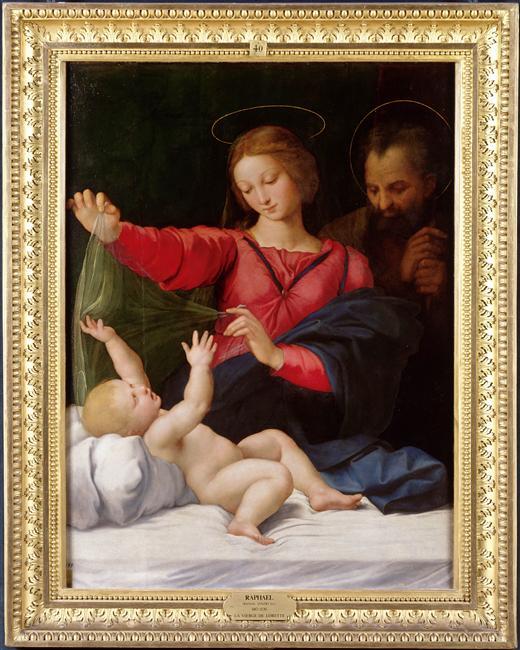
LA VIERGE DE LORETTE, Raphaël, 1509 vers,1510 et

Raphael

Madonna of Loreto

LA MADONE DE LA MAISON D'ORLEANS, Raphaël, 1506

Raphael

Madonna d'Orleans, 1506

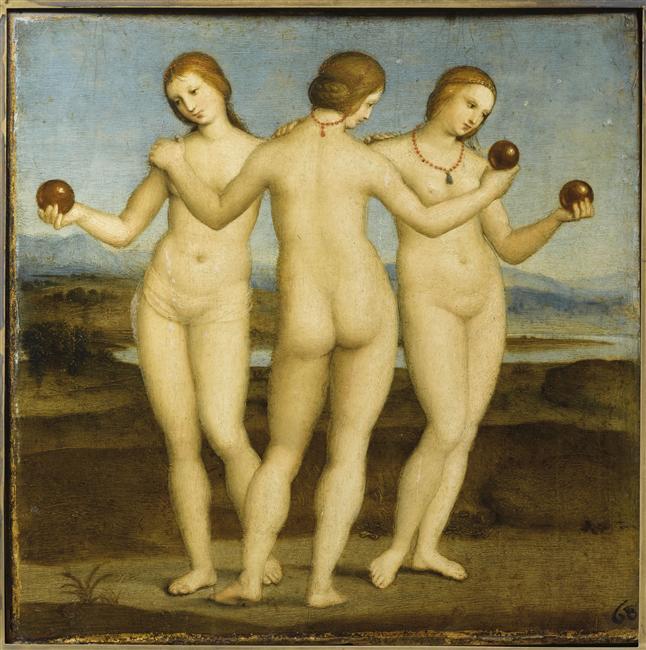
LES TROIS GRACES, Raphaël, 1504 vers,1505 ou

Raphael

Three Graces

l'Annonciation, Albrecht Durer, 1526

Albrecht Dürer

l'Annonciation, 1526

Le voyage aux Pays-Bas ; L'hôtel de ville d'Aix la Chapelle (recto) ; Caspar Sturm devant un paysage fluvial (verso), Albrecht Durer, 1520

Albrecht Dürer

Le voyage aux Pays-Bas ; L'hôtel de ville d'Aix la Chapelle (recto) ; Caspar Sturm devant un paysage fluvial (verso), 1520

La Mélancolie, Albrecht Durer, 1514

Albrecht Dürer

Melencolia I, 1514

Saint Jérôme dans sa cellule, Albrecht Durer, 1514

Albrecht Dürer

St. Jerome in His Study, 1514

LES DEUX FOSCARI, Eugène Delacroix, 1855

Eugène Delacroix

LES DEUX FOSCARI, 1855