
 Giorgio MorandiItalian, 1890–1964
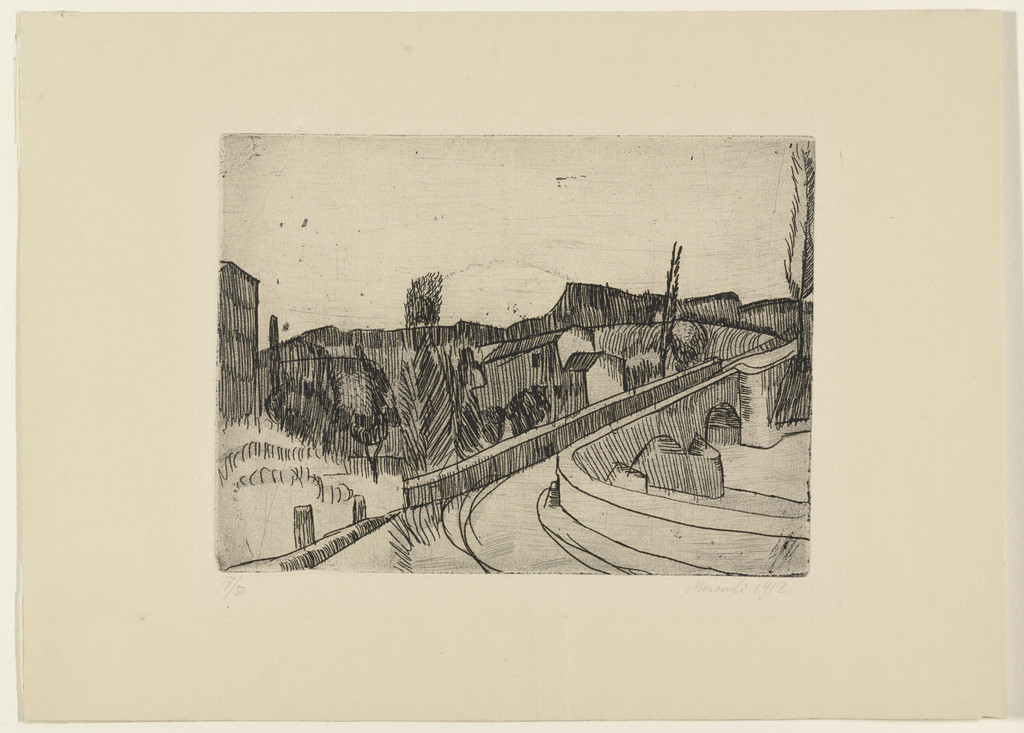
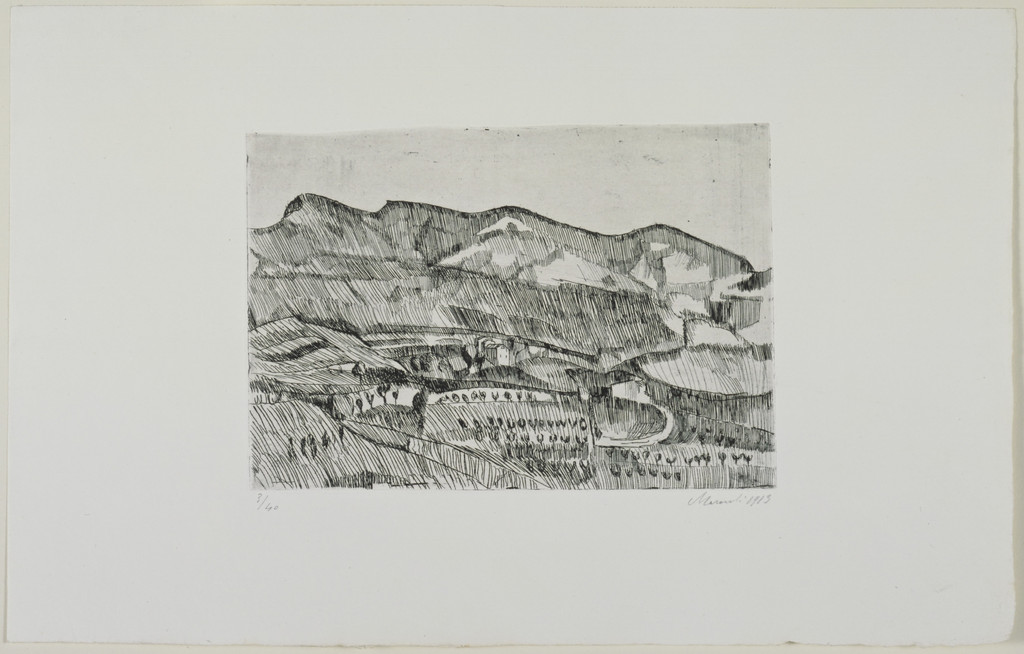
Landscape (Chiesanuova)
May one see it?
Not receiving at present

National Gallery of Art
Washington, D.C., United States
It belongs to the collection, but is not on display at present.
- Checked
- In this state since
- Source
- The museum's own collection data
Particulars
- Accession number
- 2006.128.26
What it shows
In the catalog
Sources
- National Gallery of Art: the museum's own open data · fetched 8 days ago
- Image: National Gallery of Art — © the artist or rights holder
Meanwhile, in the life of Giorgio Morandi
The whole life1914–1929
Drawing teacher in Bologna's elementary schools
He is appointed instructor of drawing in the elementary schools of Bologna, a post he holds until 1929; his family's financial difficulties keep him in his home city.
1916–1922
Drawing close to metaphysical painting
From 1916 to 1919 his explorations bring him close to the Metaphysical painters: Giorgio de Chirico, Arturo Martini and above all Carlo Carrà. From 1918 to 1922 he works in the Metaphysical manner, his last major stylistic shift.
1920s
Sympathy for the Fascist party and “Strapaese”
In the 1920s he is sympathetic to the Fascist party; by the end of the decade he is more specifically associated with the regional Strapaese group, which stressed local cultural traditions and was influenced by Fascism.
1922
The Spring Exhibition in Florence with de Chirico and Carrà
He exhibits in Florence alongside de Chirico, Carrà and Martini, and de Chirico writes an article on him for the exhibition catalogue. Morandi's new works already show that the “metaphysical stage” is behind him; from here he moves towards subtle gradations of hue and tone and objects arranged in a unifying atmospheric haze.
1926 and 1929
The “Novecento Italiano” exhibitions
He shows his work in the Novecento Italiano exhibitions of 1926 and 1929.





![Ginevra de' Benci [obverse], Leonardo da Vinci, c. 1474/1478](https://api.nga.gov/iiif/8f29e3c9-a289-4d53-abf0-31a66e9e98fa/full/!2400,2400/0/default.jpg)
![Wreath of Laurel, Palm, and Juniper with a Scroll inscribed Virtutem Forma Decorat [reverse], Leonardo da Vinci, c. 1474/1478](https://api.nga.gov/iiif/ff62e8d0-45c4-498f-ad36-6358de827e04/full/!2400,2400/0/default.jpg)


