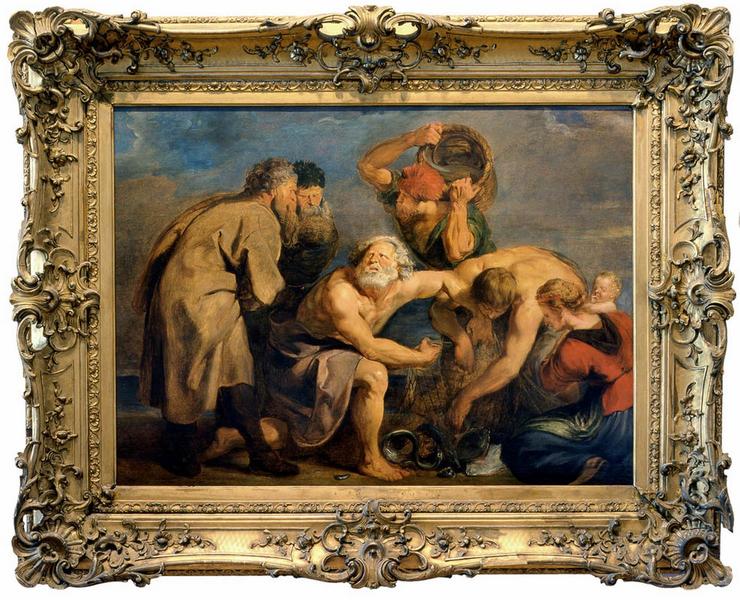
 Jacques JordaensFlemish, 1593–1678
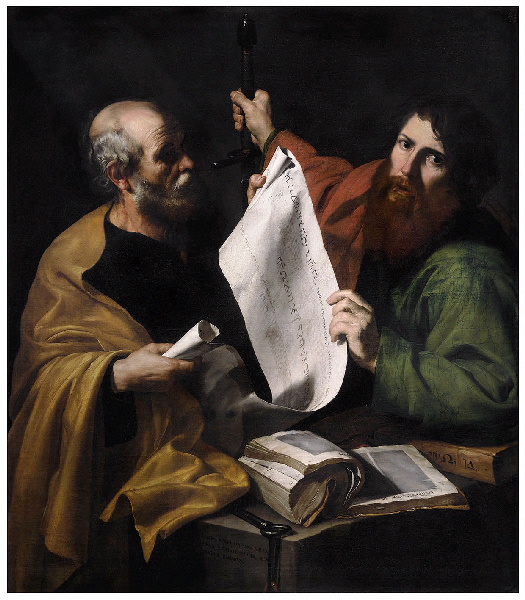
La pêche miraculeuse
Can I see it?
Unknown
Where is “La pêche miraculeuse” now? Collection: Musée des Beaux-Arts de Strasbourg, Strasbourg. Unknown.
Strasbourg, France
The owner is known; whether it is on view today is not.
- In this state since
- Source
- The museum
Details
- Accession number
- MBA 618
What it shows
In the catalog
Sources
- Musée des Beaux-Arts de Strasbourg
- Image: Musée des Beaux-Arts de Strasbourg — Service photographique des Musées de Strasbourg, BERTOLA; Ministère de la Culture (France), base Joconde
In the life of Jacques Jordaens
The whole life1616
Joins the “Guild of the Poor Box”
Jordaens became a member of the Gilde van de Armenbus, a kind of insurance pool for artists with health problems.
15 May 1616
Marries his master's daughter Catharina van Noort
Jordaens married Adam van Noort's eldest daughter Catharina (other accounts call her Anna Catharina). At first the couple lived with or near his father-in-law; they had three children: Elisabeth, Jacob, who became a painter, and Anna Catharina.
1617
Daughter born: Elisabeth Jordaens
1618
Buys a home in the quarter where he grew up
Jordaens and his wife bought a home in the neighbourhood where he grew up: by some accounts, two adjoining houses on the Hoogstraat behind the house of the merchant Backx; by others, a house at Reyndersstraat 4. His father-in-law later moved in with them; here the painter set up his studio and spent nearly all his life.
28 September 1621
Dean of the Guild of Saint Luke
Jordaens accepted the post of dean of the Guild of Saint Luke on condition that he alone would cover the expenses of his term but would not be liable for the debts left by his predecessors. He held the post for only one year.
1621–1667
His workshop: fifteen pupils in the guild records
Between 1621 and 1667 the guild registered fifteen pupils with Jordaens (the best known being Jan Boeckhorst), and six more are named in court documents; his son Jacob and his cousin Arnoldus also trained with him. His fame drew foreigners: after 1642 the Polish painter Aleksander Jan Tricius became his pupil, and in 1645 Queen Christina of Sweden meant to send her protégé Georg Waldau, but the threat of war in Flanders prevented it.