 Ivan Aivazovsky1817–1900
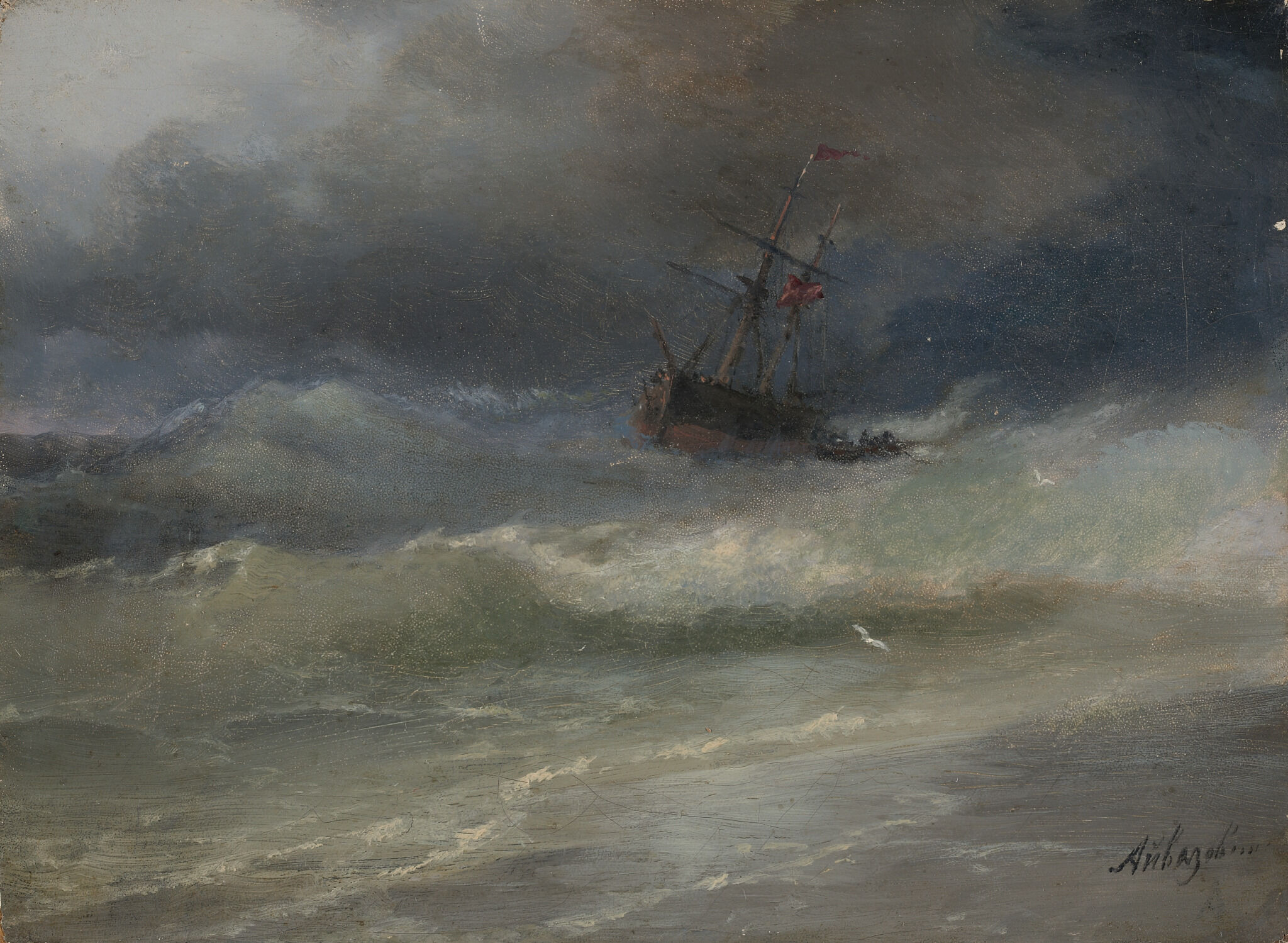
Кораблекрушение
Can I see it?
Unknown
Where is “Кораблекрушение” now? Collection: Tretyakov Gallery, Moscow. Unknown.

Moscow, Russia
The owner is known; whether it is on view today is not.
- Source
- The museum
About the painting
Museum text in Russian
В последнее десятилетие творческой деятельности Айвазовским было исполнено большое количество малоформатных произведений, которые мастер как правило предназначал в качестве подарка своим близким друзьям и поклонникам.
Read on
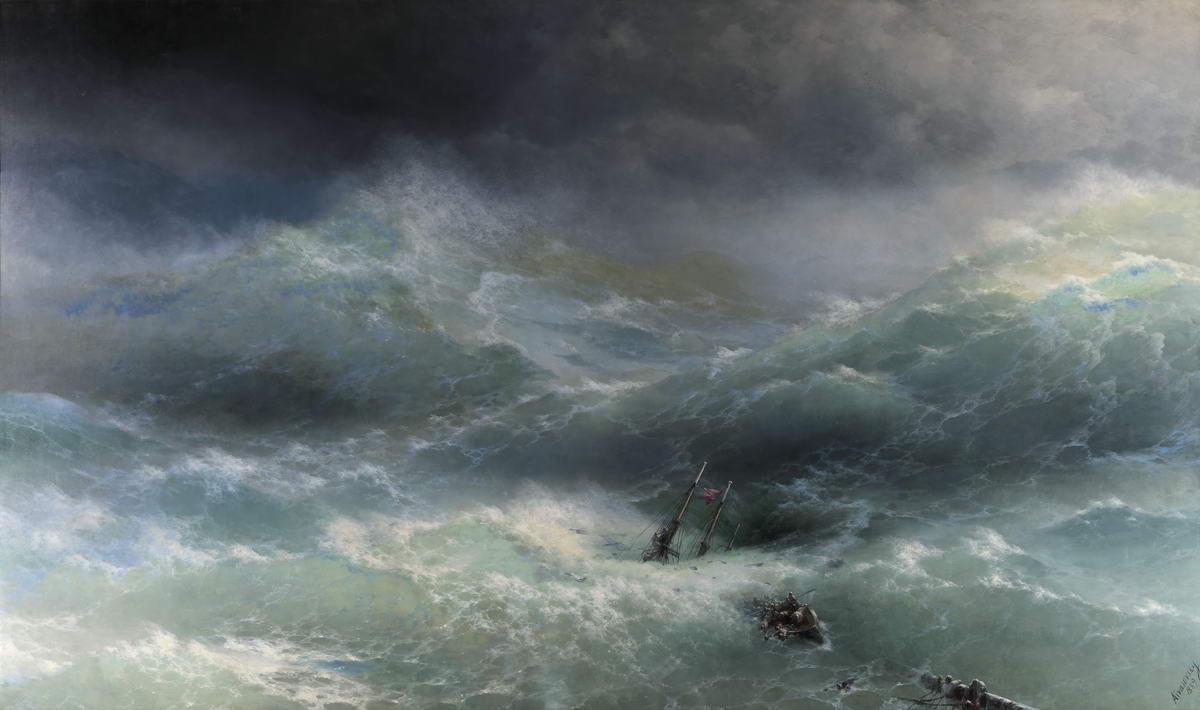
Несмотря на небольшой размер, картина “Кораблекрушение” исполнена виртуозно. Айвазовский с присущей ему экспрессией изобразил разрушительную силу подгоняемых ветром волн, наклонивших корабль. Легкие фактурные движения кисти, а также избранный художником колорит естественных природных оттенков придают картине сходство с этюдом, написанным с натуры. Но, как и другие произведения прославленного мариниста, “Кораблекрушение” создавалось по памяти. Корабль, терпящий крушение в бурных морских водах - популярный мотив в творчестве Айвазовского. Он олицетворяет противостояние человека, как бы ни казался он мал в пучине морских волн, могуществу разбушевавшейся стихии, что составляет важную часть романтического мировоззрения мастера.
В собрании Третьяковской галереи хранятся композиции подобного формата, написанные художником в 1898 году и поступившие в дар от советского ученого, профессора, доктора медицинских наук Ивана Михайловича Саркизова-Серазини: “Кораблекрушение у берегов Гурзуфа” и “Перед бурей”.
Tretyakov Gallery
Details
- Accession number
- Ж-140
In the catalog
Sources
- Tretyakov Gallery
- Image: Tretyakov Gallery — © State Tretyakov Gallery
In the life of Ivan Aivazovsky
The whole life1894–1896
Throws his Turkish decorations into the sea
Deeply affected by the Hamidian massacres of Armenians in the Ottoman Empire, Aivazovsky throws all his Turkish decorations into the sea and tells the Turkish consul in Feodosia to send the sultan their ribbons: if he likes, he may throw them into the seas the painter has painted. He also paints a number of works on the subject, such as the massacre of Armenians at Trebizond (1895).
1 January 1896
Actual Privy Councillor
On 1 January 1896 Aivazovsky becomes the first and only Russian artist to receive the rank of Actual Privy Councillor (second class of the Table of Ranks, equivalent to an admiral). Before that he had received hereditary nobility (1864) and the ranks of Actual State Councillor (1870) and Privy Councillor (1885).
1897
An exhibition for victims of the pogroms
In 1897 Aivazovsky holds an exhibition in aid of Greeks and Armenians who suffered in pogroms in Turkey.
1897
“Worthy of Aivazovsky's brush”
In Chekhov's play “Uncle Vanya” (1897) the phrase “worthy of Aivazovsky's brush” is heard for the first time; in Russia it becomes the standard way of describing something ineffably lovely, and the painter's name a synonym for art and beauty.
19 April 1900
The last paintings: “The Explosion of a Turkish Ship”
Shortly before his death Aivazovsky paints “Sea Bay”, and on the last day of his life begins “The Explosion of a Turkish Ship”, which remains unfinished. Over his lifetime he painted more than six thousand pictures.
19 April 1900
Died