ART WIKI32,963 on view
MapCollectionArtistsMuseumsExhibitionsJournal
Sign in

ART WIKI

Where the masterpiece hangs, and when they let you in.

Collections: Art Institute of Chicago, Getty Villa, Harvard Art Museums, Hirshhorn Museum and Sculpture Garden, J. Paul Getty Museum, Minneapolis Institute of Art, Musée du Louvre, National Gallery of Art, National Museum of Asian Art, National Portrait Gallery (Smithsonian), Pushkin State Museum of Fine Arts, Rijksmuseum, Smithsonian American Art Museum, SMK — National Gallery of Denmark, State Hermitage Museum, State Russian Museum, The Cleveland Museum of Art, The Metropolitan Museum of Art, The Museum of Modern Art, Tretyakov Gallery, Victoria and Albert Museum, Whitney Museum of American Art, State Catalogue of the Museum Fund of Russia (274 museums), Europeana (19 museums), Wikidata (6 museums), Paris Musées (12 museums), and Joconde, the French Ministry of Culture's museum database (495 museums). Images belong to their rights holders.

Sections

  • Map
  • Search
  • Collection
  • Masterpieces
  • On view now
  • Artists

More

  • Museums & galleries
  • Exhibitions
  • Journal
  • Where the data comes from
  • Privacy & cookies
HomeMapBrowse
  1. Collection/
  2. Kupferstich-Kabinett Dresden/
  3. Kleinstadtplatz mit Linde
Kleinstadtplatz mit Linde, Otto Wagner, 1818–1861
Otto Wagner, portraitOtto WagnerAustrian, 1841–1918

Kleinstadtplatz mit Linde

1818–1861 · Drawing

May one see it?

Unknown

Kupferstich-Kabinett Dresden

Dresden, Germany

The owner is known; whether it is on view today is not.

In this state since
Sep 27, 2026
Source
The museum
On the mapMuseum page

Particulars

In the catalog

Drawings & watercolorsNeoclassicismRomanticism19th century

Sources

  • Kupferstich-Kabinett Dresden
  • Image: Kupferstich-Kabinett Dresden — In Copyright

Meanwhile, in the life of Otto Wagner

The whole life
  1. 13 July 1841

    Birth in Penzing

    Born in Penzing — then a suburb of Vienna next to the imperial residence of Schönbrunn — to Rudolf Simeon Wagner, a prosperous notary of the Hungarian royal court chancellery, and Susanne von Helfersdorfer, née Hübner.

  2. c. 1846

    The death of his father

    His father died of a lung disease when Otto was five. The family was left in want, yet his mother, Susanne, managed to give her son a good education.

  3. from 1850

    Schooling in Vienna and at Kremsmünster

    From 1850 Wagner spends two years at the Vienna Academic Gymnasium, then attends the Benedictine gymnasium at Kremsmünster Abbey in Upper Austria.

  4. 1857–1860

    The Vienna Polytechnic Institute

    In 1857 Wagner enters the Vienna Polytechnic Institute, where he studies mathematics, physics, descriptive geometry, technology and drawing. Some accounts extend his studies to 1862, others have them ending in 1860, when he left for Berlin.

  5. 1860–1861

    The Berlin Building Academy

    On finishing his studies in Vienna Wagner goes to Berlin and studies at the Royal Building Academy under Carl Ferdinand Busse, a pupil of Karl Friedrich Schinkel, the leader of the German school of neoclassical and neo-Gothic architecture.

  6. 1862

    Joins Ludwig von Förster’s office

    Wagner joins the architectural office of Ludwig von Förster, whose studio designed much of the new architecture along the Ringstraße. The first part of his career, lasting until about 1880, was spent on that boulevard; he described his own style of those years as “a sort of free Renaissance”.
More by Otto Wagner

All works
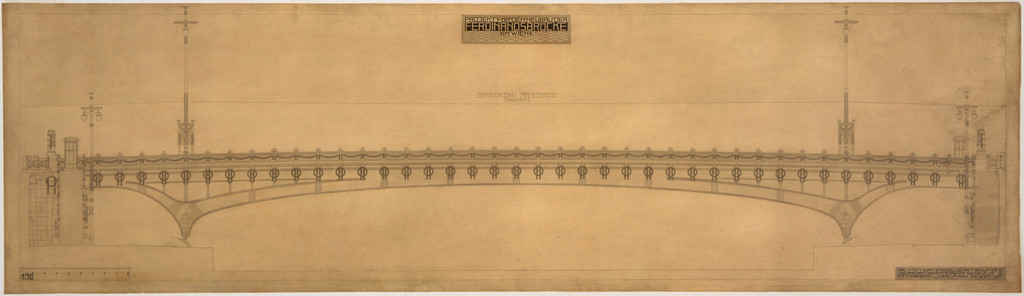
Ferdinandsbrücke Project, Vienna, Austria (Elevation, preliminary version), Otto Wagner, 1896

Ferdinandsbrücke Project, Vienna, Austria (Elevation, preliminary version)

1896 · Not on view · The Museum of Modern Art

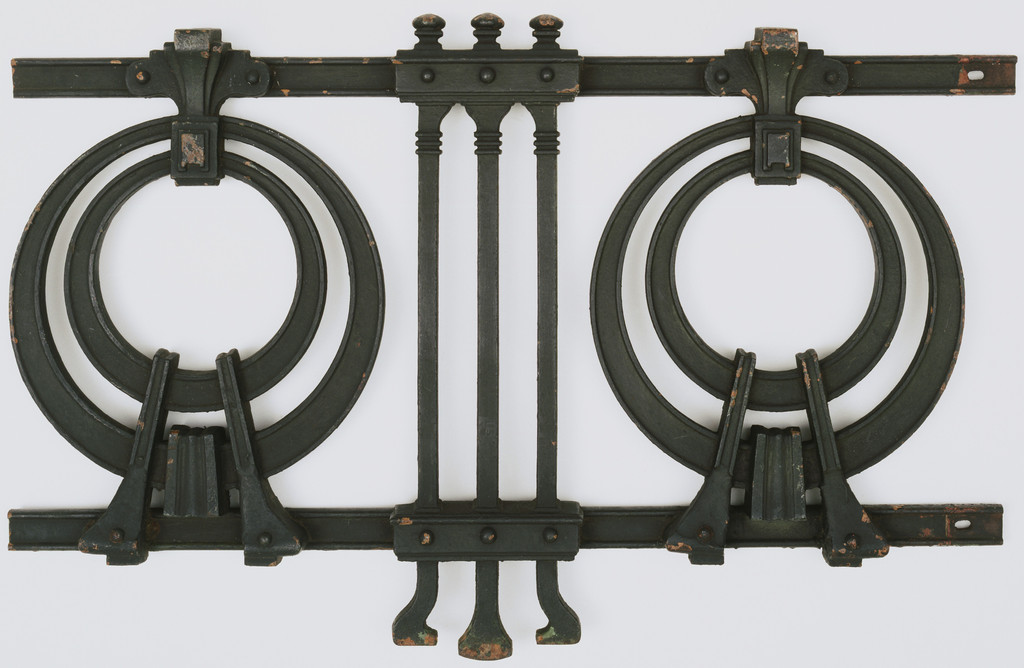
Railing, Otto Wagner, 1899

Railing

1899 · Not on view · The Museum of Modern Art

In Meissen, Otto Wagner, 19th century

In Meissen

19th century · Not on view · Harvard Art Museums

Cottage Door, Otto Wagner, 19th century

Cottage Door

19th century · Not on view · Harvard Art Museums

Up in the Black Forest, Otto Wagner, 19th century

Up in the Black Forest

19th century · Not on view · Harvard Art Museums

German Town, Otto Wagner, 19th century

German Town

19th century · Not on view · Harvard Art Museums

Cottages, Otto Wagner, 19th century

Cottages

19th century · Not on view · Harvard Art Museums

Alter Ziehbrunnen mit Überdachung, Otto Wagner

Alter Ziehbrunnen mit Überdachung

Kupferstich-Kabinett Dresden

From the collection of Kupferstich-Kabinett Dresden

Museum page
Der Erzengel Michael, Raphael

Raphael

Der Erzengel Michael

Kopf einer jungen Frau mit Turban und Perlenkette, Raphael

Raphael

Kopf einer jungen Frau mit Turban und Perlenkette

Plakat: I. Kunstausstellung der Wiener Secession, Gustav Klimt, 1898

Gustav Klimt

Plakat: I. Kunstausstellung der Wiener Secession, 1898

Jan Antonides van der Linden, Professor der Medizin in Leiden, Rembrandt, 1665

Rembrandt van Rijn

Jan Antonides van der Linden, Professor der Medizin in Leiden, 1665

Jan Antonides van der Linden, Professor der Medizin in Leiden, Rembrandt, 1665

Rembrandt van Rijn

Jan Antonides van der Linden, Professor der Medizin in Leiden, 1665

Diana und Aktaion, Rembrandt, 1663–1665

Rembrandt van Rijn

Diana und Aktaion, 1663–1665

Petrus am Totenbett der Tabea, Rembrandt, 1662–1665

Rembrandt van Rijn

Petrus am Totenbett der Tabea, 1662–1665

Die Frau mit dem Pfeil (Venus und Cupido?), Rembrandt, 1661

Rembrandt van Rijn

Die Frau mit dem Pfeil (Venus und Cupido?), 1661