 Otto WagnerAustrian, 1841–1918
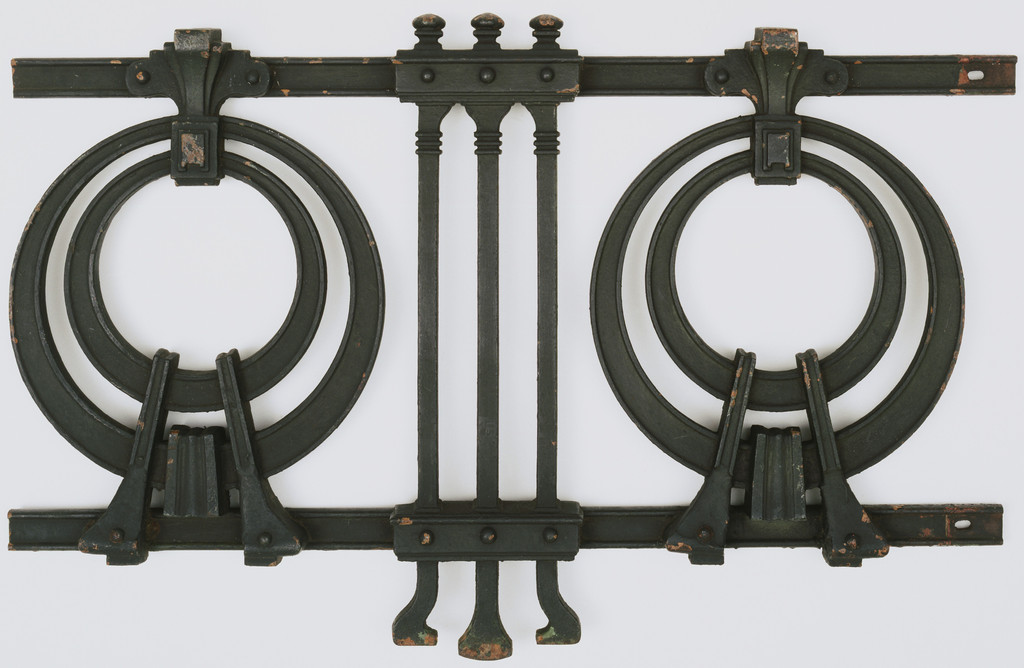
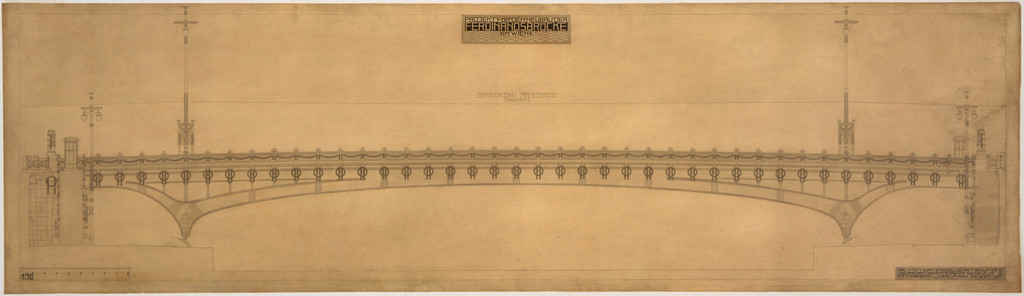
Ferdinandsbrücke Project, Vienna, Austria (Elevation, preliminary version)
May one see it?
Not receiving at present

The Museum of Modern Art
New York, United States
It belongs to the collection, but is not on display at present.
- Checked
- Source
- The museum's own collection data
Particulars
- Accession number
- 885.1996
In the catalog
Sources
- The Museum of Modern Art: the museum's own open data · fetched 15 days ago
- Image: The Museum of Modern Art — © the artist or rights holder
Meanwhile, in the life of Otto Wagner
The whole life1894
Becomes professor at the Academy of Fine Arts
Wagner becomes professor of architecture at the Vienna Academy of Fine Arts and teaches there until 1914. He trains a whole generation of masters of Austrian and Czech Art Nouveau, among them Josef Hoffmann, Jan Kotěra, Jože Plečnik, Max Fabiani and Pavel Janák.
April 1894
Artistic adviser to the Vienna Stadtbahn
In April 1894 Wagner is named artistic adviser to the new Stadtbahn city railway and is gradually given responsibility for its bridges, viaducts and stations, including lifts, signs, lighting and decoration. He designs thirty-six stations and serves as chief engineer of the whole project, which runs until 1901; he hires seventy artists and designers, among them Joseph Maria Olbrich and Josef Hoffmann, later prominent in the birth of modern architecture.
1895 or 1896
The book “Modern Architecture”
Wagner publishes the textbook “Modern Architecture”, based on his 1894 inaugural lecture: the foundations of architecture are to be sought not in art history but in modern life, and “only that which is practical can be beautiful”. The book is dated 1895 or 1896 and has been called the “bible of the new movement”.
1897
A pamphlet against Wagner
Conservative Vienna answers his book with a pamphlet claiming that Wagner has turned from a fully mature architect into an experimenter in art, “a standard-bearer of fashion greedy for sensations”.
1897 or 1899
Joins the Vienna Secession
The Secession, founded in 1897, declared war on historicism and called for the abolition of the boundary between the fine and the applied arts. Some accounts say Wagner himself joined it only in 1899, others that he aligned himself with the movement as early as 1897.