Max LiebermannGerman, 1847–1935
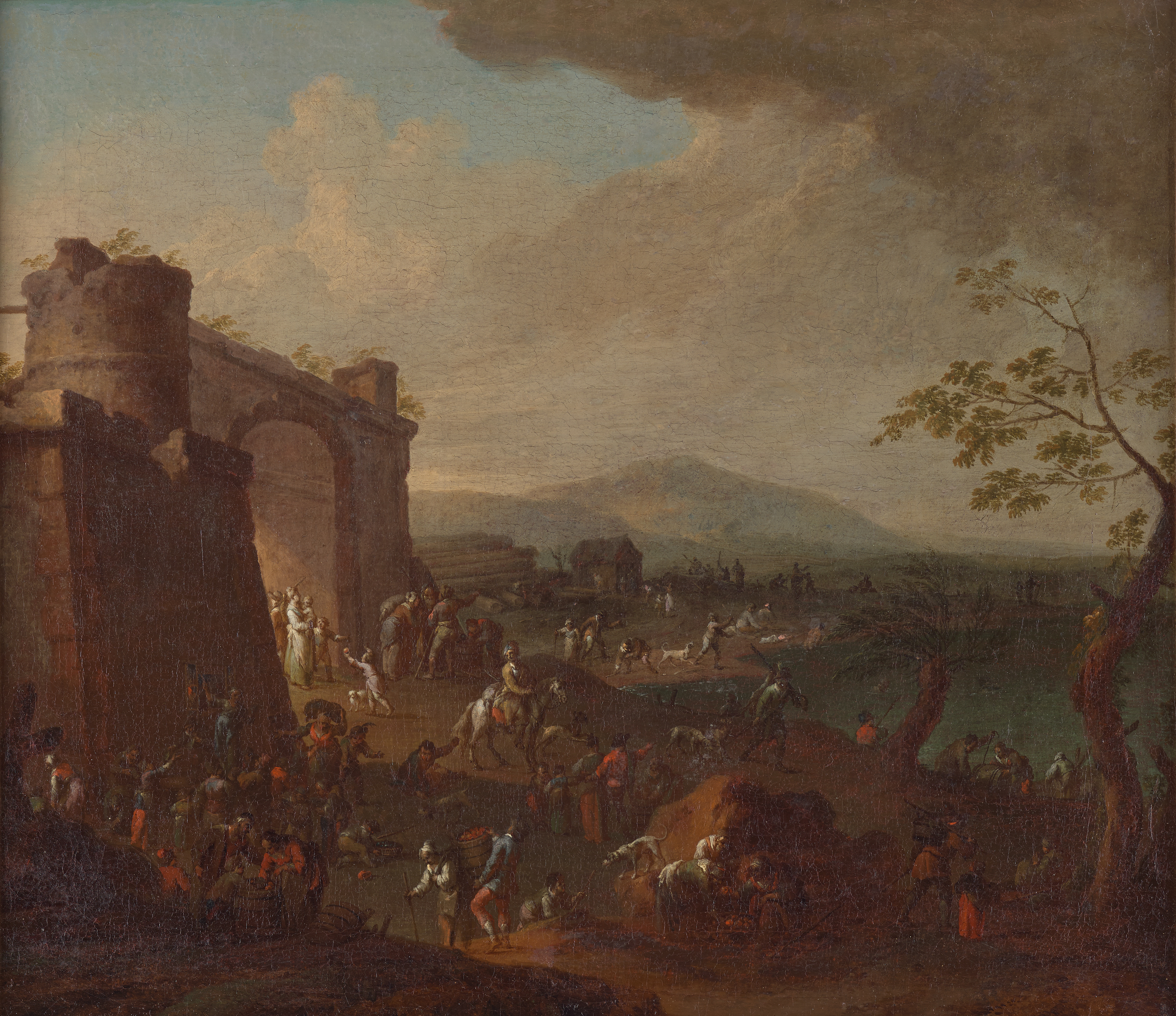
Jäger in den Dünen
Can I see it?
Unknown
Where is “Jäger in den Dünen” now? Collection: Belvedere, Vienna. Unknown.

Vienna, Austria
The owner is known; whether it is on view today is not.
- In this state since
- Source
- The museum
Details
In the catalog
Sources
- Belvedere
- Image: Belvedere — CC BY-SA 4.0
In the life of Max Liebermann
The whole lifespring 1911
Fleeing to Rome from the Secession crisis
In the spring of 1911 Liebermann fled to Rome to escape the Secession crisis; criticism of his leadership style was growing ever louder.
1911
Death of his friend Jozef Israëls
Jozef Israëls died — a friend of Liebermann's since their meeting in Amsterdam in 1876, who had suggested the subject of “The Grace” and joined his honeymoon trip.
16 November 1911
Steps down as president of the Secession
After criticism of his leadership that came even from his own ranks, Liebermann resigned; Max Beckmann, Max Slevogt and August Gaul left with him. The general assembly elected him honorary president and entrusted the leadership to Lovis Corinth — a decision that foreshadowed the end of the Secession and the decline of German Impressionism.
1912
House Order of Orange, honorary doctorate and the Academy senate
In The Hague Queen Wilhelmina presented Liebermann with the House Order of Orange, the University of Berlin awarded him an honorary doctorate, and the Academy of Arts at last invited him into its senate. The art academies of Vienna, Brussels, Milan and Stockholm made him a member.
1913
Leaves the Secession after Cassirer's election
Liebermann tried to prevent the election of a non-artist, Paul Cassirer, as chairman; Cassirer barred from the 1913 exhibition the members who had voted against him, and when Corinth unexpectedly sided with them, Liebermann and the other founders left the Secession. In February 1914 the Free Secession was founded, continuing the tradition of the original Secession.
autumn 1914
Signs the appeal “To the Cultural World!”
In the autumn of 1914 Liebermann was among the 93 signatories — mostly professors, writers and artists — who denied German war crimes. After the war he spoke self-critically of the appeal, explaining it by solidarity with his country.