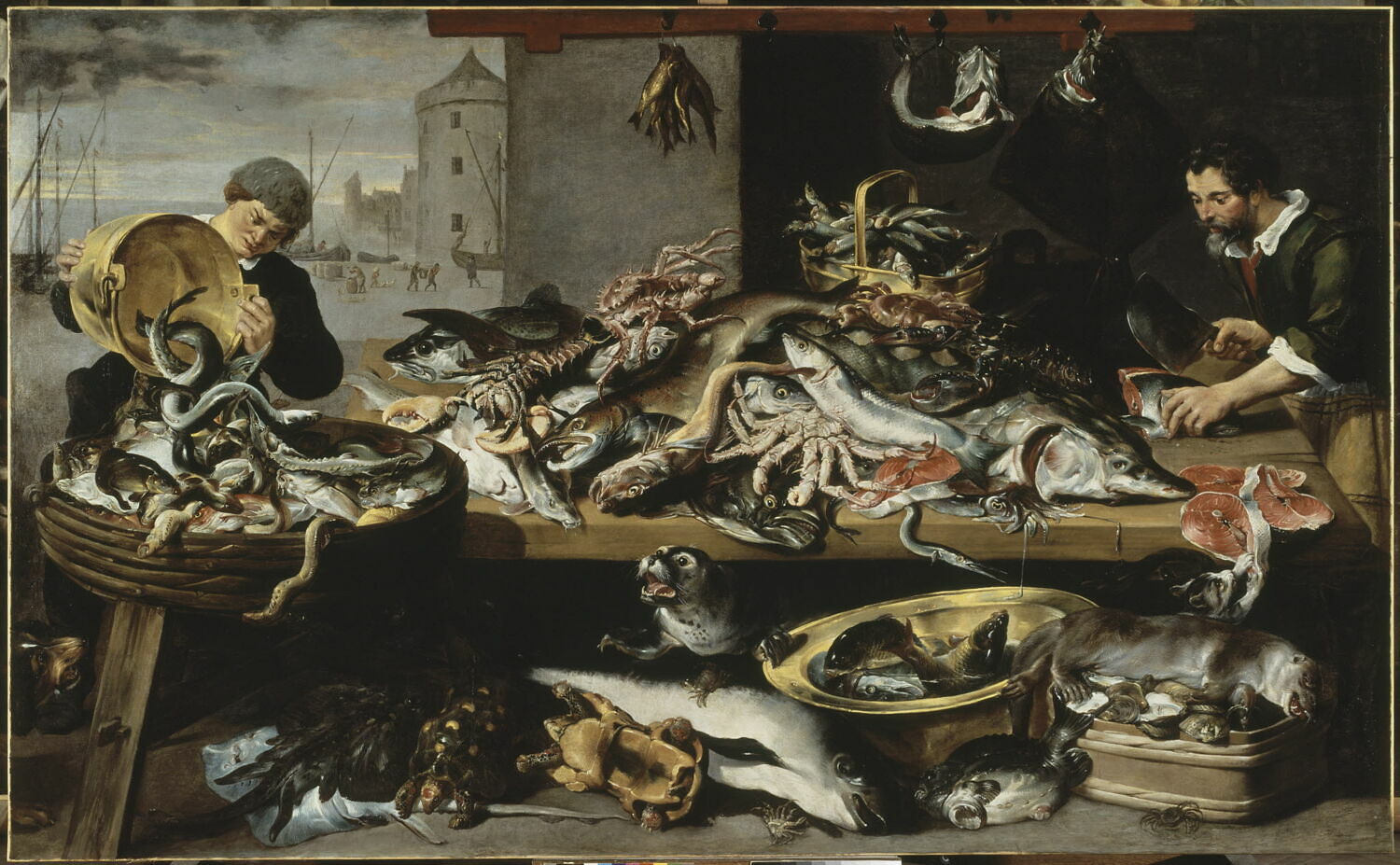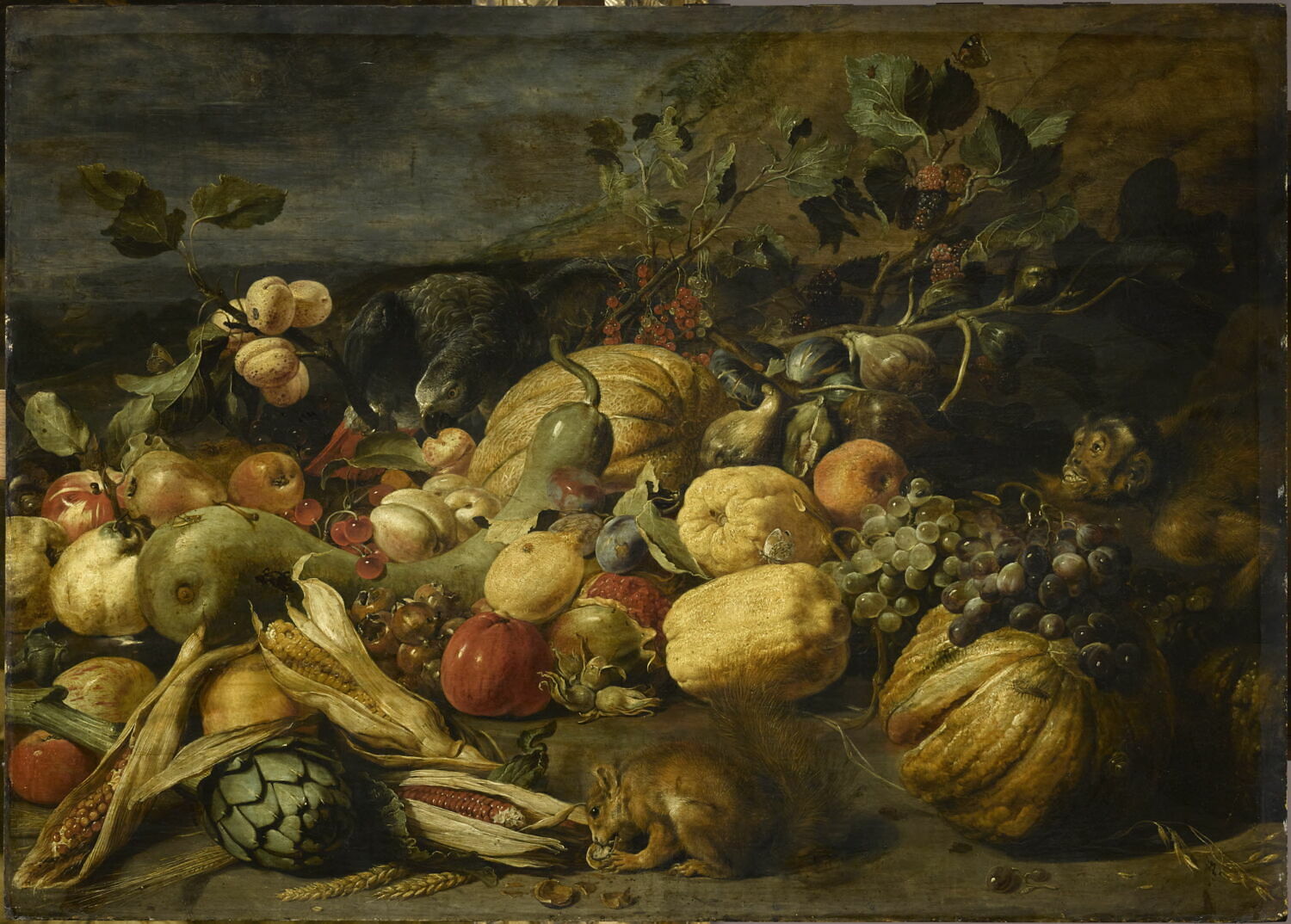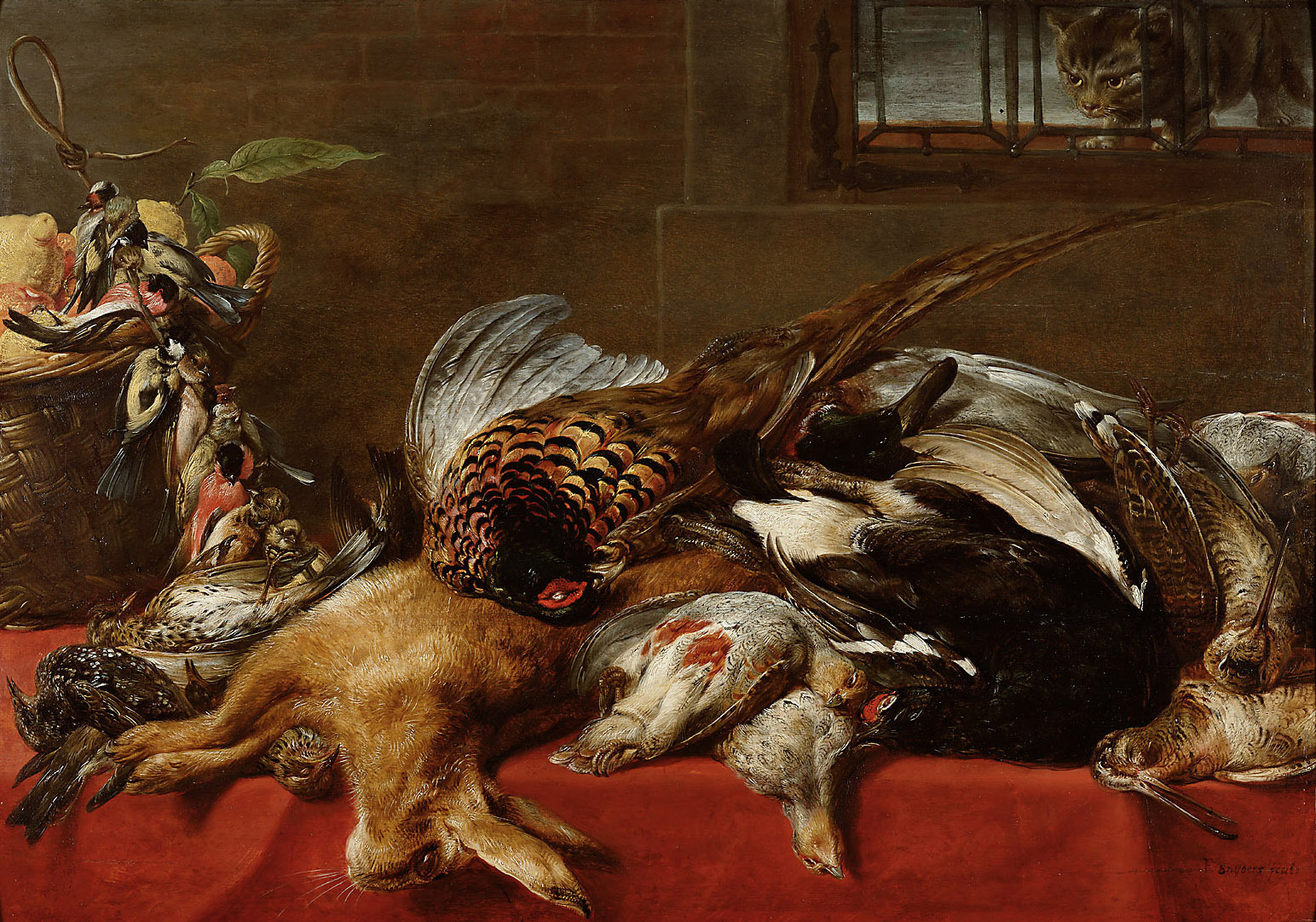
 Snyders, FransFlemish, 1579–1657
JagdStillleben
May one see it?
Unknown

Vienna, Austria
The owner is known; whether it is on view today is not.
- In this state since
- Source
- The museum
About the painting
In the museum's own words — in German
Beschriftung: Signatur: Bez. rechts unten: F. Snyders fecit
Kunsthistorisches Museum
Particulars
In the catalog
Sources
- Kunsthistorisches Museum
- Image: Kunsthistorisches Museum — CC BY-NC-SA 4.0
Meanwhile, in the life of Snyders, Frans
The whole life1609–1657 · Workplace
Antwerp
1610–1640
A close collaboration with Rubens
From the 1610s Snyders works with Rubens, who admires his ability to render the textures of fur and skin and often has him paint animals, fruit and still life in his own pictures; the collaboration is particularly close between 1610 and 1640. At first Rubens himself sketches the whole composition in oils and marks the place for Snyders’s contribution (“The Recognition of Philopoemen”, regarded as the first Baroque still life with figures), while in “Prometheus Bound” it is the reverse: Snyders makes the sketch, leaving space for Rubens’s figure. Contemporaries had difficulty telling their hands apart in joint works, and after Rubens’s death Snyders was one of the appraisers of the inventory of his collection.
1641–1642
A trip to the Dutch Republic
In 1641 and 1642 Snyders travels with other artists to the Dutch Republic.
1646 · Workplace
Breda
1647
Snyders becomes a widower
In 1647 Snyders becomes a widower; he outlives his wife by ten years.