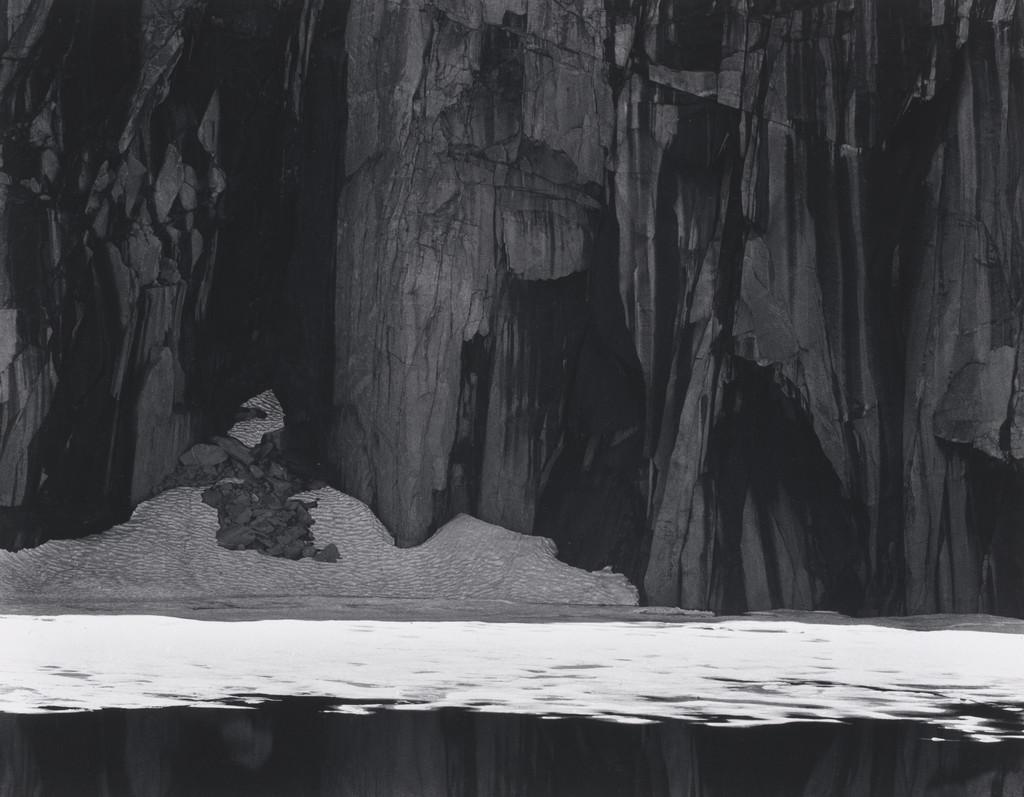
 Ansel AdamsAmerican, 1902–1984
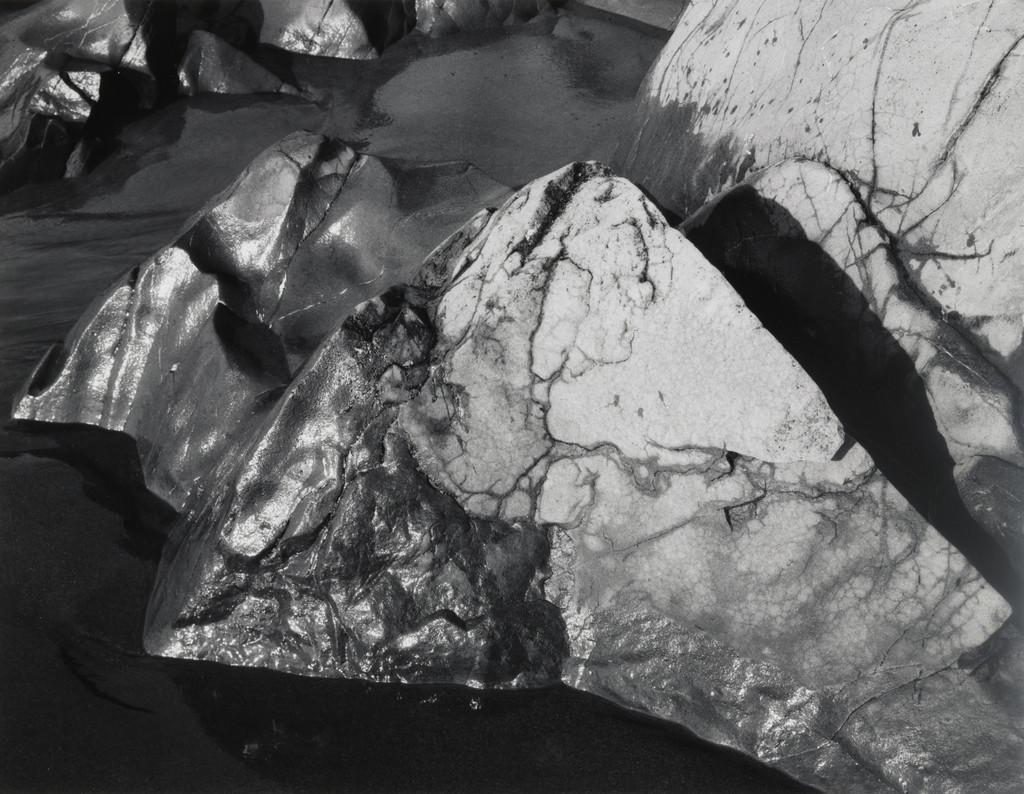
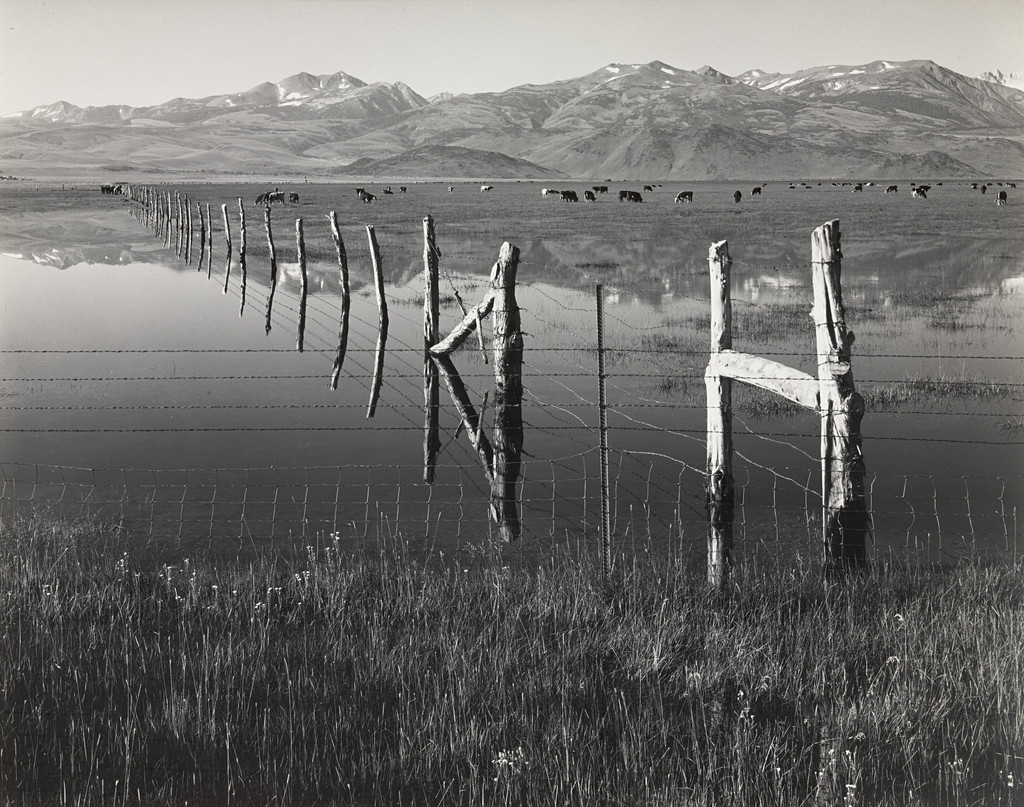
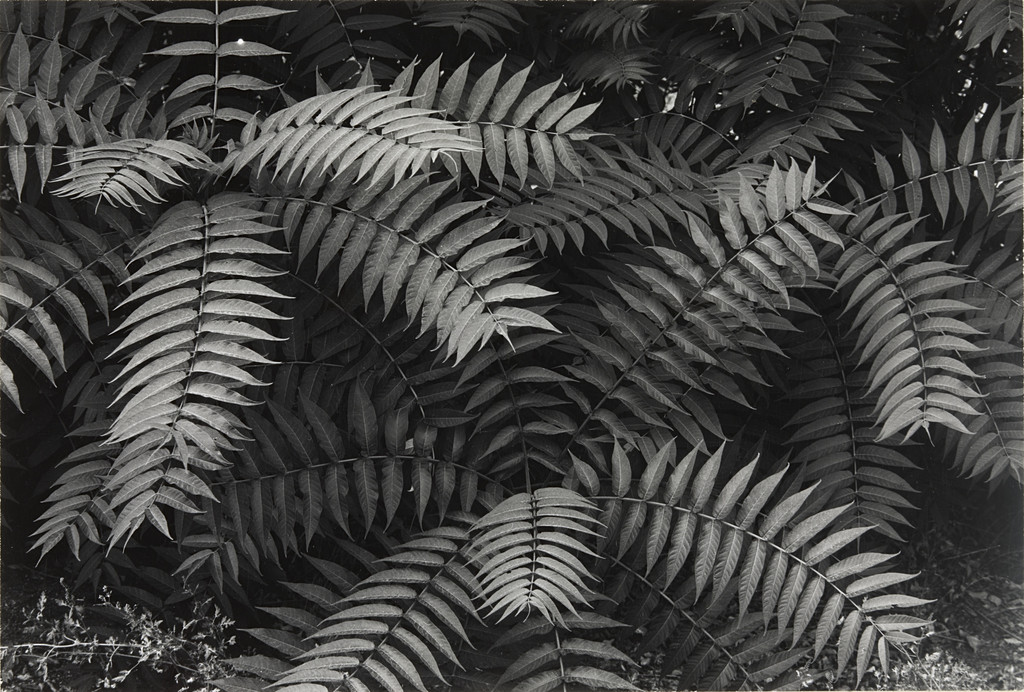
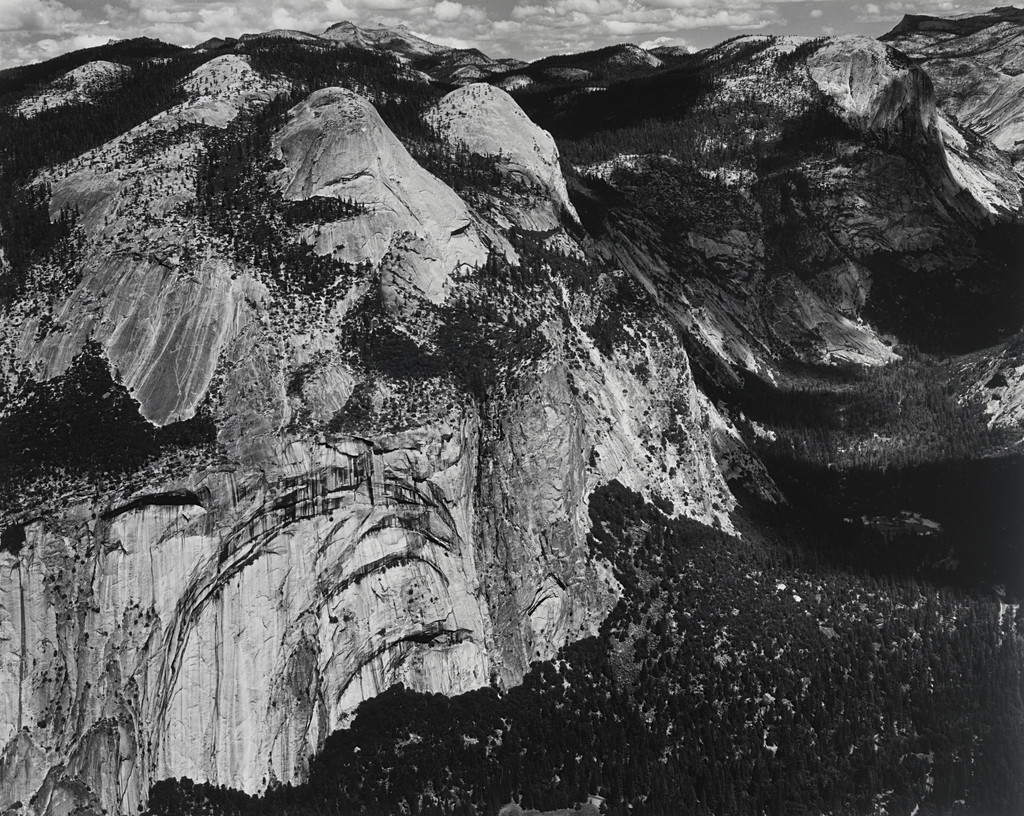
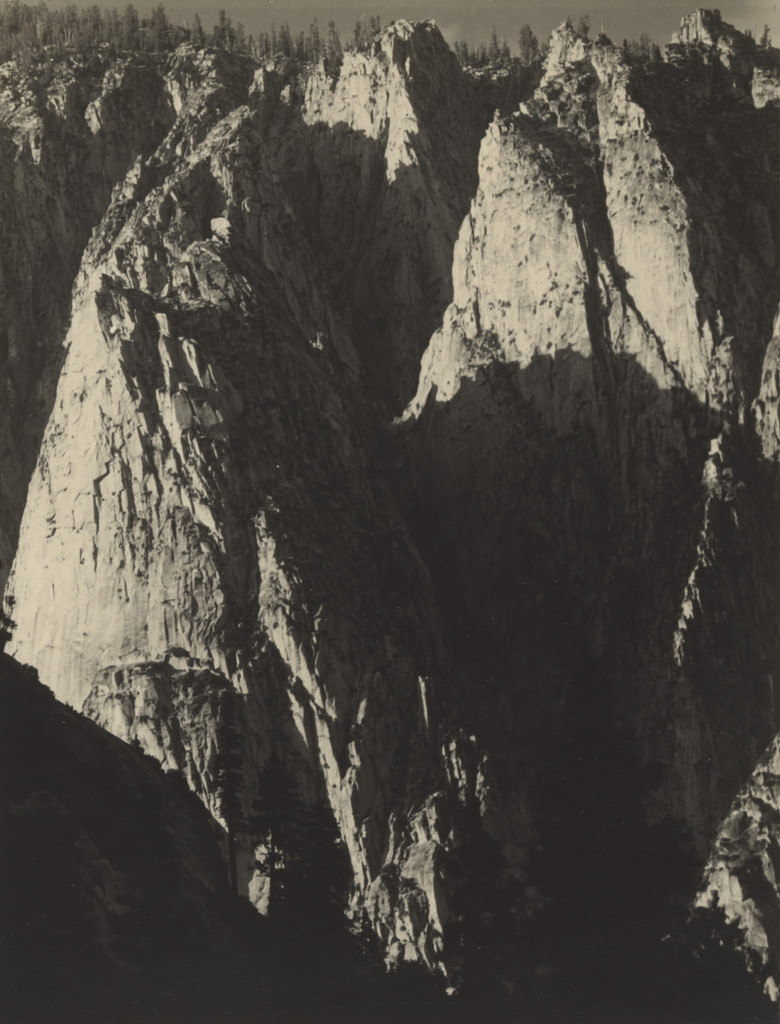
Ice and Cliffs, Kaweah Gap, California
May one see it?
Not receiving at present

The Museum of Modern Art
New York, United States
It belongs to the collection, but is not on display at present.
- Checked
- 11 days ago
- Source
- The museum's own collection data
Particulars
- Accession number
- 33.1966
Sources
- The Museum of Modern Art: the museum's own open data · fetched 11 days ago
- Image: The Museum of Modern Art — © the artist or rights holder
Meanwhile, in the life of Ansel Adams
The whole lifec. 1930
Taos: Strand, O'Keeffe, Marin, Jeffers
Bender takes Adams to Taos, where he befriends the poet Robinson Jeffers, the artists John Marin and Georgia O'Keeffe, and the photographer Paul Strand; his first book, “Taos Pueblo,” with text by Mary Hunter Austin, is published in 1930. Strand proves especially influential: he shares the secrets of his technique, convinces Adams to pursue photography fully, and recommends glossy paper to intensify tonal values.
1931
First solo museum exhibition at the Smithsonian
In 1931 the Smithsonian Institution hosts Adams's first solo museum exhibition, “Pictorial Photographs of the Sierra Nevada Mountains by Ansel Adams” — sixty prints taken in the High Sierra and the Canadian Rockies. The Washington Post writes that his photographs are like portraits of giant peaks inhabited by mythical gods.
1932
Group f/64: the de Young exhibition and manifesto
In 1932 Adams, Imogen Cunningham and Edward Weston show together at the M. H. de Young Museum and soon form Group f/64, which stands for “pure” or “straight” photography against pictorialism. Adams writes the group's manifesto for the exhibition: pure photography, it declares, has no qualities of technique, composition or idea derived from any other art form.
1933
The birth of his son Michael
In 1933 the Adamses' first child, a son, Michael, is born; two years later a daughter, Anne, follows. In the summers Adams still goes on the Sierra Club's High Trips as the group's paid photographer.
1934
Elected to the Sierra Club's board of directors
In 1934 Adams is first elected to the Sierra Club's board of directors, on which he will serve for thirty-seven years; his wife also served as a director.
1934
First defines “visualization” in print
In 1934 Adams first defines in print the concept of “visualization” — picturing each image before taking it — which becomes a core principle of his photography. With it he pursues higher quality, relying on small apertures and long exposures in natural light, as in “Rose and Driftwood” (1933).