Joseph Mallord William TurnerBritish, 1775–1851
Heidelberg
May one see it?
Unknown

London, United Kingdom
The owner is known; whether it is on view today is not.
- In this state since
- Source
- The museum
Particulars
- Accession number
- NG518
In the catalog
Sources
- Wikidata
- Image: The National Gallery — J. M. W. Turner · Public domain · Wikimedia Commons
Meanwhile, in the life of Joseph Mallord William Turner
The whole life1830–1840s
Criticism in the 1830s–1840s and Ruskin’s defence
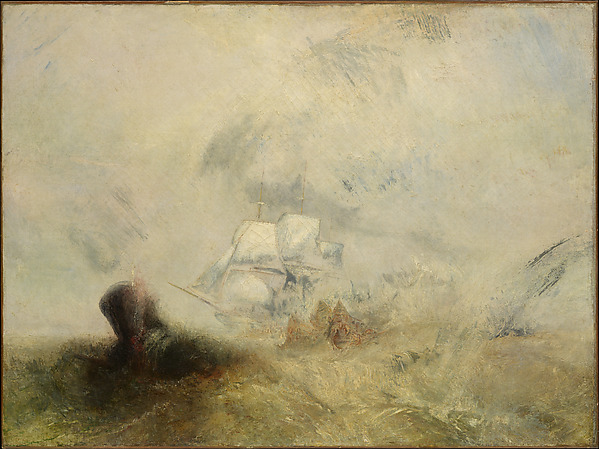
His innovative works, bordering on abstraction, gave him a reputation for madness: the Victorian public preferred realism and sentimentality, and Queen Victoria refused to knight him. John Ruskin came to his defence, calling him “the greatest artist of all time”.
1840–1844
Last journeys: Venice and Switzerland
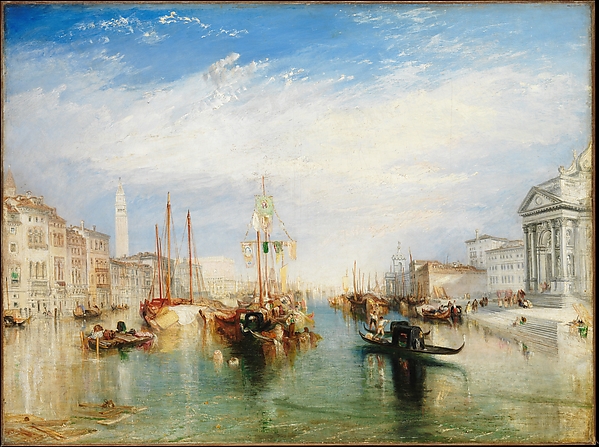
On a second trip to Venice (1840) he also visited Trieste and Coburg, and in 1841 and 1844 he made two final trips to Switzerland, in his sixties.
1842
“Snow Storm: Steam-Boat…”: a scathing review
Of “Snow Storm: Steam-Boat off a Harbour’s Mouth” (1842), considered a masterpiece today, The Athenaeum wrote dismissively that the painter now painted with cream, chocolate, yolk of egg or currant jelly, and that where the steam-boat was and where the harbour began were matters past finding out.
1851
Bequeaths some 300 paintings to the nation
In an unprecedented gesture he bequeathed to the nation about 100 finished and 200 unfinished oil paintings, over 19,000 sketches, drawings and watercolours and some 200 sketchbooks; he specified that a special gallery should be built for them, and his will included a donation of £140,000 in investments and property to help painters.
19 December 1851
Death in Sophia Booth’s house; his last words
He died, reportedly of cholera, in the house of Sophia Caroline Booth on Cheyne Walk in Chelsea; his last words are apparently “The Sun is God”. He is buried in St Paul’s Cathedral next to Sir Joshua Reynolds.
19 December 1851
Died