![[Heerführer; Provost], Hendrik Goltzius, 1587–1594](https://diglib.hab.de/varia/haum/gheyn-j-d-ii-wb3-0102/max/000001.jpg)
 Hendrick GoltziusDutch, 1558–1617
[Heerführer; Provost]
Can I see it?
Unknown
Where is “[Heerführer; Provost]” now? Collection: Herzog Anton Ulrich Museum, Braunschweig. Unknown.

Braunschweig, Germany
The owner is known; whether it is on view today is not.
- In this state since
- Source
- The museum
Details
What it shows
In the catalog
Sources
- Herzog Anton Ulrich Museum
- Image: Herzog Anton Ulrich Museum — CC BY-NC-SA 4.0
In the life of Hendrick Goltzius
The whole lifelate 1580s
Depression and consumption
From the late 1580s he suffered from depression and consumption; his family life was unhappy.
1587
Founding of the Haarlem Academy
Together with Cornelis van Haarlem and Karel van Mander he founded an academy of art in Haarlem, later known as the Haarlem Mannerist Academy (some sources give 1583 or 1600). There, for the first time in the Netherlands, systematic study of anatomy and drawing from the nude model were introduced.
1590
Departure for Italy
He fled from his wife and, despite his illnesses, set out for Italy — via Hamburg and Munich to Venice, Bologna and Florence. Part of the way he traveled on foot, passing himself off as a commoner, "partly out of a love of mystification."
January 1591
Eight months in Rome
He arrived in Rome in January 1591 and stayed eight months (with a brief sojourn in Naples). He discovered Raphael, was especially impressed by Michelangelo and Giambologna, and studied art from classical sculpture to the masters of the Renaissance.
August 1591
Return to Haarlem with a collection of drawings
He returned to Haarlem, bringing from Italy a large collection of drawings that he used for the rest of his life; from the Roman material three engravings of classical statues are known, including the Farnese Hercules.
mid-1590s
Turn toward classicism
In the mid-1590s his art underwent a gradual stylistic turn toward classicism; at the same time he began executing large finished pen drawings on parchment in a calligraphic technique imitating the methods of burin engraving.


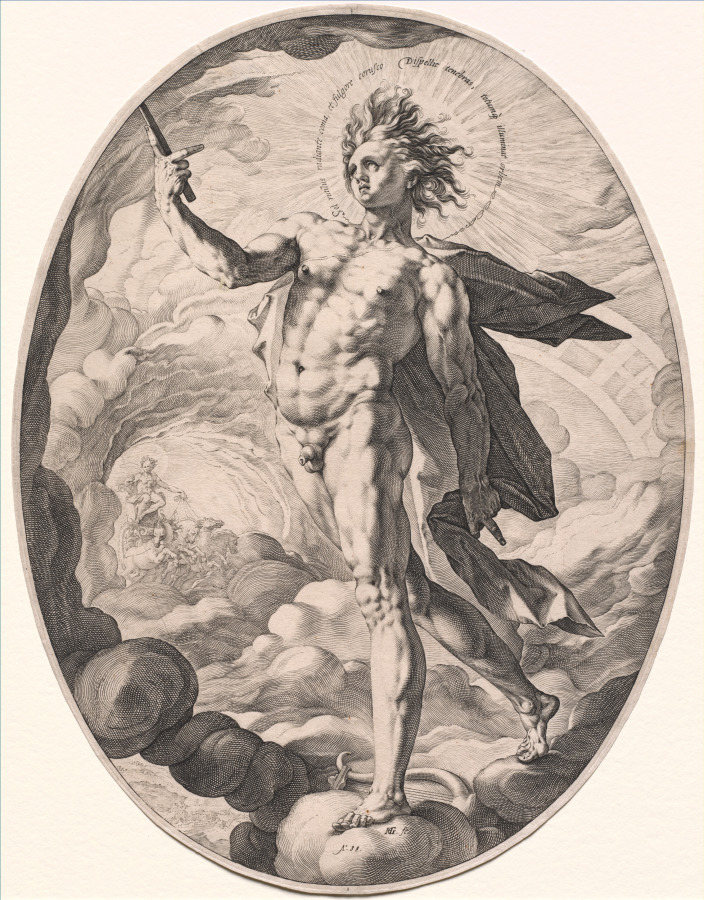
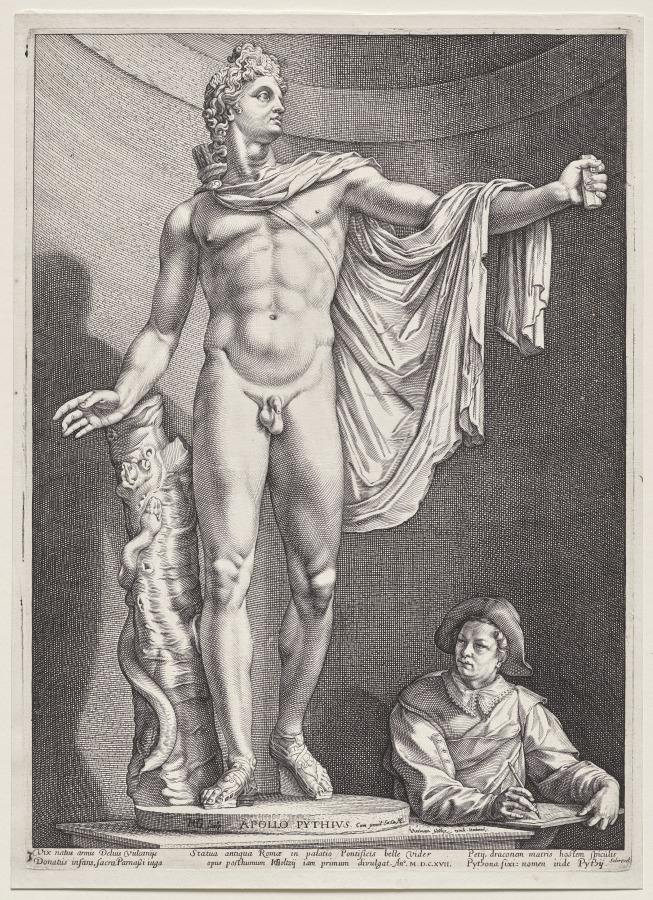


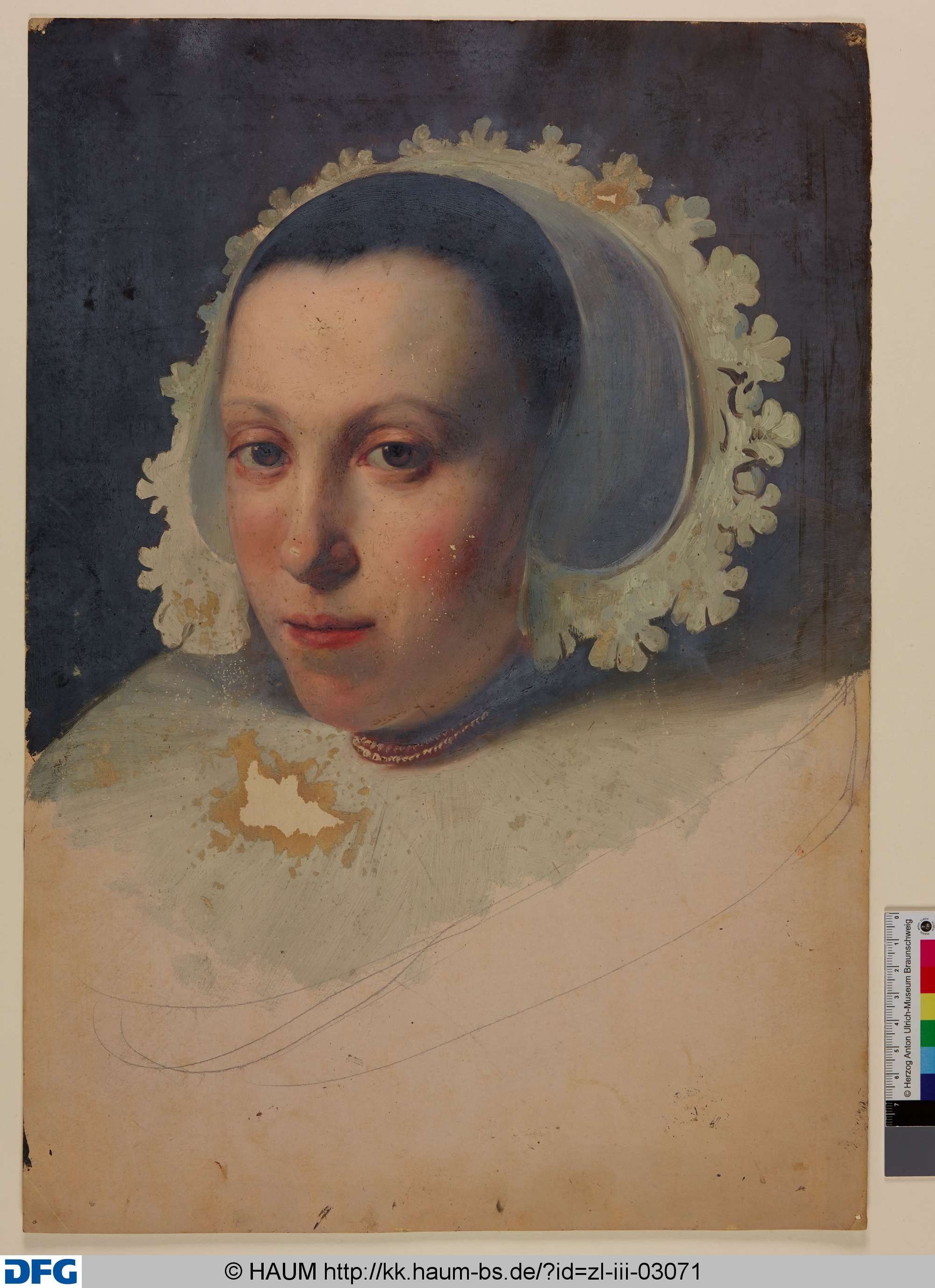


![[Der Persier; The Persian; Le Persan], Rembrandt, 1632](https://diglib.hab.de/varia/haum/rembrandt-ab3-0187/max/000001.jpg)
![[Two warriors, one seated on a low foreground rock and holding a war hammer; the other figure seated on the ground behind him, holding a mace across his right shoulder and looking up at the foreground figure; Zwei Krieger, einer auf einem niedrigen Fels im Vordergrund sitzend und einen Kriegshammer haltend; die andere, auf dem Boden sitzende Figur hält eine Keule über seine rechte Schulter und schaut hinauf zur Vordergrundfigur], Salvator Rosa, 1656–1657](https://diglib.hab.de/varia/haum/rosa-s-ab3-0025/max/000001.jpg)
![[Two warriors, one seated on a foreground rock; the other standing behind him and pointing; Zwei Krieger, einer auf einem Fels im Vordergrund sitzend; der andere, hinter ihm stehend, deutet auf etwas] [Two soldiers, one seated with sword and shield; Zwei Krieger, einer sitzend mit Schwert und Schild], Salvator Rosa, 1656–1657](https://diglib.hab.de/varia/haum/rosa-s-ab3-0023/max/000001.jpg)
![[Two warriors, one holding a shield with a Medusa face and gesturing; the other behind him holding a spear; Zwei Krieger, einer hält ein Schild mit dem Gesicht der Medusa und gestikuliert; der andere hinter ihm hält ein Speer], Salvator Rosa, 1656–1657](https://diglib.hab.de/varia/haum/rosa-s-ab3-0040/max/000001.jpg)
![[A standing warrior holding a staff over his shoulder and gesturing with an outstretched arm; Ein stehender Krieger, der einen Stab über seiner Schulter trägt und mit dem ausgestreckten Arm gestikuliert], Salvator Rosa, 1656–1657](https://diglib.hab.de/varia/haum/rosa-s-ab3-0009/max/000001.jpg)


