ART WIKI32,963 on view
MapCollectionArtistsMuseumsExhibitionsJournal
Sign in

ART WIKI

Where the masterpiece hangs, and when they let you in.

Collections: Art Institute of Chicago, Getty Villa, Harvard Art Museums, Hirshhorn Museum and Sculpture Garden, J. Paul Getty Museum, Minneapolis Institute of Art, Musée du Louvre, National Gallery of Art, National Museum of Asian Art, National Portrait Gallery (Smithsonian), Pushkin State Museum of Fine Arts, Rijksmuseum, Smithsonian American Art Museum, SMK — National Gallery of Denmark, State Hermitage Museum, State Russian Museum, The Cleveland Museum of Art, The Metropolitan Museum of Art, The Museum of Modern Art, Tretyakov Gallery, Victoria and Albert Museum, Whitney Museum of American Art, State Catalogue of the Museum Fund of Russia (274 museums), Europeana (19 museums), Wikidata (6 museums), Paris Musées (12 museums), and Joconde, the French Ministry of Culture's museum database (495 museums). Images belong to their rights holders.

Sections

  • Map
  • Search
  • Collection
  • Masterpieces
  • On view now
  • Artists

More

  • Museums & galleries
  • Exhibitions
  • Journal
  • Where the data comes from
  • Privacy & cookies
HomeMapBrowse
  1. Collection/
  2. The Cleveland Museum of Art/
  3. Head of a Sphinx
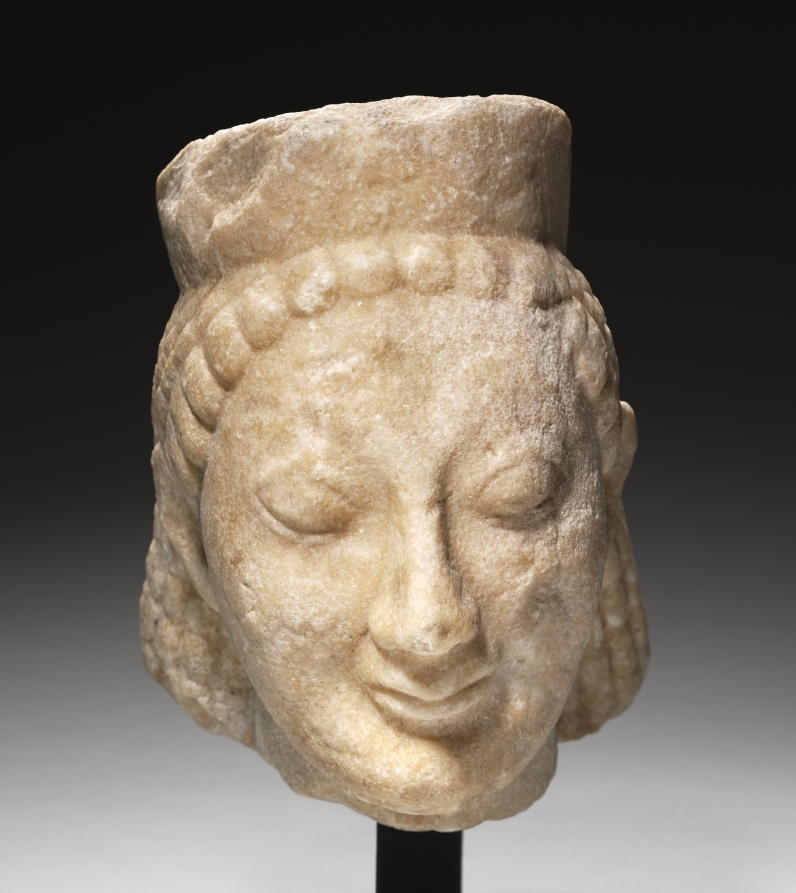
Head of a Sphinx, 540–520 BCE

Head of a Sphinx

540–520 BCE · Sculpture

May one see it?

Yes, receiving visitors

The Cleveland Museum of Art

Cleveland, United States

Room102B Greek

On public display.

Checked
3 days ago
In this state since
Aug 19, 2026
Source
The museum
On the mapMuseum page

About the sculpture

This female head once belonged to a sphinx, a mythological hybrid creature with the head of a woman and body of a winged lion. Her short cylindrical crown, known as a polos, helps to identify her as a sphinx, as does the slope of her hair and neck, which once continued onto a feline body. Also common in ancient Egyptian and Near Eastern art (though more often in male form), the sphinx is best known in Greek mythology for devouring passersby who could not answer her riddle outside the Boiotian city of Thebes. Stone sphinxes like this one served as both votive offerings and grave monuments in Archaic Greece.

The Cleveland Museum of Art

Particulars

Accession number
1928.858

In the same room · 102B Greek, The Cleveland Museum of Art

Museum page

In the catalog

SculptureMarbleGreece, Archaic period

Sources

  • The Cleveland Museum of Art
  • Image: The Cleveland Museum of Art — Museum open access
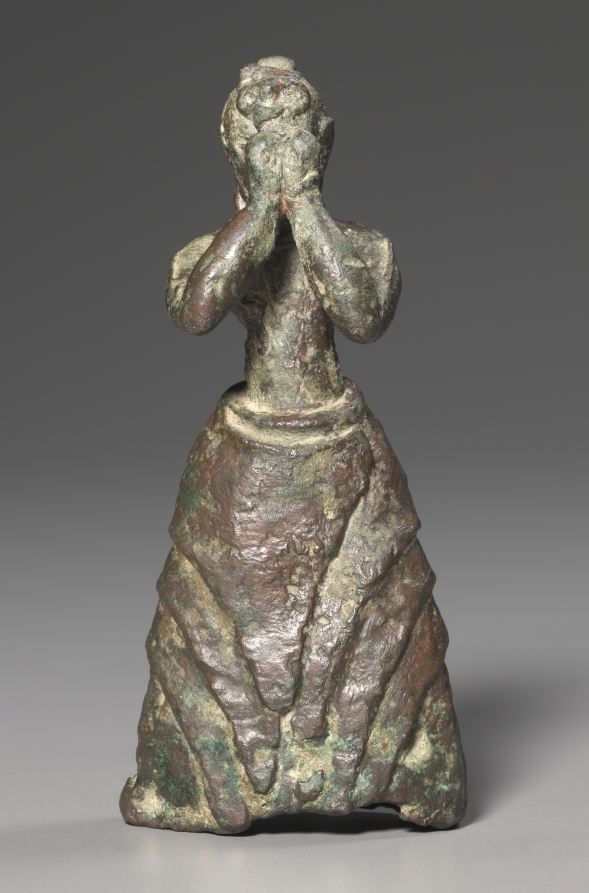
Female Worshiper, c. 1600–1500 BCE

Female Worshiper, c. 1600–1500 BCE

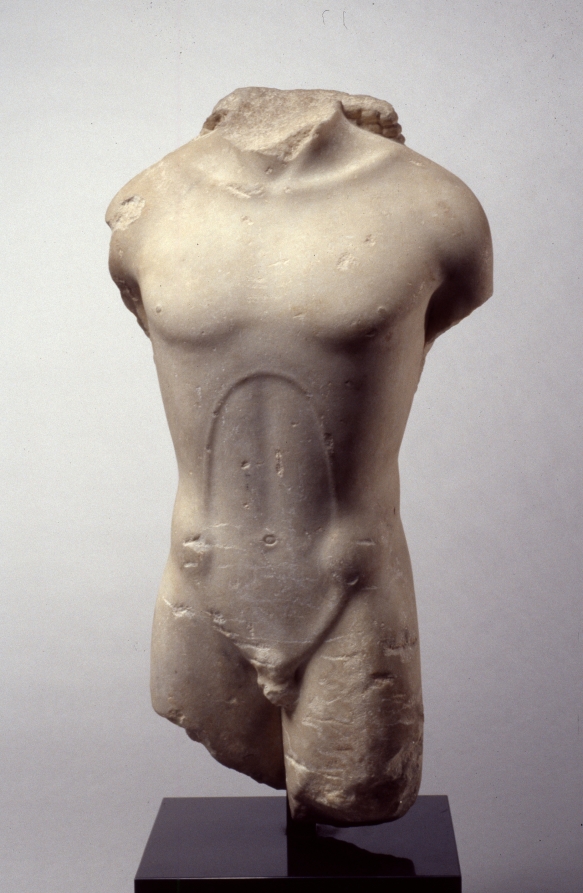
Torso of a Kouros, c. 550 BCE

Torso of a Kouros, c. 550 BCE

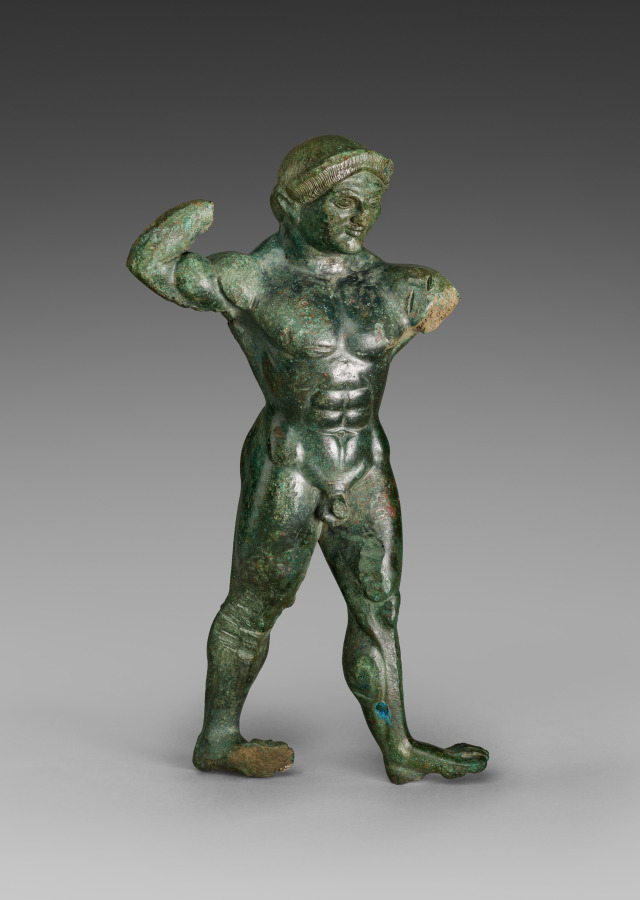
Statuette of Herakles, 510–500 BCE

Statuette of Herakles, 510–500 BCE

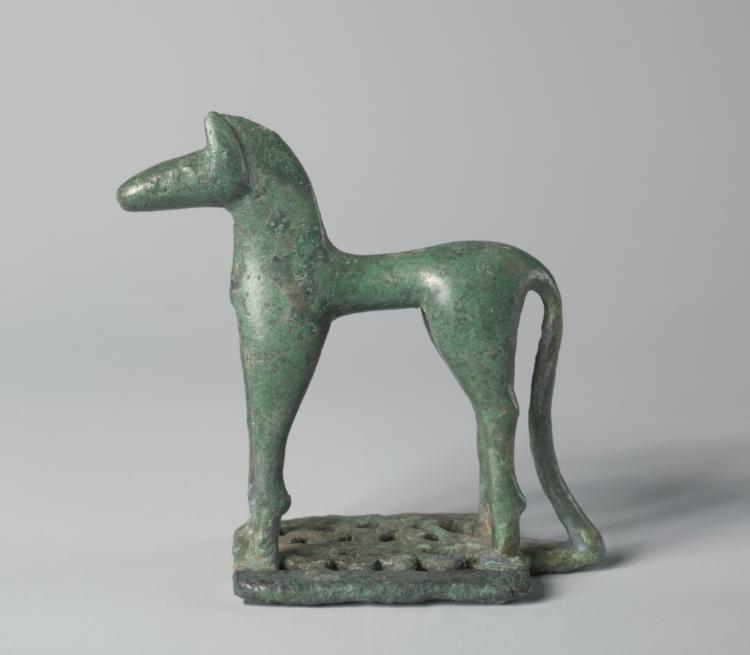
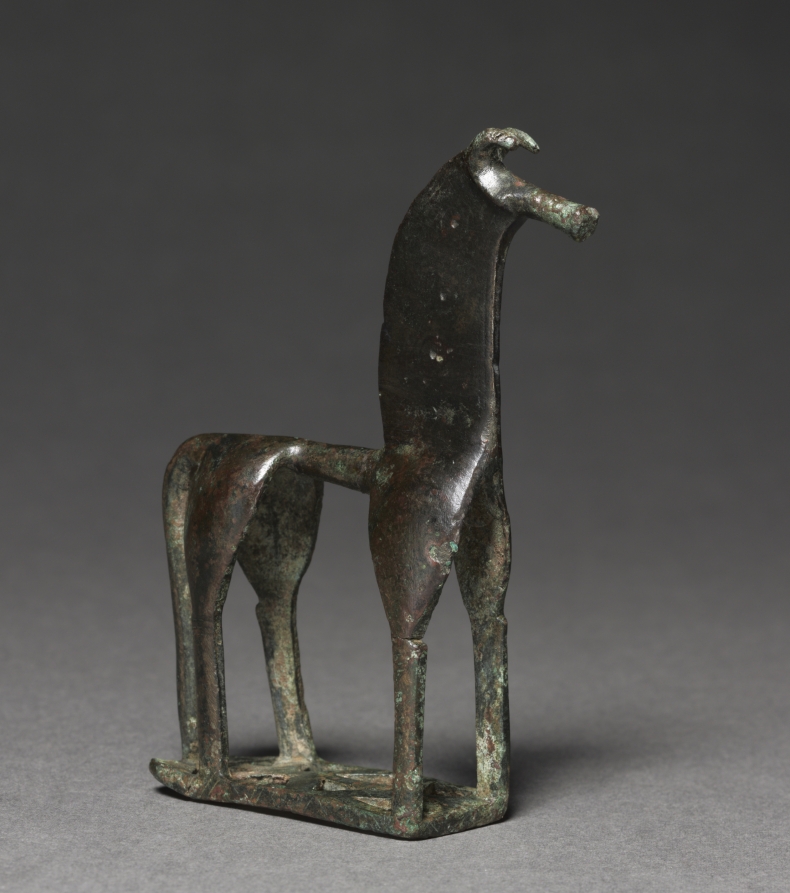
Statuette of a Horse, 750–725 BCE

Statuette of a Horse, 750–725 BCE

Kriophoros (Ram-Bearer), Statuette, 650–600 BCE

Kriophoros (Ram-Bearer), Statuette, 650–600 BCE

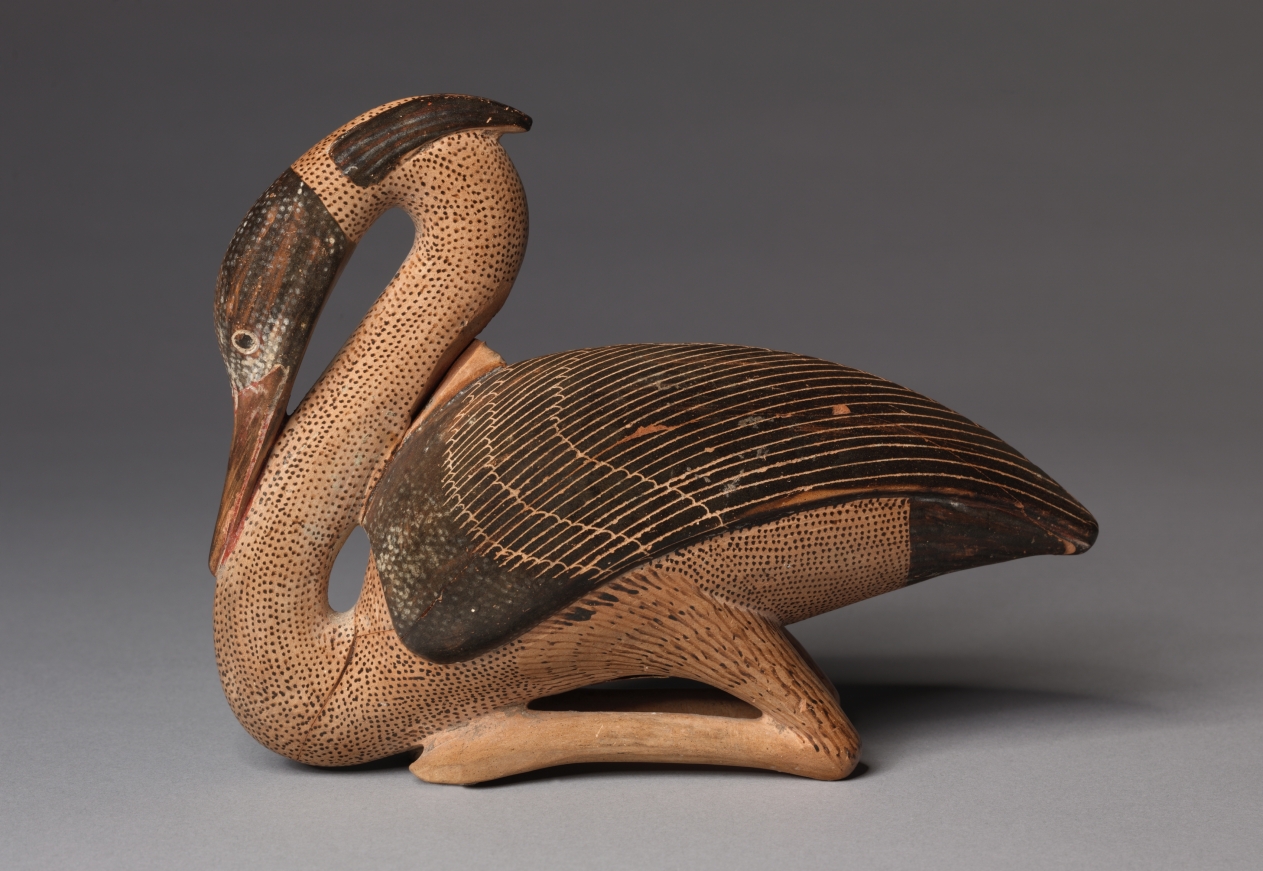
Heron-Shaped Figure Vase (Oil Vessel), Robertson's Group, c. 580 BCE

Robertson's Group

Heron-Shaped Figure Vase (Oil Vessel), c. 580 BCE

Statuette of a Horse, 750–700 BCE

Statuette of a Horse, 750–700 BCE