 Auguste RodinFrench, 1840–1917
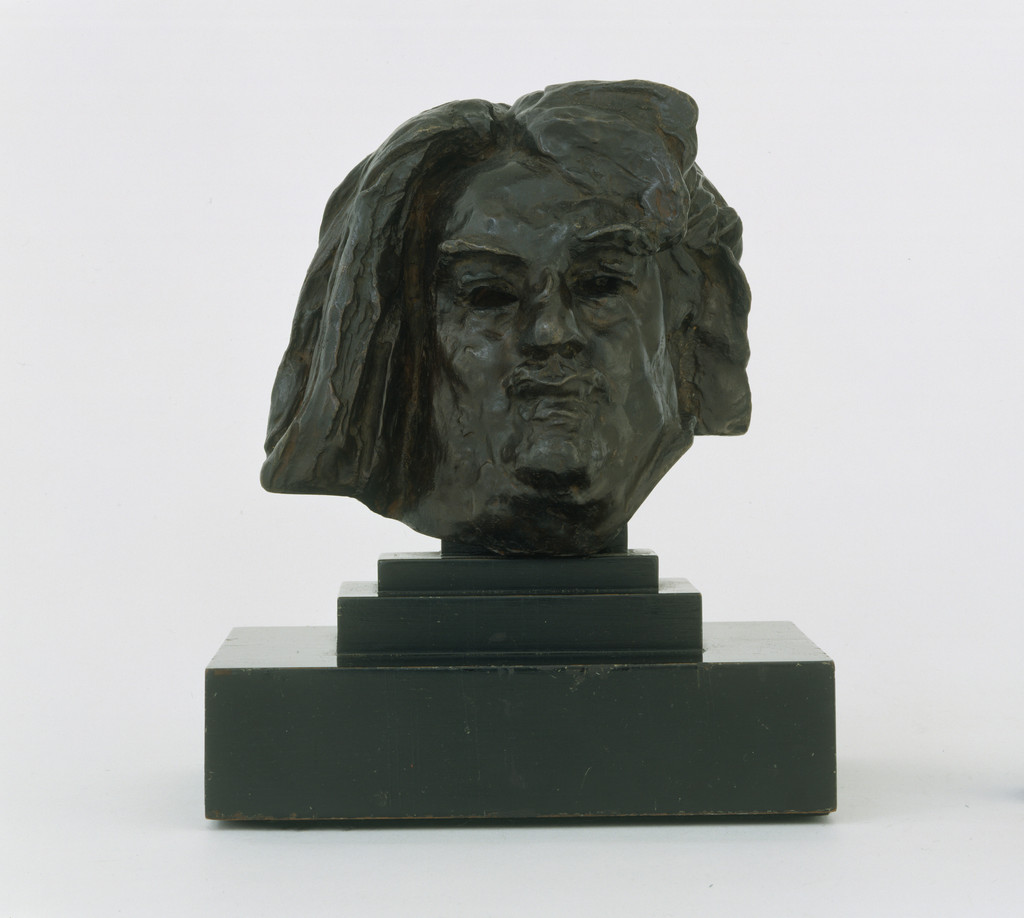
Head
May one see it?
Not receiving at present

The Museum of Modern Art
New York, United States
It belongs to the collection, but is not on display at present.
- Checked
- 12 days ago
- Source
- The museum's own collection data
Particulars
- Accession number
- 437.1975
Sources
- The Museum of Modern Art: the museum's own open data · fetched 12 days ago
- Image: The Museum of Modern Art — © the artist or rights holder
Meanwhile, in the life of Auguste Rodin
The whole life1890s–1900s
Young sculptors in Rodin's studio
His income let him hire gifted young sculptors, among them Antoine Bourdelle, Charles Despiau, Jules Desbois, François Pompon and Aristide Maillol. Constantin Brancusi left after two months, convinced that nothing grows under a big tree.
1895
Buys the Villa des Brillants at Meudon
Rodin bought the Villa des Brillants estate near Paris and moved his studio there, but there was not enough room and two years later it went back to Paris. His income let him collect: Egyptian, Greek and Roman sculpture, Persian miniatures and paintings by his contemporaries, including Van Gogh's “Portrait of Père Tanguy”.
1895
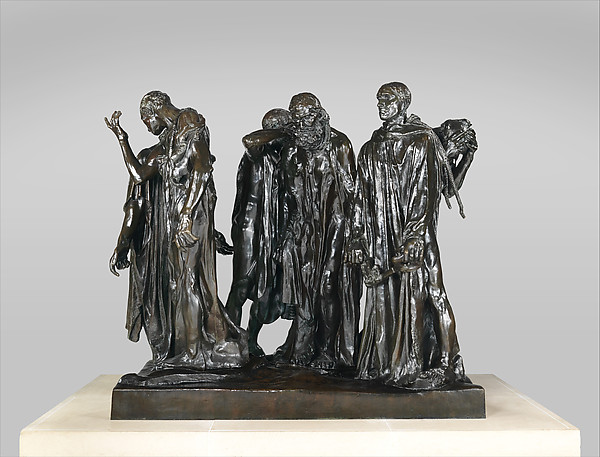
“The Burghers of Calais” installed in Calais
Against Rodin's wishes — he had hoped to place the group at ground level near the town hall — Calais chose a high platform in front of a public garden, with a cast-iron railing. Rodin had proposed doing without a pedestal so that viewers could “penetrate to the heart of the subject”.
1897
An album of Rodin's drawings
The industrialist and collector Maurice Fenaille published an album of 147 reproductions of Rodin's drawings in an edition of 125 copies. It sold out at once.
1898
Parts from Camille Claudel
Rodin never gave up Rose Beuret, his companion of the lean years and the mother of his son; in 1898 he and Claudel parted. A few years later Claudel suffered what is called a nervous breakdown, and her family confined her to an institution for thirty years.
1898
The scandal over “Balzac”
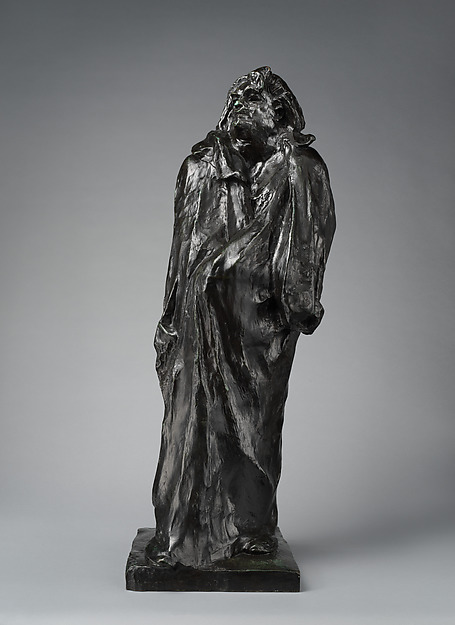
The monument's showing in 1898 caused a storm: the Société des Gens de Lettres rejected it, the press ran parodies, and Monet, Debussy and the future premier Clemenceau signed a manifesto in Rodin's defence. Rodin repaid the commission and moved the statue to his garden; he never completed another public commission.