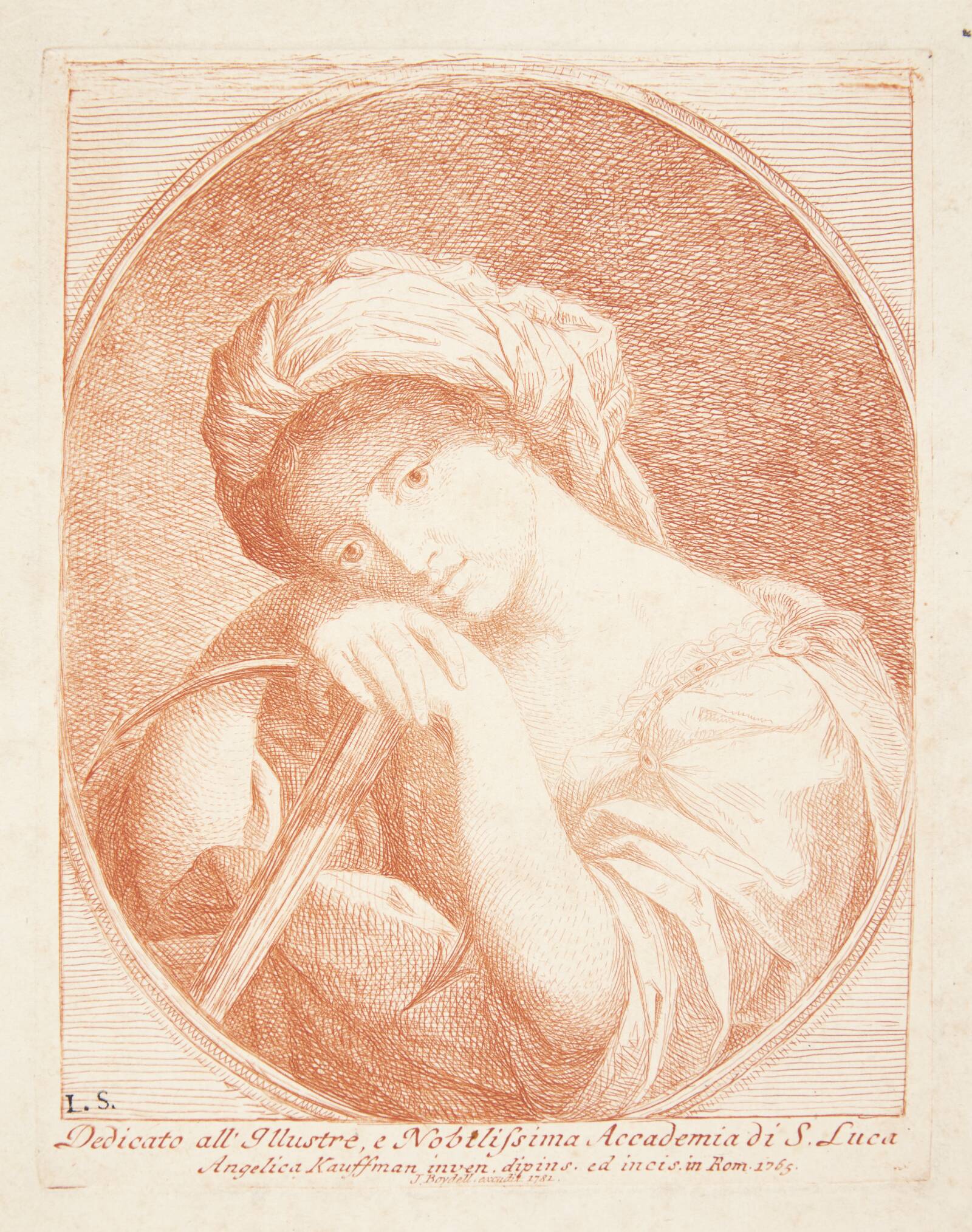
 Angelica KauffmannSwiss, 1741–1807
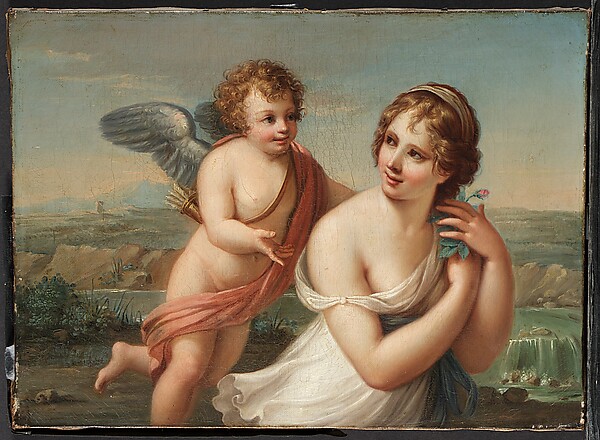
Håbet
Can I see it?
Not on view at present
Where is “Håbet” now? Collection: SMK — National Gallery of Denmark, Copenhagen. Not on view at present. Checked September 29, 2026.

Copenhagen, Denmark
It belongs to the collection, but is not on display at present.
- Checked
- In this state since
- Source
- The museum
Details
- Accession number
- KKSgb28842
In the catalog
Sources
- SMK
- Image: SMK — National Gallery of Denmark — public domain
In the life of Angelica Kauffmann
The whole lifeJanuary 1763
Meets the English community in Rome
Moving to Rome in January 1763, Kauffman was introduced to the British community there; as she learned more English and continued with portraiture, she became a popular portraitist for British visitors to Rome.
1764
Her portrait of Winckelmann
In Rome Kauffman painted a half-length portrait of the art historian Johann Joachim Winckelmann and also made an etching of it; in August 1764 Winckelmann wrote to a friend about her popularity: she spoke Italian and German, handled French and English with ease, could be called beautiful, and in singing could vie with the best virtuosi.
1765
A journey with Lady Wentworth: Bologna, Venice, Paris
Accompanied by Lady Wentworth, the wife of the British ambassador, Kauffman travelled for the first time without her father, to Bologna, Venice and Paris, where she studied the works of Rubens.
1766
Friendship with Joshua Reynolds
Reynolds became Kauffman’s firmest friend: in his pocketbooks she often appears as “Miss Angelica” or “Miss Angel”; in 1766 he painted her portrait, and she answered with her portrait of Reynolds.
June 1766
Arrives in London
In June 1766 Kauffman arrived in London, having been persuaded by Lady Wentworth to go with her. Lady Wentworth’s rank opened society to her, and the royal family showed her particular favour.
1767
Marries the impostor “Count de Horn”
In 1767 Kauffman married an impostor calling himself Count Frederick de Horn; the marriage ended in scandal: by one account it was declared void within a few months, by another the couple separated the following year.