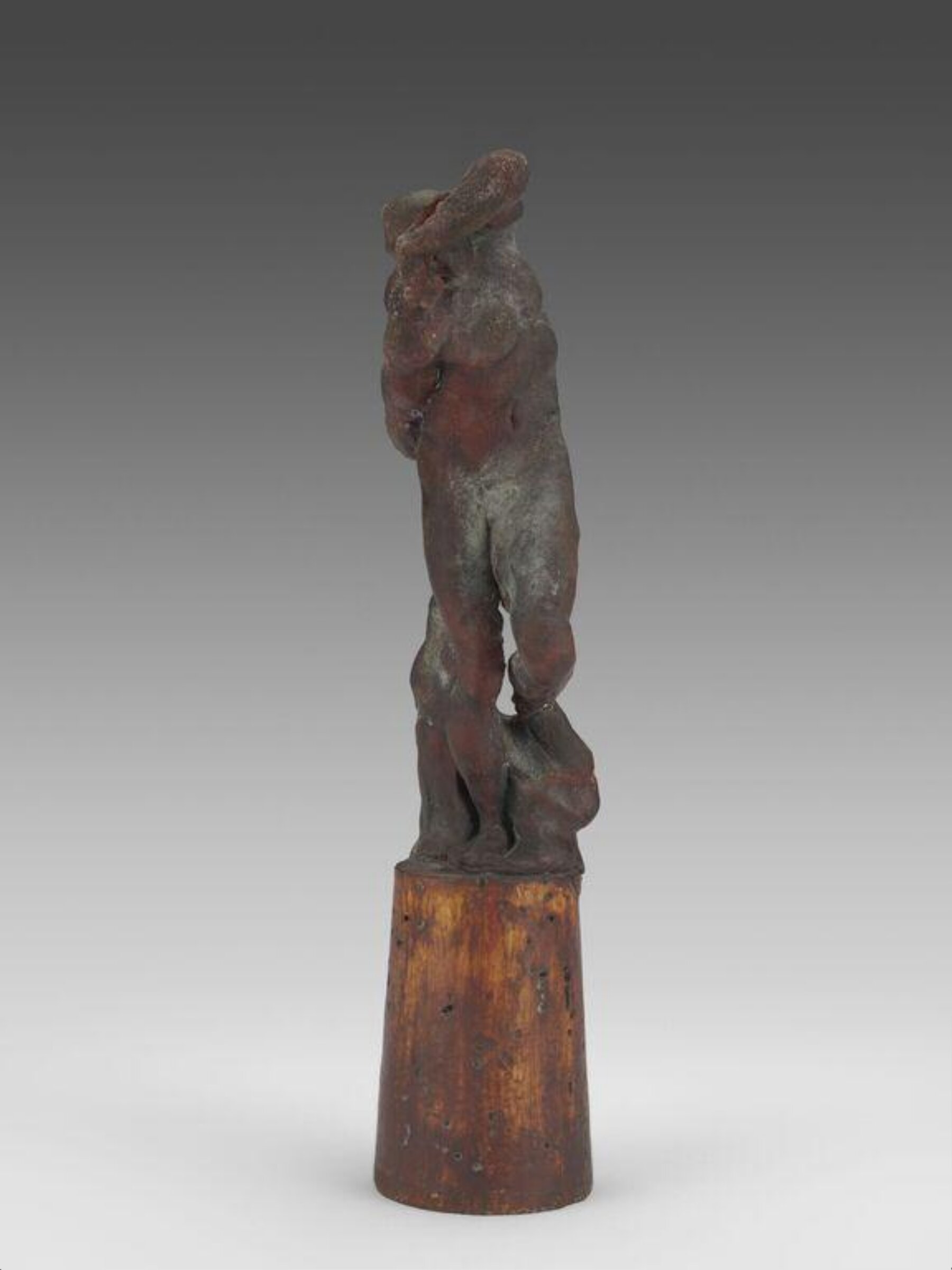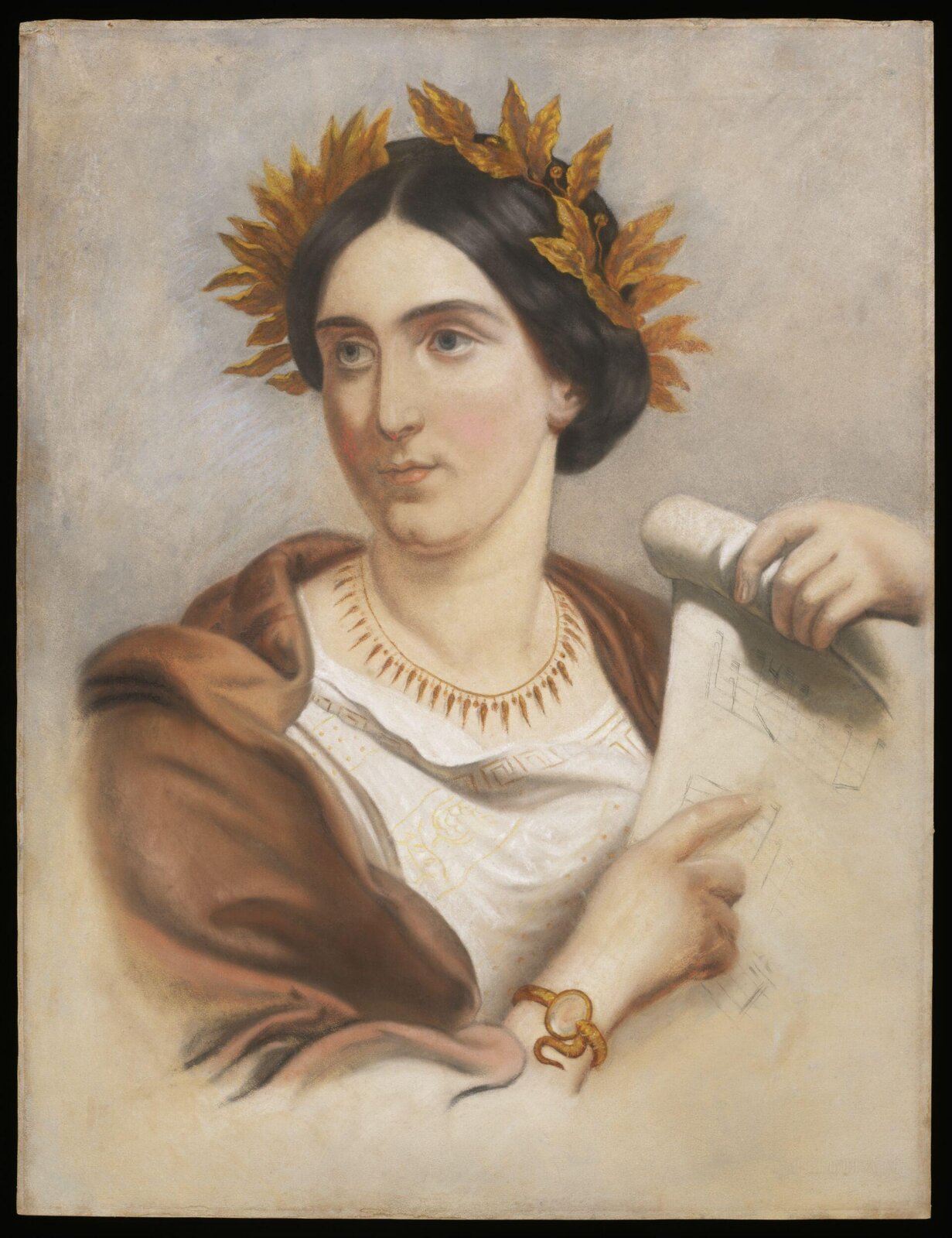
Giuditta Pasta as Norma
May one see it?
Unknown

Victoria and Albert Museum
London, United Kingdom
The owner is known; whether it is on view today is not.
- In this state since
- Source
- The museum
About the work
The Italian soprano Giuditta Pasta was born in Saronno in 1797 and studied with Giuseppe Scappa in Milan, where she made her debut in his opera Le Tre Eleonore in 1815. In Paris the following year she appeared as Clorina in Paer's Il Principe di Taranto, 1816, and in London in 1817 at the King's Theatre in the title role of Cimarosa's Penelope. After another year's study with Scappa she was more successful in Venice in 1819 in Pacini's Adelaide Comingo, but her first triumph was in Paris in 1821 as Desdemona in Rossini's Otello, a role she repeated in London in 1824, and followed with Semiramis in Semiramide, with the composer Rossinconducting both works. She performed regularly in London, Paris and St.
Read on
Petersbourg between 1824 and 1837 and became particularly associated with the roles of Amina in Bellini's La Sonnambula which she created in Milan in 1831, the title roles of Donizetti's Anna Bolena, Milan, 1830, and Norma, Milan 1831, all of which were written for her. She is said to have introduced dramatic realism to the opera stage, and her fame was as much a result of the intensity of her acting as of the brilliance of her voice, which became increasingly uneven towards the end of her career. She died in Blevio, Lake Como, in 1865.
The role of the scorned Druid Priestess Norma is notoriously difficult to sing, and demands intensely dramatic acting. Bellini and his librettist Felice Romani based their opera Norma, ossia L’Infanticidio on the play of the same name, Norma, or The Infanticide by Alexandre Soumet which was being performed in Paris at around that time, and which Pasta would have seen. Bellini wrote to Pasta on 1 September 1831: 'I hope that you will find this subject to your liking. Romani believes it to be very effective, and precisely because of the all-inclusive character for you, which is that of Norma.
He will manipulate the situations so that they will not resemble other subjects at all, and he will retouch, even change, the characters to produce more effect, if need be.' Writing of her performance in 1856, Paul Scudo said: 'Beautiful, intelligent, and passionate, Pasta made up for the imperfections of her vocal organ by means of incessant work, and a noble, tender, knowing style. An actress of the first rank, [she] submitted each breath to the control of an impeccable taste, and never left a single note to chance.
Stendhal, a passionate admirer and friend of Pasta admitted that she had a voice made up of three distinct ranges: 'not all moulded from the same metal, as they say in Italy; but the fundamental variety of tone produced by a single voice affords one of the richest veins of musical expression which the artistry of a great soprano is able to exploit.' Sergio Segalini concludes his analysis of Pasta as a singer: ‘her limitations were obvious; but by dint of sheer effort, Giuditta Pasta forged all extremely accomplished technique that allowed her to become the ideal interpreter for Bellini and Donizetti. She was never able to erase her vocal asperities, nor give to her voice the exquisite beauty of a Maria Malibran. But thanks to those very asperities, she learned how to bring an infinite variety of vocal colours to her interpretations.'
Victoria and Albert Museum
Particulars
- Accession number
- S.1692-2014
What it shows
In the catalog
Sources
- Victoria and Albert Museum
- Image: Victoria and Albert Museum — © Victoria and Albert Museum, London