 Paul GauguinFrench, 1848–1903
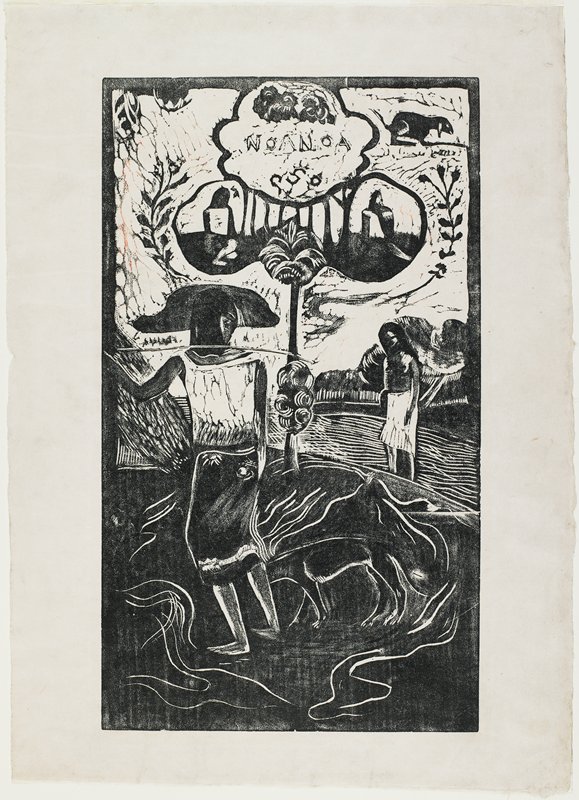
Fragrant Scent
May one see it?
Not receiving at present

Minneapolis, United States
It belongs to the collection, but is not on display at present.
- Checked
- In this state since
- Source
- The museum
About the work
In 1893 Paul Gauguin returned to Paris from his first trip to Tahiti and exhibited his new paintings to a bewildered public. After the critics panned his show, Gauguin wrote Noa-Noa to explain his Tahitian works. The woodblock prints he included in the book were meant to be translations, rather than reproductions, of paintings, sculptures, and drawings he had created in Tahiti.
Minneapolis Institute of Art
Particulars
- Accession number
- P.93.21.11
In the catalog
Sources
- Minneapolis Institute of Art
- Image: Minneapolis Institute of Art — public domain
Meanwhile, in the life of Paul Gauguin
The whole life1870s–1891 · Workplace
Paris
1886–1891 · Workplace
Pont-Aven
February 1891
Successful Auction at the Hôtel Drouot
A successful auction of paintings at the Hôtel Drouot in Paris in February 1891, aided by a glowing review from Octave Mirbeau, together with a banquet and a benefit concert, provided the funds for the journey to Tahiti.
1 April 1891
Departure for Tahiti
On 1 April 1891, after a final visit to his wife and children in Copenhagen, Gauguin sailed for Tahiti, intending to escape European civilization and "everything that is artificial and conventional." He spent his first three months in Papeete, then set up a studio in a bamboo hut at Mataiea.
1891–1901 · Workplace
Tahiti
28 June 1895
Final Departure for Oceania
On 28 June 1895 Gauguin sailed once more for Tahiti — Eugène Carrière arranged cheap passage for him — arriving in September; he never saw Europe again. He spent the next six years mostly near Papeete, building a spacious house at Punaauia.



![Pair of Wooden Shoes (Sabots) [left], Paul Gauguin, 1889/1890](https://api.nga.gov/iiif/44a731a9-e900-4898-a282-01034fcaa6ca/full/!2400,2400/0/default.jpg)