Nicolas PoussinFrench, 1594–1665
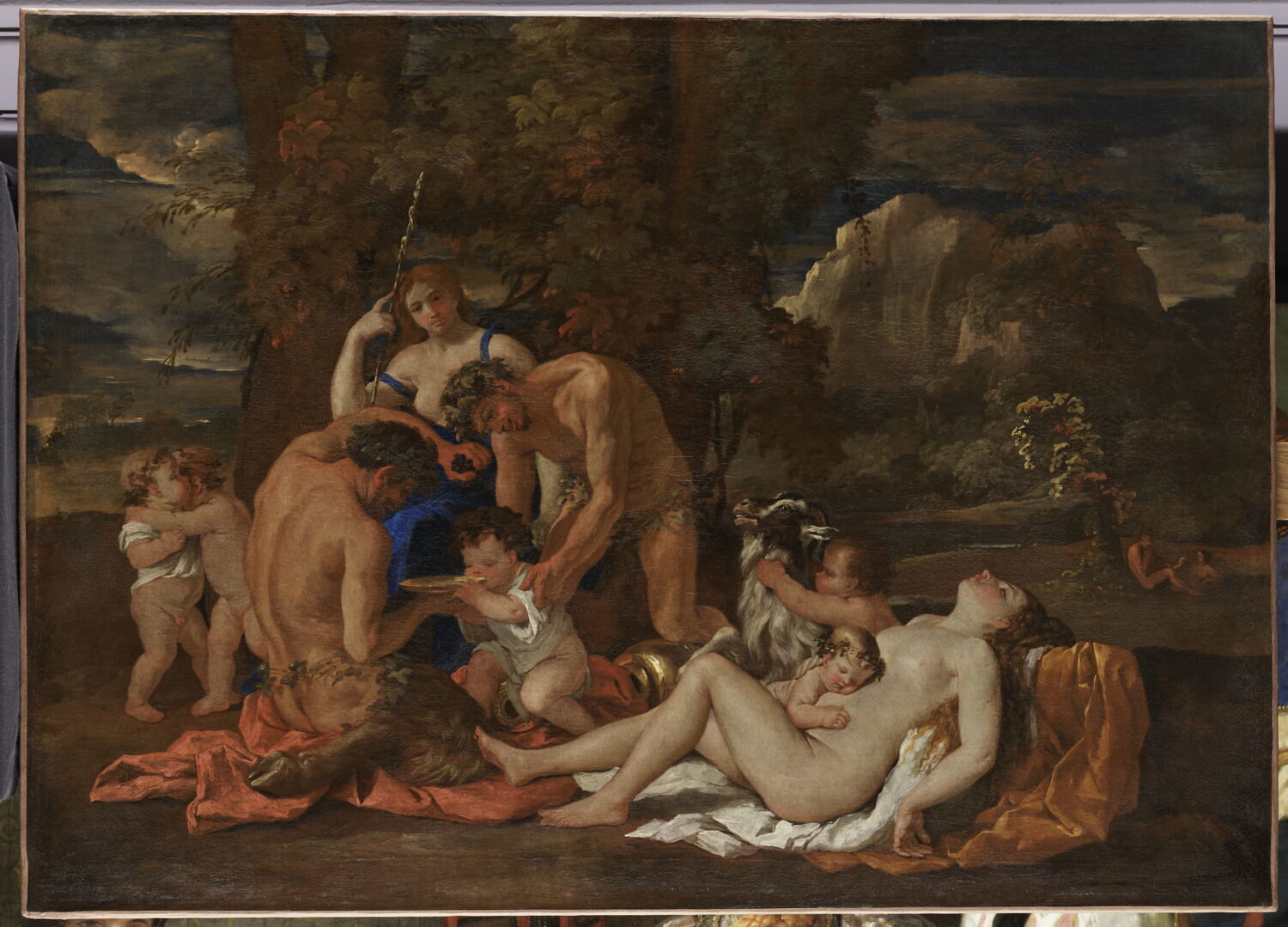
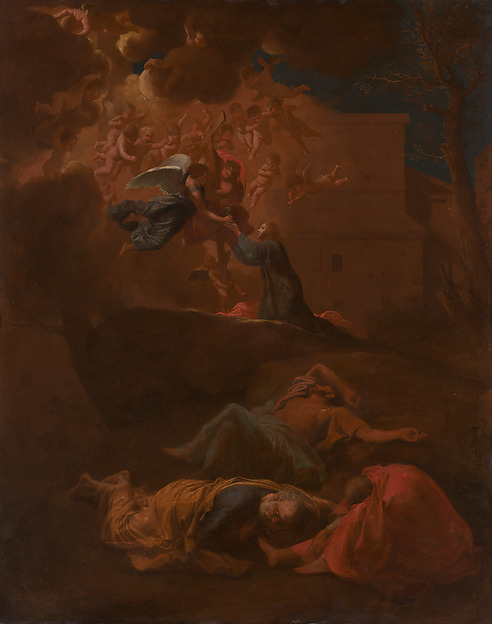
Figures, Chariot and Dog
Can I see it?
Not on view at present
Where is “Figures, Chariot and Dog” now? Collection: Art Institute of Chicago, Chicago. Not on view at present. Checked September 29, 2026.

Chicago, United States
It belongs to the collection, but is not on display at present.
- Checked
- In this state since
- Source
- The museum
Details
- Accession number
- 1922.3063
In the catalog
Sources
- Art Institute of Chicago
- Image: Art Institute of Chicago — CC0
In the life of Nicolas Poussin
The whole life1620s
The Cavaliere Marino takes the painter under his wing
Poussin’s work caught the attention of the Italian poet Cavaliere Marino, then living in France; his patronage let the thirty-year-old painter work in peace. According to Bellori the poet took him into his house and helped him with the invention of subjects and the rendering of emotion, and in Marino’s house Poussin gained access to a library with treatises by Alberti and Dürer and manuscripts and drawings by Leonardo.
1622
Six pictures for the Jesuits in just six days
A serious commission helped him pay his debts: the Jesuit college in Paris asked Poussin and other painters for six large paintings on the lives of Ignatius Loyola and the newly canonised Francis Xavier. According to Bellori the panels, in à la détrempe technique, were painted in only six days; they have not survived.
1622
Arrested for debt in Lyon on the way to Rome
In 1622 Poussin again tried to go to Rome but was arrested for debt in Lyon and never reached Italy.
April 1623
Marino returns to Italy and calls Poussin
In April 1623 Marino returned to Italy and summoned Poussin to the papal court — the pontificate of Urban VIII had just begun; the painter himself was held up in Paris. As Paul Desjardins remarks, Poussin’s career is counted from his arrival in Rome.
spring 1624
Spring 1624: Poussin arrives in Rome
According to Bellori Poussin settled in Rome in the spring of 1624 (other accounts say he first visited Venice); the lists of the church of San Lorenzo in Lucina name him from March 1624 among twenty-two people, mostly French artists, living in the house of Simon Vouet. He studied Raphael, while Caravaggio, whose literal materiality repelled him, he held to have come “to destroy painting”.
1626
Friends in Rome: Claude Lorrain, Stella, the Duquesnoy brothers
In 1626 Pierre Mellin and the brothers François and Jérôme Duquesnoy lodged in his studio; he was close to Claude Lorrain and kept company with Jacques Stella and Jean Lemaire. The circle was united by a pull towards classical antiquity; despite all his disagreements with French painters, it was this milieu that helped Poussin keep his national roots.