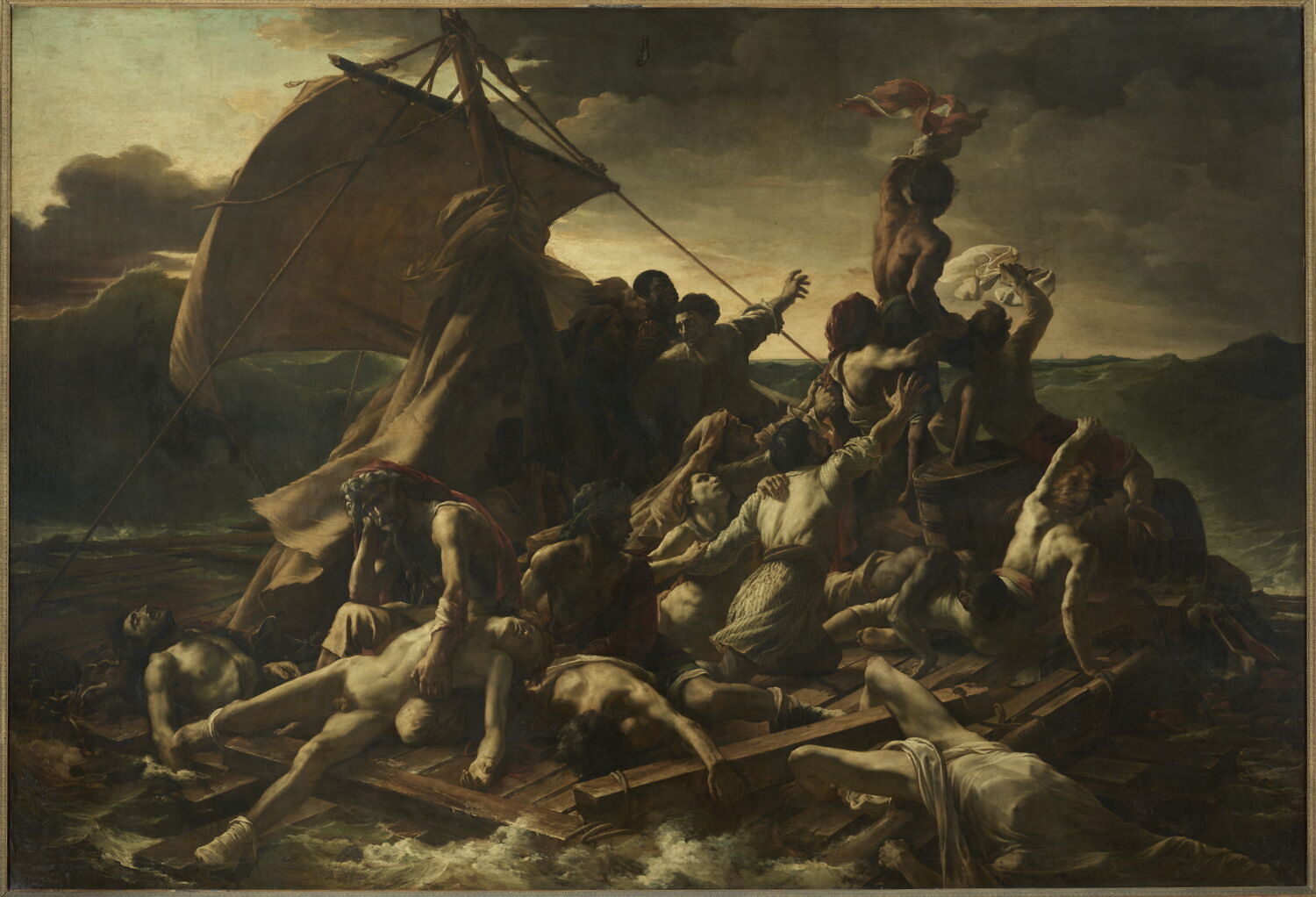
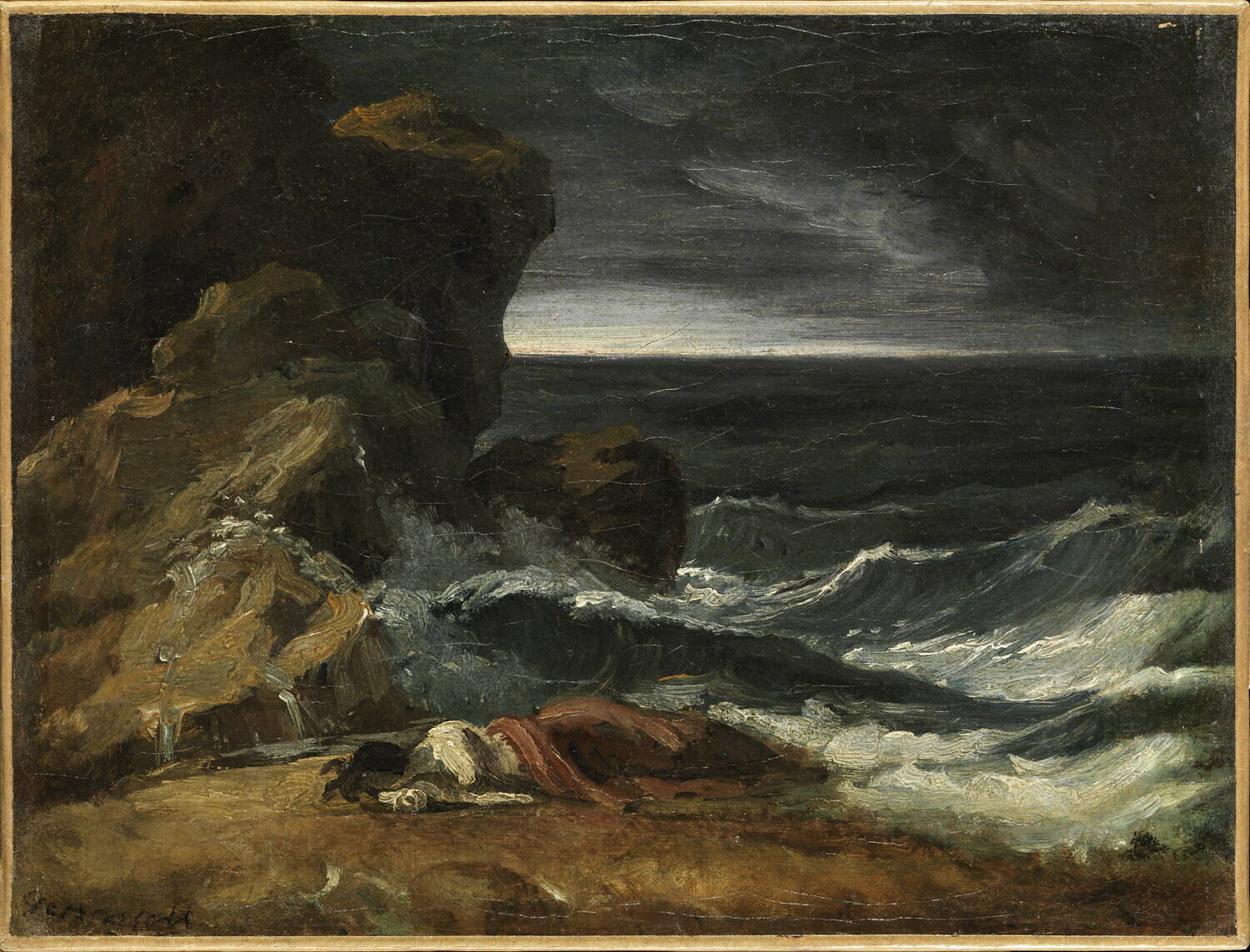
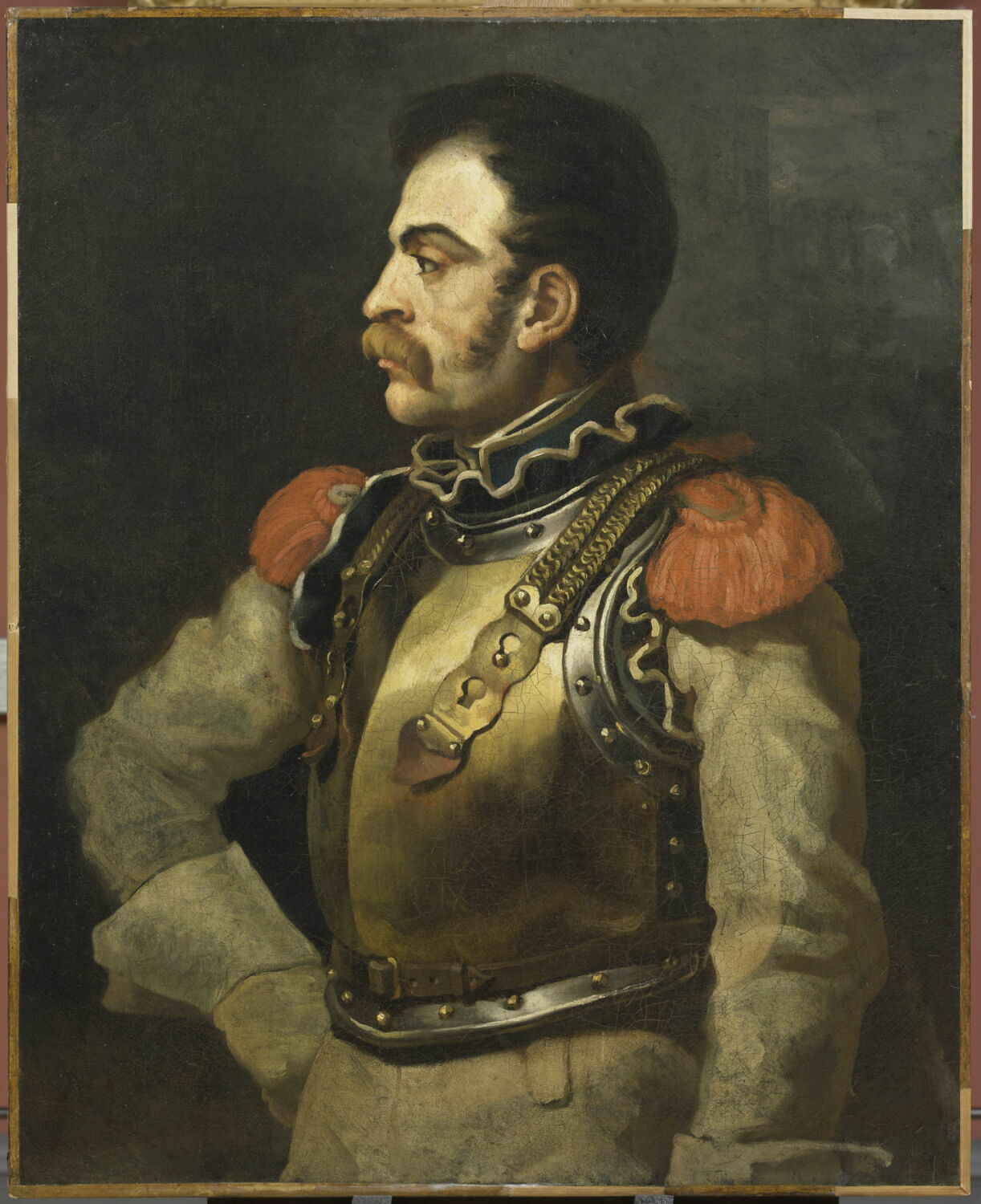
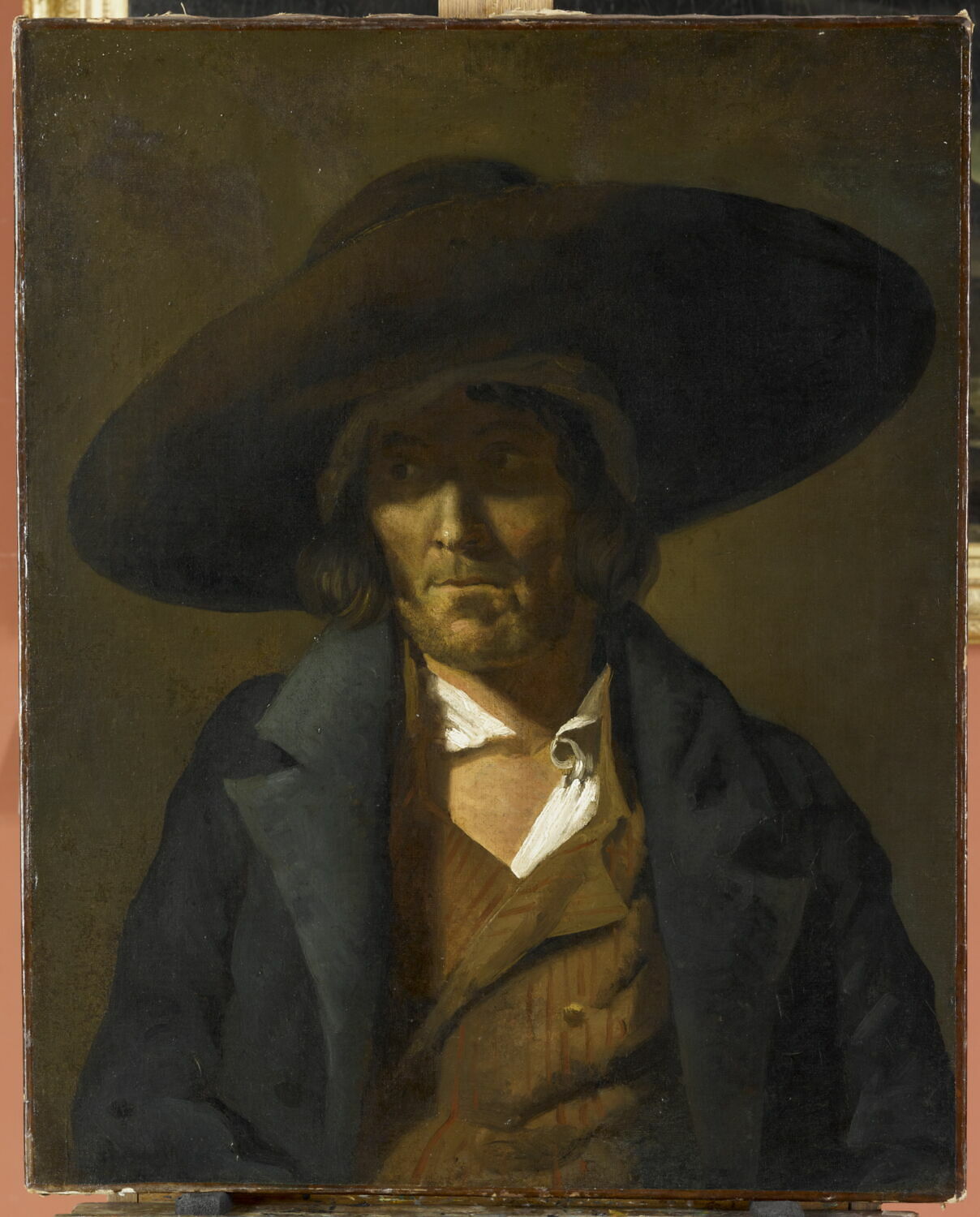
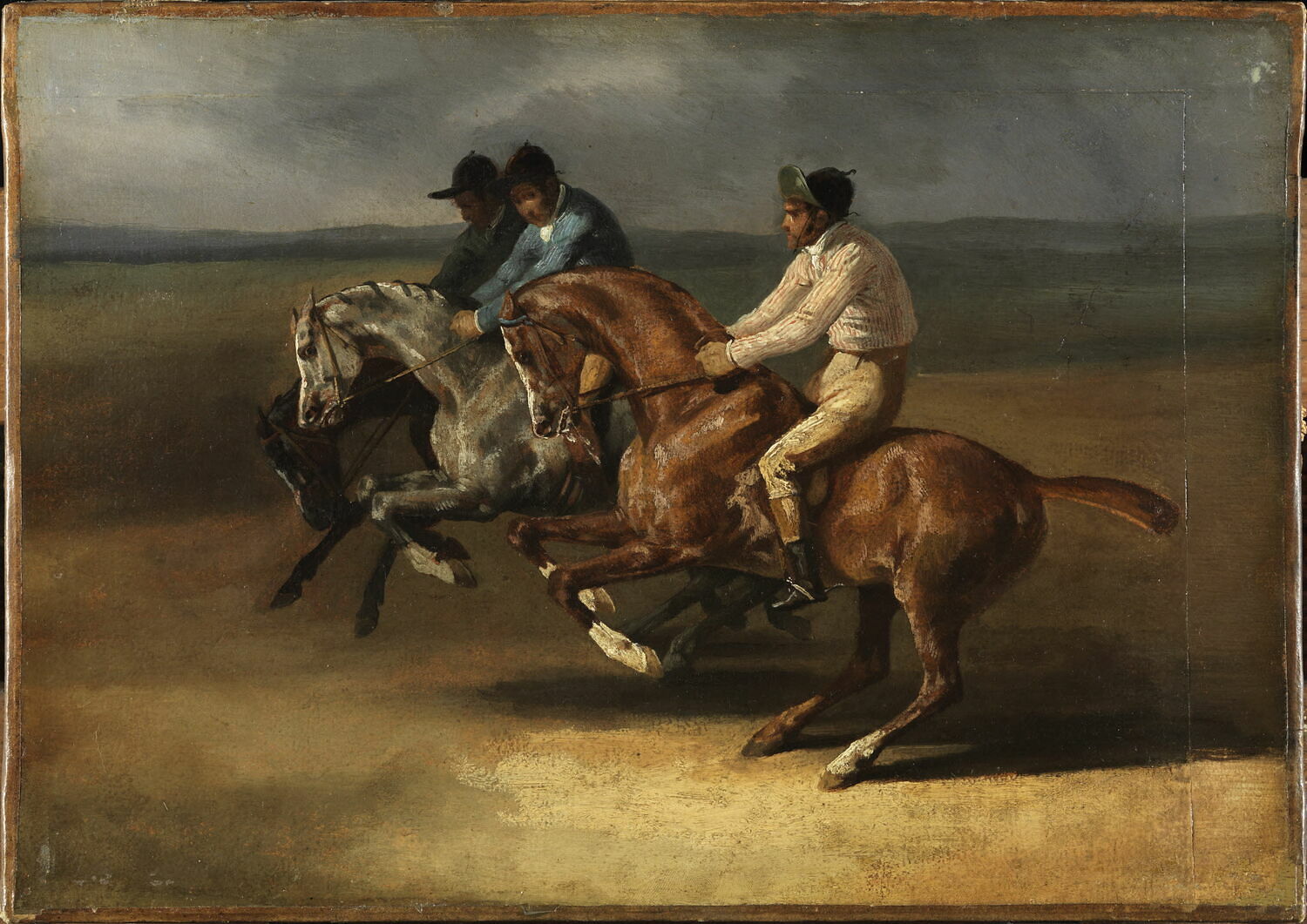
Théodore GéricaultFrench, 1791–1824
Figure study and inscriptions
Can I see it?
Not on view at present
Where is “Figure study and inscriptions” now? Collection: J. Paul Getty Museum, Los Angeles. Not on view at present. Checked October 7, 2026.
Los Angeles, United States
It belongs to the collection, but is not on display at present.
- Checked
- In this state since
- Source
- The museum
About the work
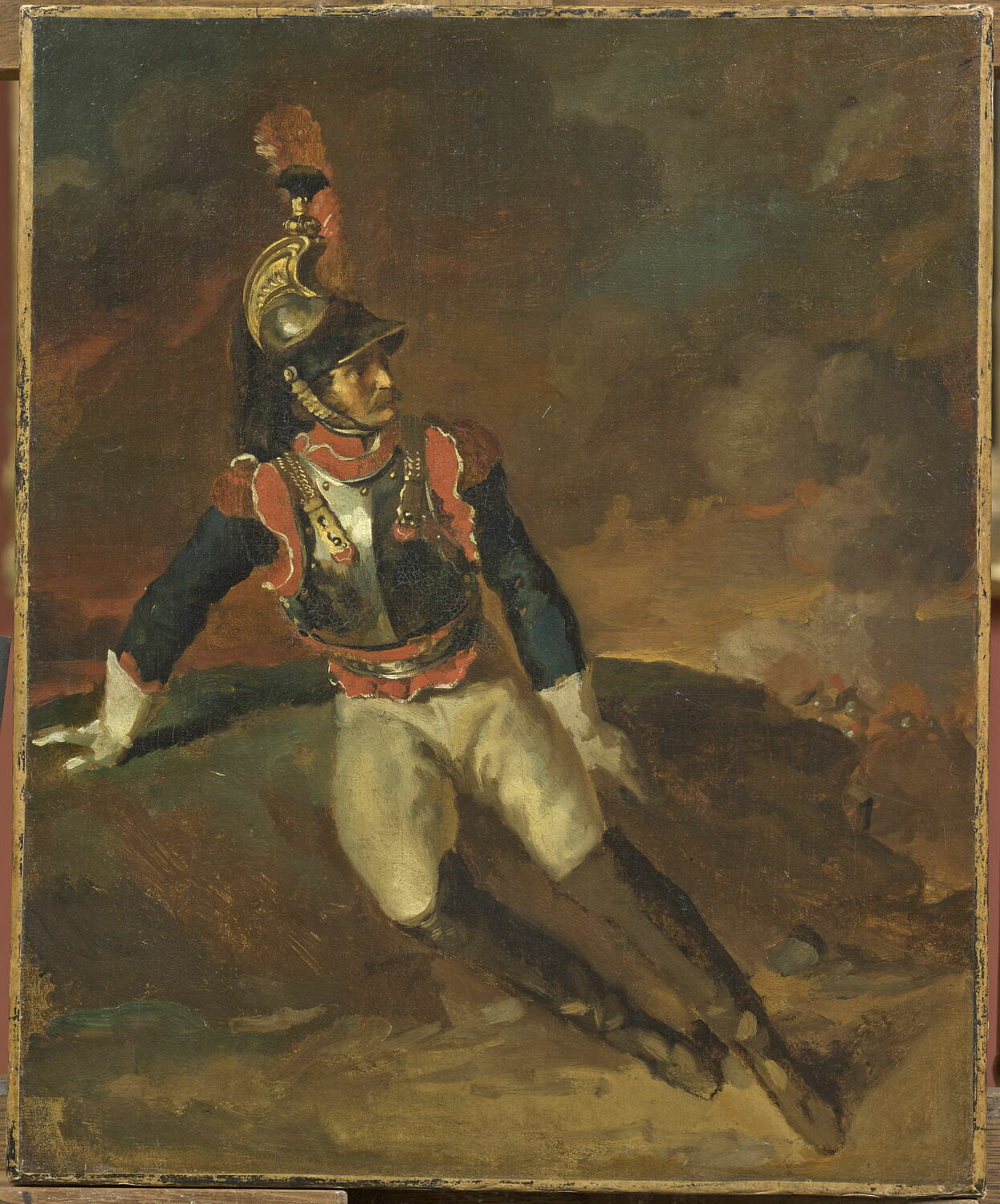
Théodore Géricault posed the soldier in this slight drawing in a manner similar to the man in his 1814 painting *The Wounded Cuirassier.* He conceived the picture as a pendant to his earlier work, the *Charging Chasseur,* and exhibited it in the Paris Salon the same year. Géricault seems to have written the notes at the top of the cover to remind himself to copy various motifs and subjects from other masters and from antiquity. For example, he noted works by his teacher Pierre-Narcisse Guérin, the Flemish artist Peter Paul Rubens, and the French artist Nicolas Poussin as important sources of inspiration.
J. Paul Getty Museum
Details
- Accession number
- 95.GD.40.58
In the catalog
Sources
- J. Paul Getty Museum
- Image: J. Paul Getty Museum — Open Content
In the life of Théodore Géricault
The whole life1810
To Pierre Guérin: six months of irregular lessons
In 1810 Géricault left Vernet's studio for the rigorous classicist Pierre Guérin, who disapproved of his student's impulsive temperament while recognizing his talent. He attended the studio irregularly for about six months, probably to work from the live model and meet the other pupils, and painted “Samson and Delilah”, “The Departure of Odysseus from Ithaca” and “The Defense of Thermopylae” at the time.
5 February 1811 · Education
Beaux-Arts de Paris
1812
Salon debut: “Officer of the Imperial Guard Chasseurs”
In 1812 Géricault sent “Portrait of Dieudonné” (now “Officer of the Imperial Guard Chasseurs Charging”, Louvre) to the Paris Salon. An artist unknown until then, said to have “hardly studied”, he at once drew the critics' attention: Boutard advised him to take up battle painting, Durdent called him “perhaps the best of all our painters”, and David himself noticed the picture.
1814
Salon of 1814: “Wounded Cuirassier” and cold reviews
At the Salon of 1814, held after Napoleon's fall, the “Officer” was shown paired with “Wounded Cuirassier Leaving the Field of Battle”, the only reminder of a passing tragic and glorious era among the neutral subjects chosen by other artists. Critics either said nothing of Géricault's pictures or received them unfavorably.
December 1814
He buys a commission as a musketeer
Having recently evaded military service, in December 1814 Géricault, with the help of his father and uncle, bought a commission in the musketeer company commanded by Lauriston, a privileged military unit. His biographers find it hard to explain what motivated him.
1815
The Hundred Days: Louis XVIII's escort and flight to Normandy
During the Hundred Days Géricault was in the escort of the fleeing Louis XVIII and then, disguised as a peasant, made his way to Normandy, where he probably stayed until the middle of the summer of 1815.