 Natalia GoncharovaRussian, 1881–1962
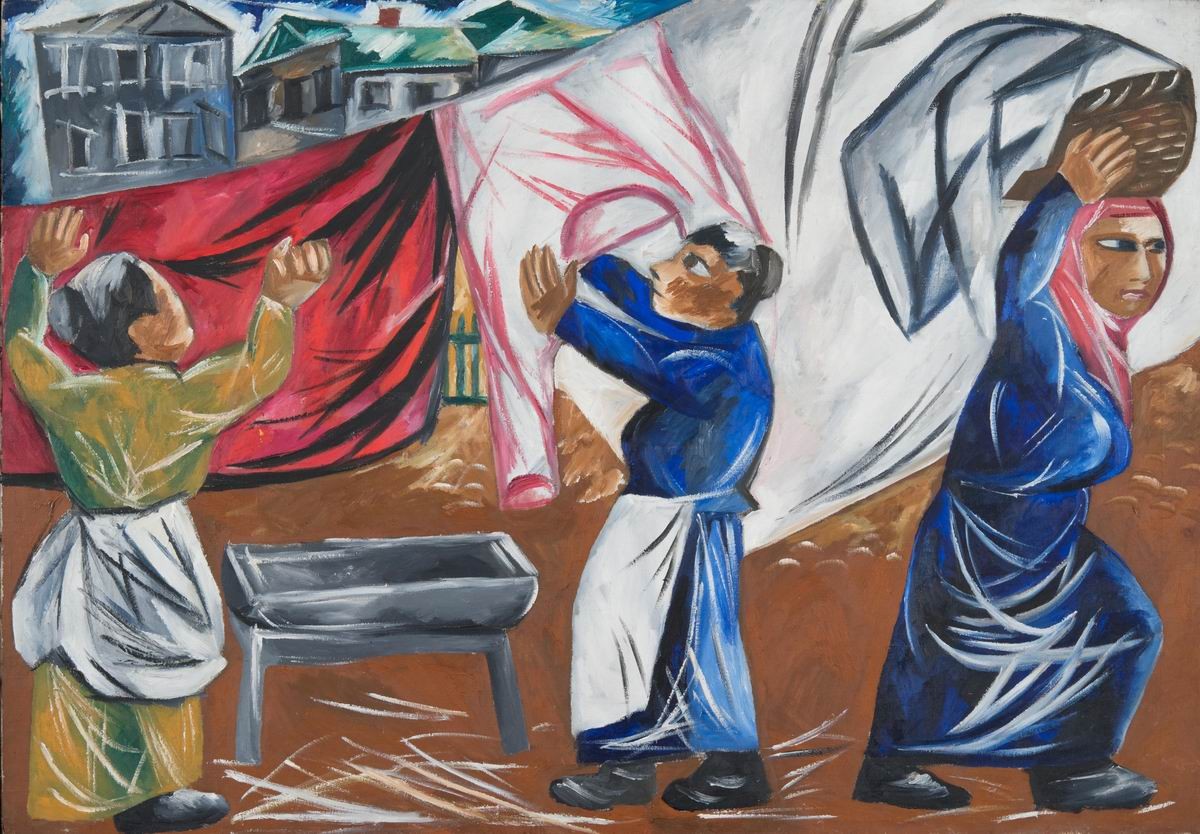
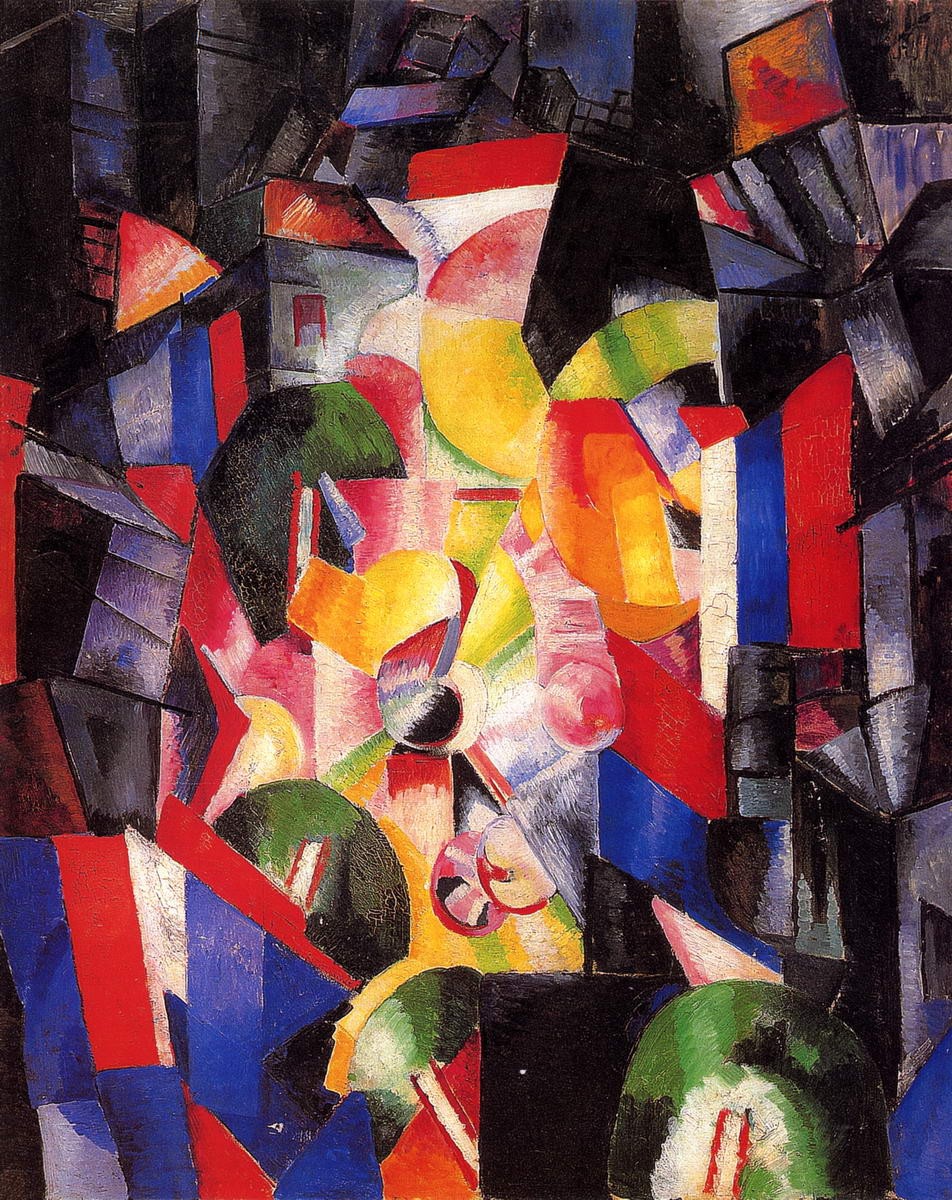
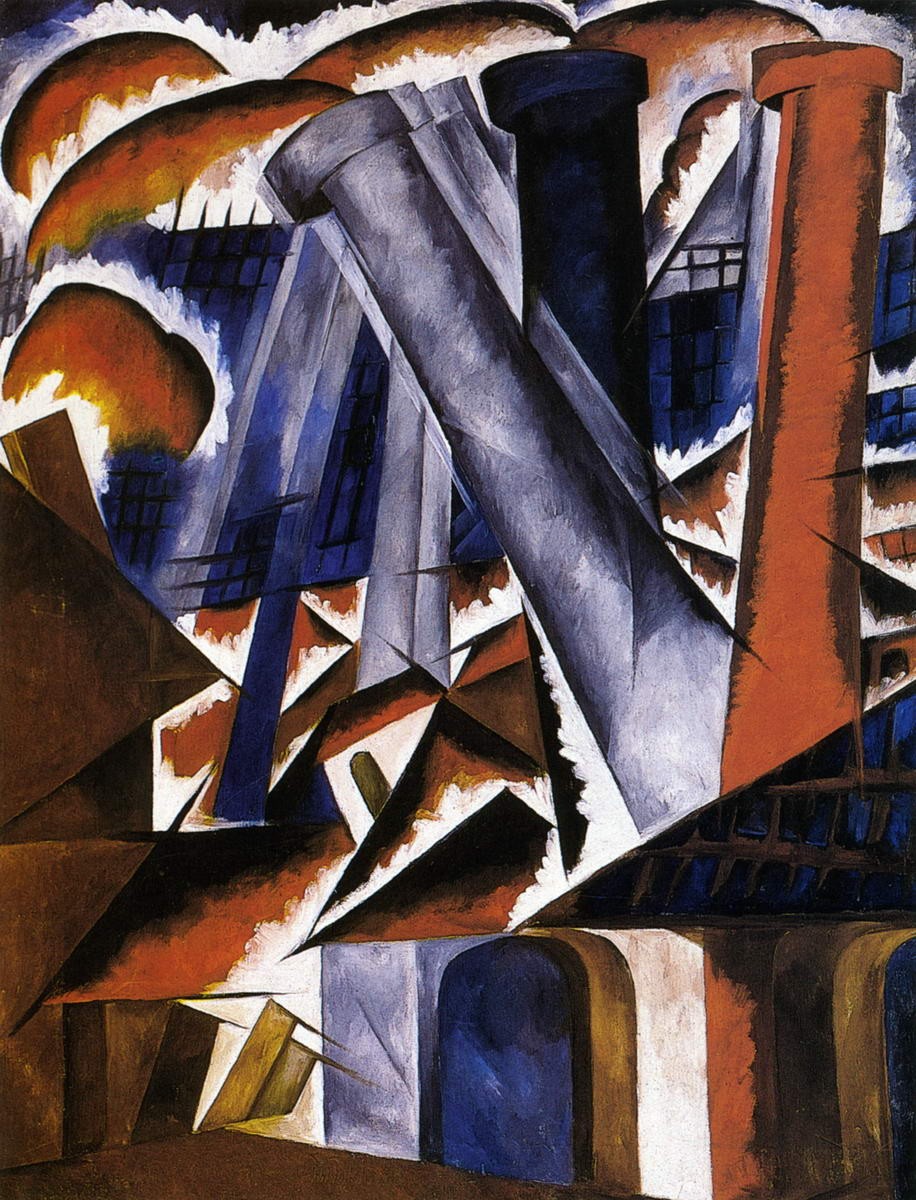
Фабрика
Can I see it?
Unknown
Where is “Фабрика” now? Collection: State Russian Museum, Saint Petersburg. Unknown.

Saint Petersburg, Russia
The owner is known; whether it is on view today is not.
- In this state since
- Source
- The museum
About the painting
Museum text in Russian
В каталоге своей персональной выставки 1913 года, на которой экспонировалась «Фабрика», рядом с названием картины Гончарова в скобках сделала примечание: «футуристическая». Футуризм привлек Гончарову главным образом как художественный метод, вернее, как один из художественных методов, разрабатываемых ею в начале 1910-х годов. Идея наглядной интерпретации динамики не могла не заинтересовать художницу, всегда ощущавшую потребность в максимальной пластической динамичности. В картине «Фабрика» Гончарова использует отдельные приемы футуристической композиции, в частности многократные линеарные и плоскостные сдвиги. Однако, воспринятые чисто внешне, они не сообщают композиции той временной и пространственной «разомкнутости», длительности, которая свойственна произведениям итальянских футуристов.
State Russian Museum
Details
- Accession number
- ЖБ-1601
What it shows
In the catalog
Sources
- State Russian Museum
- Image: State Russian Museum — © State Russian Museum
In the life of Natalia Goncharova
The whole life24 March 1910
First solo show and a charge of pornography
At the club of the Society of Free Aesthetics Goncharova showed 22 paintings for a single day; after an anonymous notice in the newspaper “Golos Moskvy” the police seized two “Models” and the painting “God”, and she was charged with pornography.
December 1910 – January 1911
First Jack of Diamonds exhibition
The first show of the Jack of Diamonds — Moscow's first radical independent exhibiting group, named by Larionov — included Goncharova's Primitivist and Cubist paintings.
1911
Develops Rayonism with Larionov
Goncharova and Larionov developed Rayonism and painted many works in the style (elsewhere Rayonism is dated 1912–1914).
March – April 1912
The Donkey's Tail: over fifty paintings
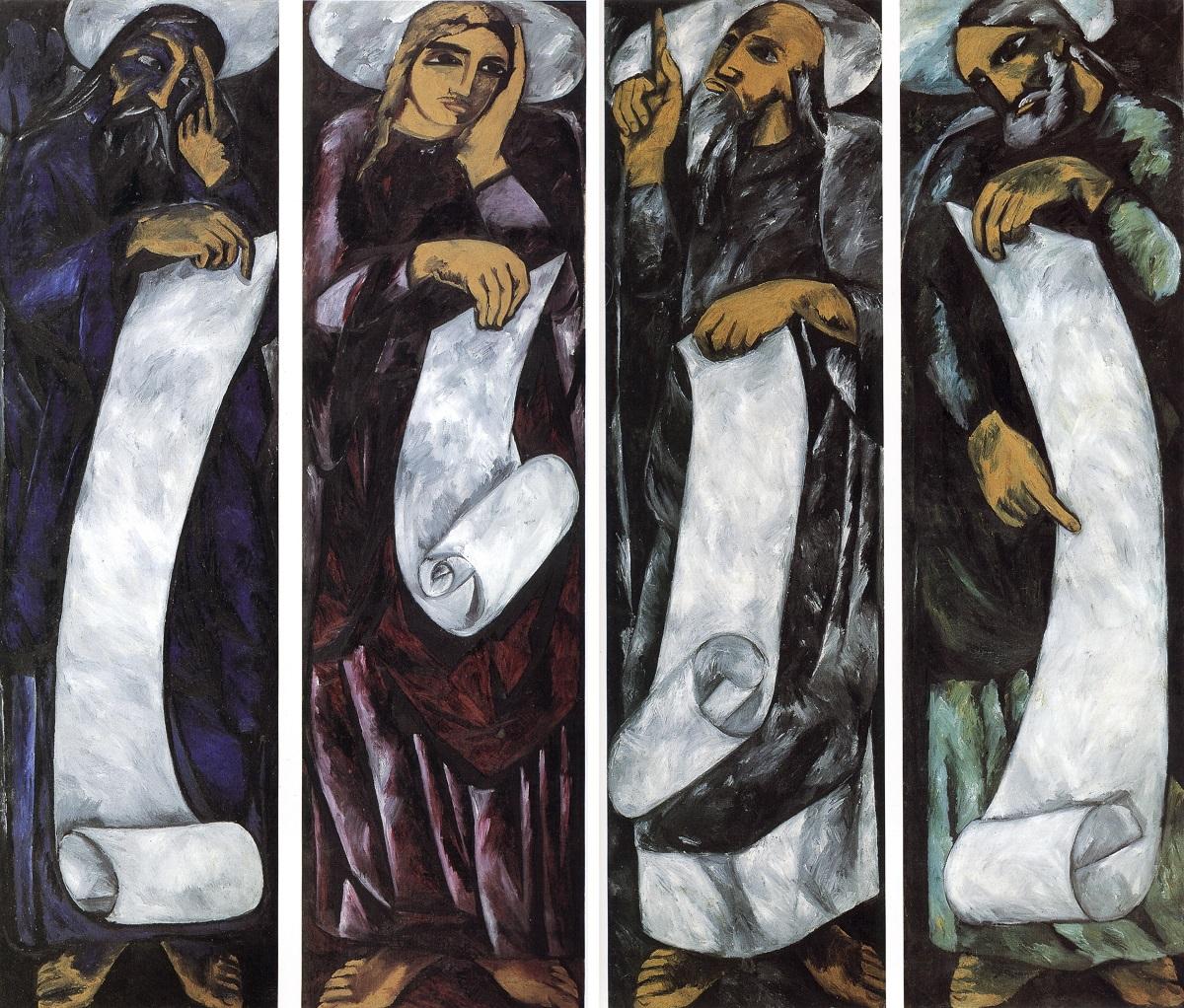
More than fifty of her paintings hung at the first Donkey's Tail exhibition, which Larionov organised as a break with European influence; the censor confiscated “The Evangelists” as blasphemous.
autumn 1913
Solo show on Bolshaya Dmitrovka
Goncharova's largest solo show (together with the spring show in St Petersburg, over 700 works of 1900–1913) closed with the first catalogue-monograph on her and Larionov, edited by I. M. Zdanevich; its preface carries the famous words about turning away “from the West” to the East, whose authorship is disputed.
1914
Designs “The Golden Cockerel” for Diaghilev
On Alexandre Benois's recommendation Diaghilev invited Goncharova to design the opera-ballet “The Golden Cockerel”; after its first performances in Paris and London succeeded, their collaboration continued.