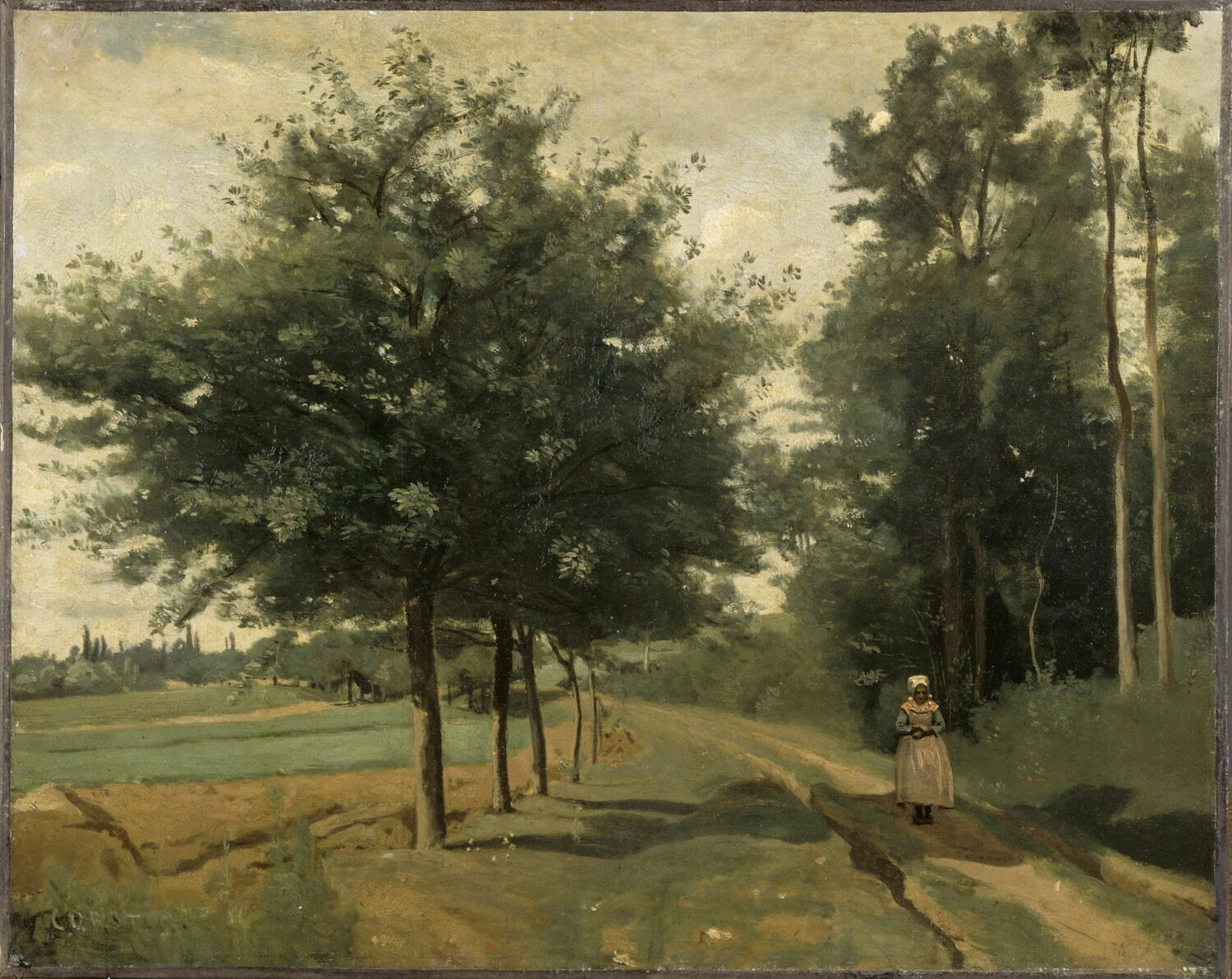
 Camille CorotFrench, 1796–1875
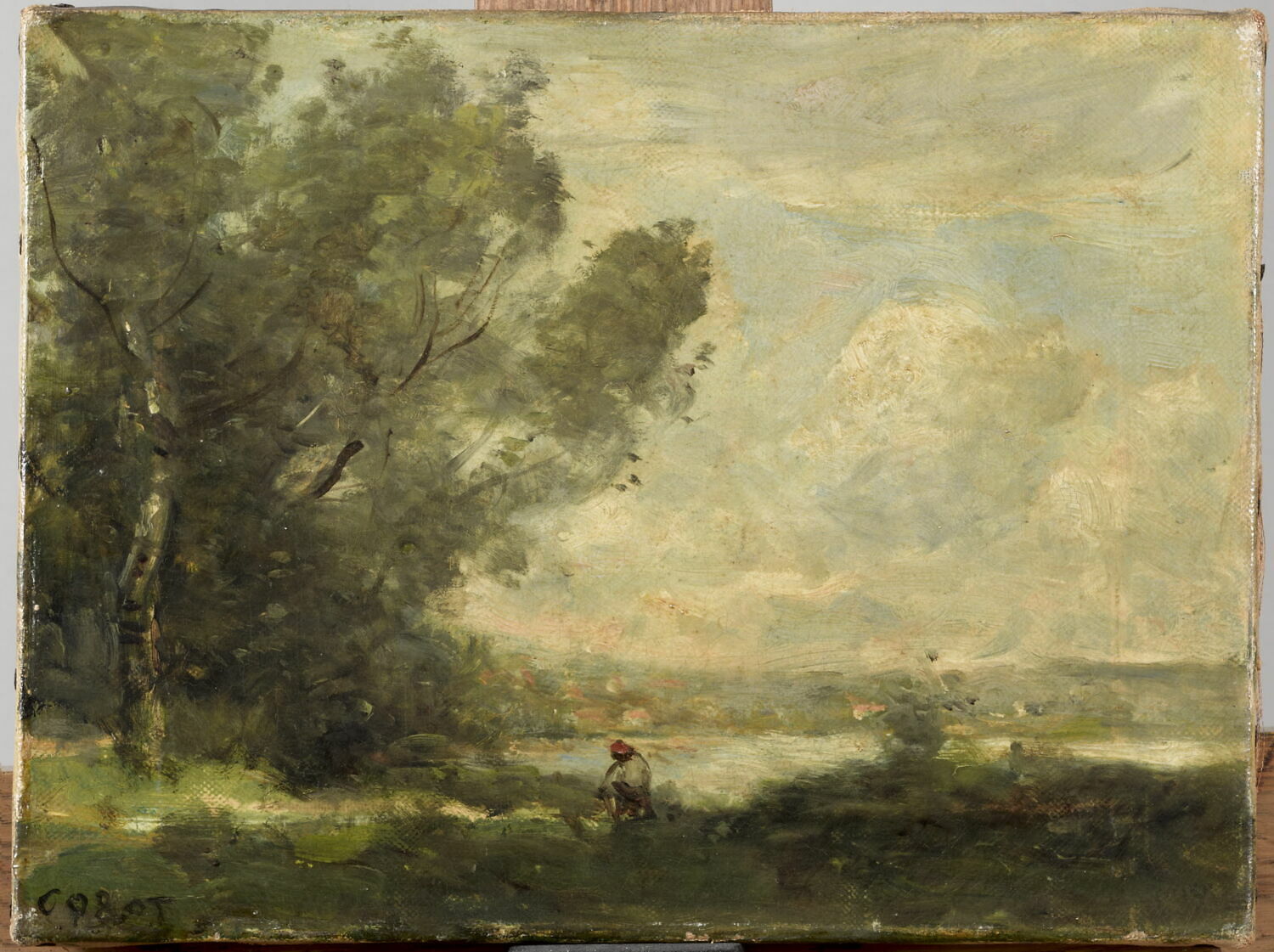
Environs de Mortain. Chemin borde à gauche par des Pommiers, dit aussi Le sentier le long du bois
May one see it?
Yes, receiving visitors

Musée du Louvre
Room948, Aile Sully, Niveau 2Paris, France
On public display.
- Checked
- 7 days ago
- In this state since
- Sep 26, 2026
- Source
- The museum's own collection data
Particulars
- Accession number
- RF 1997 39
Sources
- Musée du Louvre: the museum's own open data · fetched 7 days ago
- Image: Musée du Louvre — © 1998 GrandPalaisRmn (musée du Louvre) / Daniel Arnaudet
Meanwhile, in the life of Camille Corot
The whole life1828–1834
Chasing the Salon: Normandy, portraits and first commissions
Between his first and second Italian trips Corot concentrated on preparing large landscapes for the Salon, often adapting his Italian oil sketches, reworked in the studio, according to Neoclassical principles. Away from the studio he travelled throughout France, returned to the Normandy coast and to Rouen, painted portraits of friends and relatives and received his first commissions; one of the most successful, a portrait of his niece Laure Sennegon in powder blue, was later donated to the Louvre.
1834
Second trip to Italy
In 1834 Corot made his second trip to Italy. The study “Morning in Venice”, dated to the same year, is now in the Pushkin Museum of Fine Arts.
1835
A sensation at the Salon: “Hagar in the Wilderness”
In 1835 Corot created a sensation at the Salon with his biblical painting “Hagar in the Wilderness”, showing Hagar and the child Ishmael dying of thirst until saved by an angel; his bold, fresh statement of the Neoclassical ideal succeeded with the critics. The biblical and mythological subjects that followed did not succeed as well, as the critics found him wanting in comparison with Poussin.
1845
Baudelaire proclaims Corot leader of modern landscape
Throughout the 1840s the Salon rejected many of Corot's works and the public bought few. But by 1845 Baudelaire led a charge proclaiming him the leader of the “modern school of landscape painting”, answering critics who found his colors pale: Corot, he said, was more a harmonist than a colorist.
1847
Death of his father, Jacques Louis Corot
In 1847 the artist's father, Jacques Louis Corot (1771–1847), died.
1847
Delacroix takes note of Corot; Dutilleux becomes a friend
In 1847 Delacroix noted in his journal that Corot was a true artist. On Delacroix's recommendation the painter Constant Dutilleux bought a Corot painting and began a long and rewarding relationship with the artist, bringing him friendship and patrons.