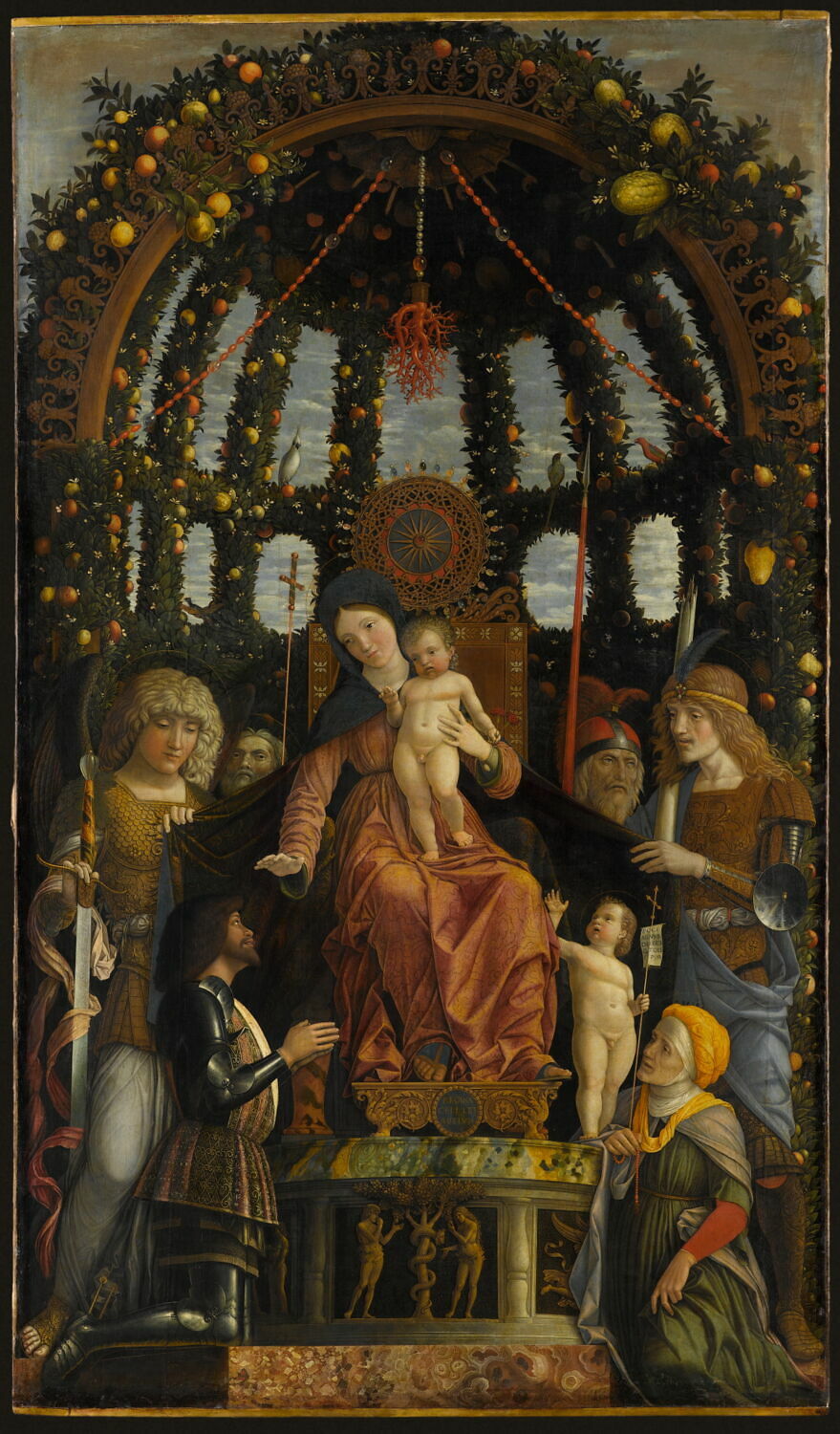
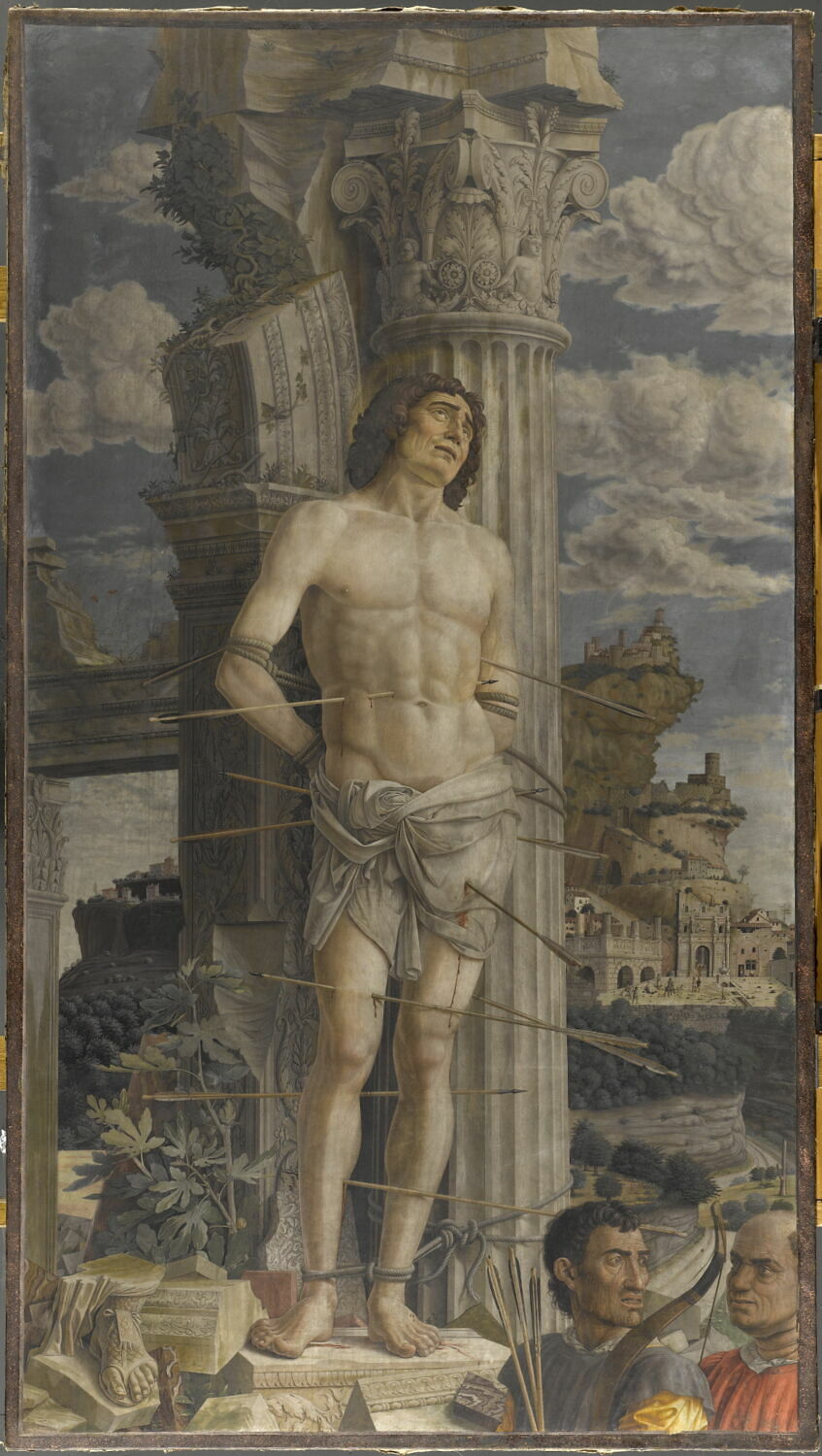
Andrea MantegnaItalian, 1431–1506
Entombment
Can I see it?
Not on view at present
Where is “Entombment” now? Collection: Harvard Art Museums, Cambridge. Not on view at present. Checked September 29, 2026.

Cambridge, United States
It belongs to the collection, but is not on display at present.
- Checked
- In this state since
- Source
- The museum
Details
- Accession number
- R719
In the catalog
Sources
- Harvard Art Museums
- Image: Harvard Art Museums — © President and Fellows of Harvard College
In the life of Andrea Mantegna
The whole life1431
Born
c. 1448
Going to court against Squarcione for the right to work independently
At seventeen Mantegna won through the courts the right to work independently of Squarcione.
1453
Married: Nicolosia Bellini
1460
The Gonzagas call Mantegna into service: 75 lire a month
Marquis Ludovico III Gonzaga had long been pressing Mantegna to enter his service; in 1460 he became court artist at a salary of 75 lire a month — so large a sum for the period that it showed the high regard in which his art was held. Mantegna was the first painter of any eminence to be based in Mantua.
1488–1490
Rome: frescoes for Pope Innocent VIII
In 1488–1490 in Rome Mantegna, at the request of Pope Innocent VIII, decorated with frescoes the pope’s chapel in the Vatican Belvedere (later destroyed).
after 1497
Isabella d’Este’s studiolo: mythological subjects
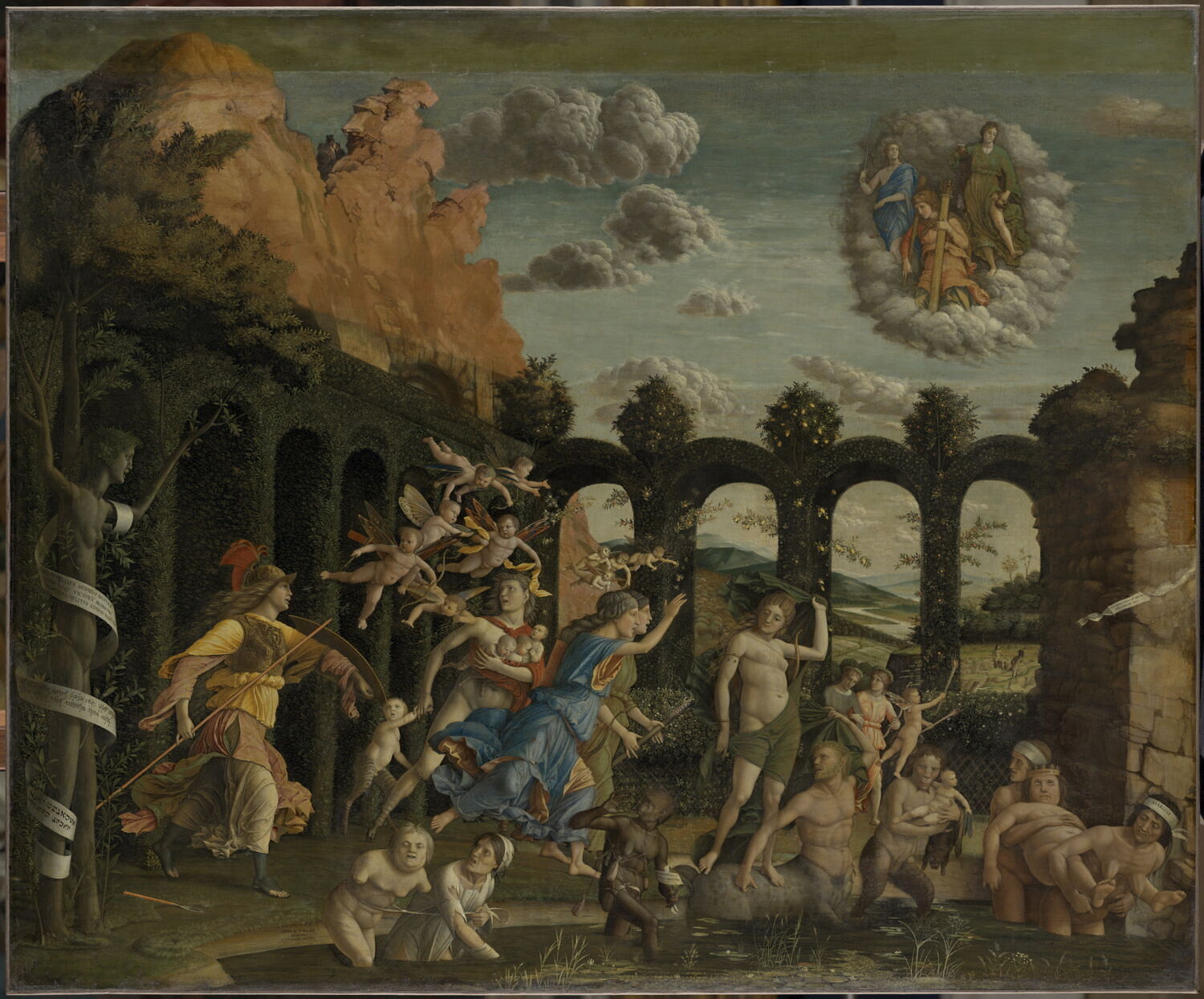
After 1497 Isabella d’Este commissioned Mantegna to turn the mythological themes devised by the court poet Paride Ceresara into paintings for her private apartment (studiolo) in the Palazzo Ducale; he left the “Legend of the God Comus” unfinished, and it was completed by his successor as court painter, Lorenzo Costa. Perugino and Correggio were also commissioned for the studiolo.