 Andrea MantegnaItalian, 1431–1506
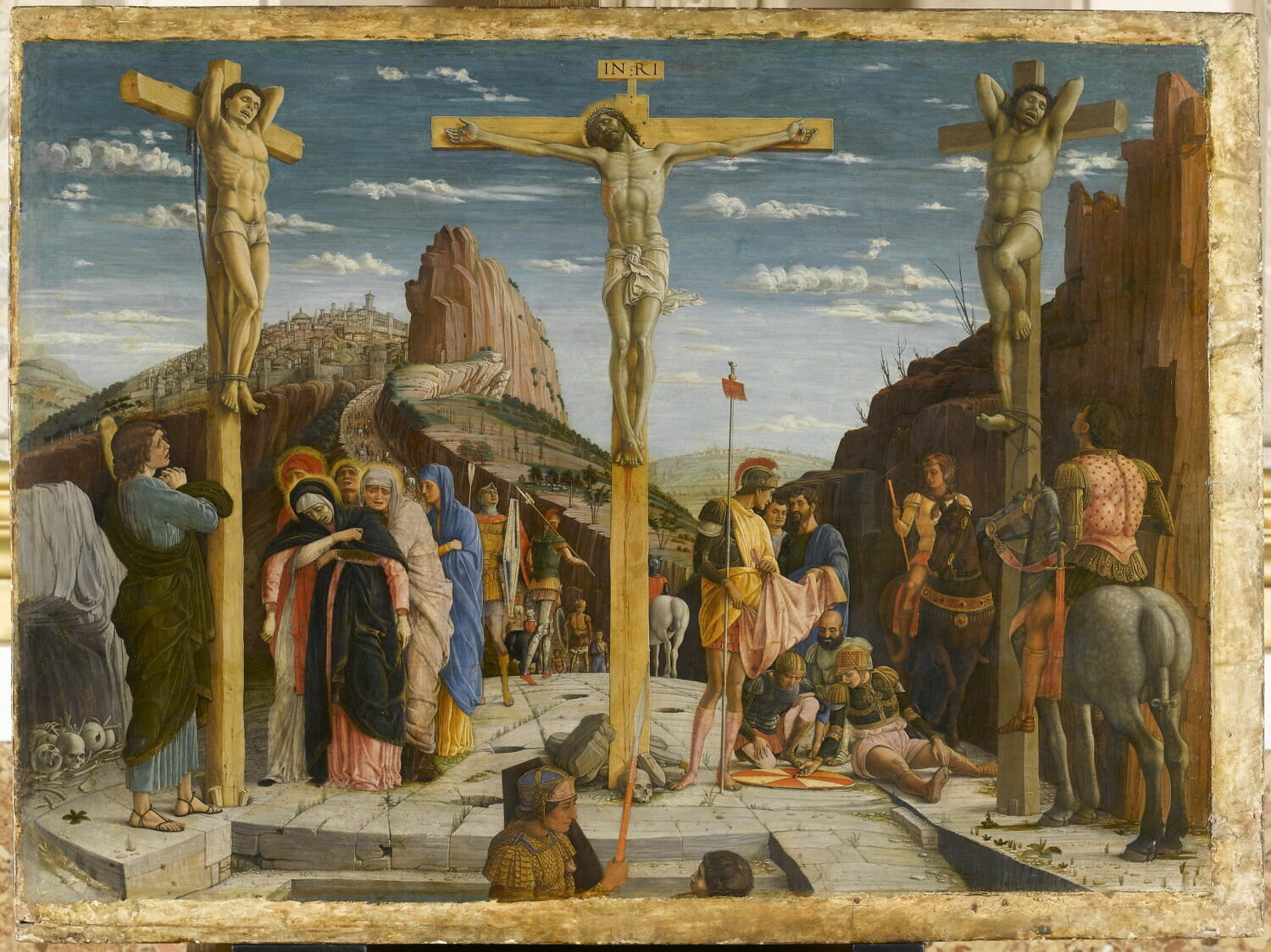
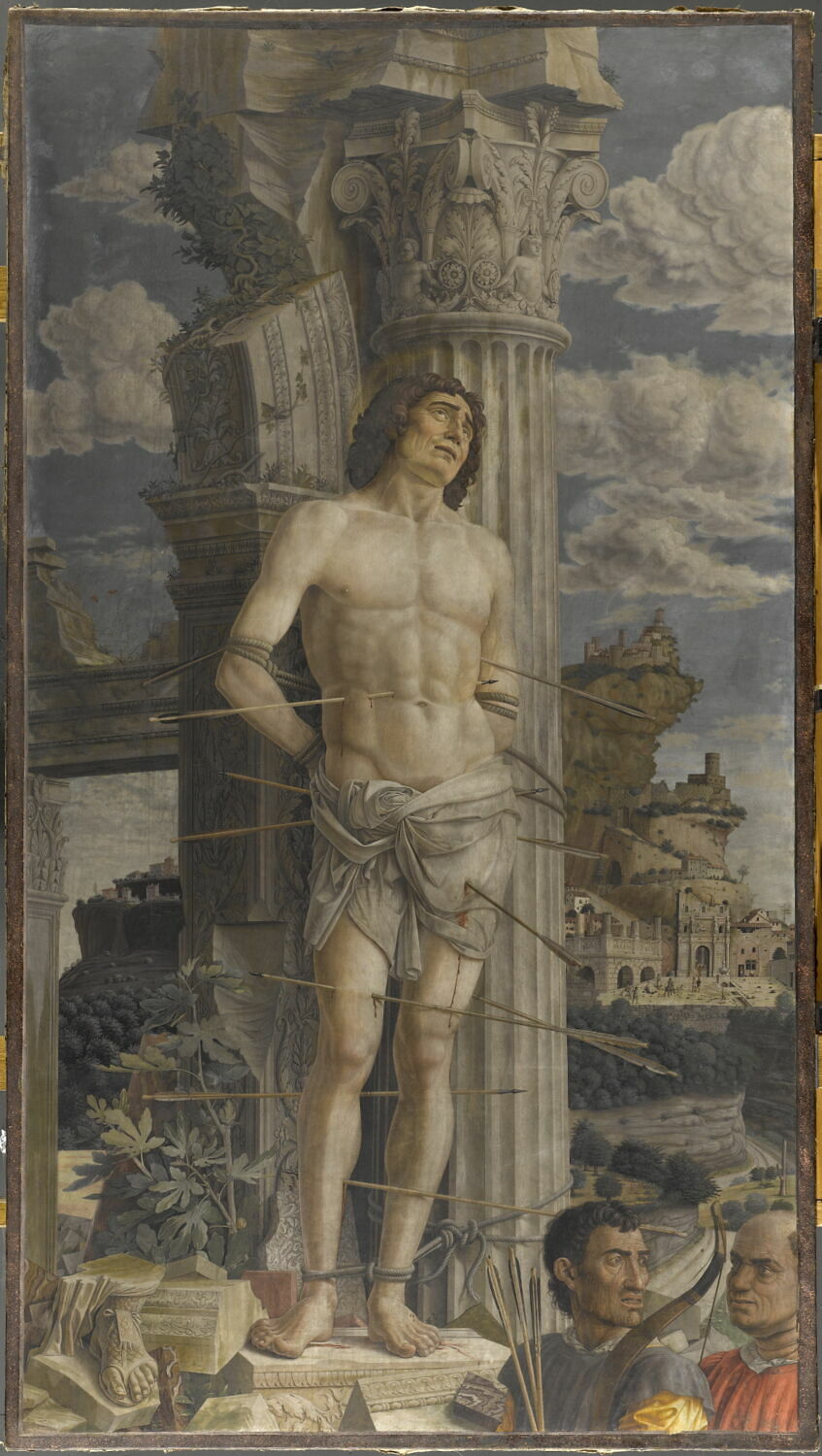
Saint Sébastien
Can I see it?
Yes, on view now
Where is “Saint Sébastien” now? Musée du Louvre, Salle 710, Aile Denon, Niveau 1, Paris. Yes, on view now. Checked September 26, 2026.

Open now· until 6:00 PM
On public display.
- Checked
- In this state since
- Source
- The museum
Details
- Accession number
- RF 1766
In the catalog
Sources
- Musée du Louvre
- Image: Musée du Louvre — © 2008 GrandPalaisRmn (musée du Louvre) / René-Gabriel Ojéda
In the life of Andrea Mantegna
The whole life1460–1506
Post: court painter
after 1474
His own house near the church of San Sebastiano
In Mantua Mantegna built a stately house near the church of San Sebastiano and adorned it with a multitude of paintings; the house can still be seen today, although the paintings no longer survive.
1474–1484
An unhappy decade in Mantua
The next ten years were not happy ones for Mantegna and Mantua: the artist grew irritable, his son died, as did Marquis Ludovico, his wife Barbara and his successor Federico, who had dubbed Mantegna a knight; artistic commissions in Mantua recommenced only with the election of Francesco II Gonzaga.
1488–1490
Rome: frescoes for Pope Innocent VIII
In 1488–1490 in Rome Mantegna, at the request of Pope Innocent VIII, decorated with frescoes the pope’s chapel in the Vatican Belvedere (later destroyed).
1490
Back in Mantua and closer to Isabella d’Este
Returning to Mantua in 1490, Mantegna embraced again his more literary and bitter vision of antiquity and entered into a close connection with the new marchesa, the cultured and intelligent Isabella d’Este.
after 1497
Isabella d’Este’s studiolo: mythological subjects
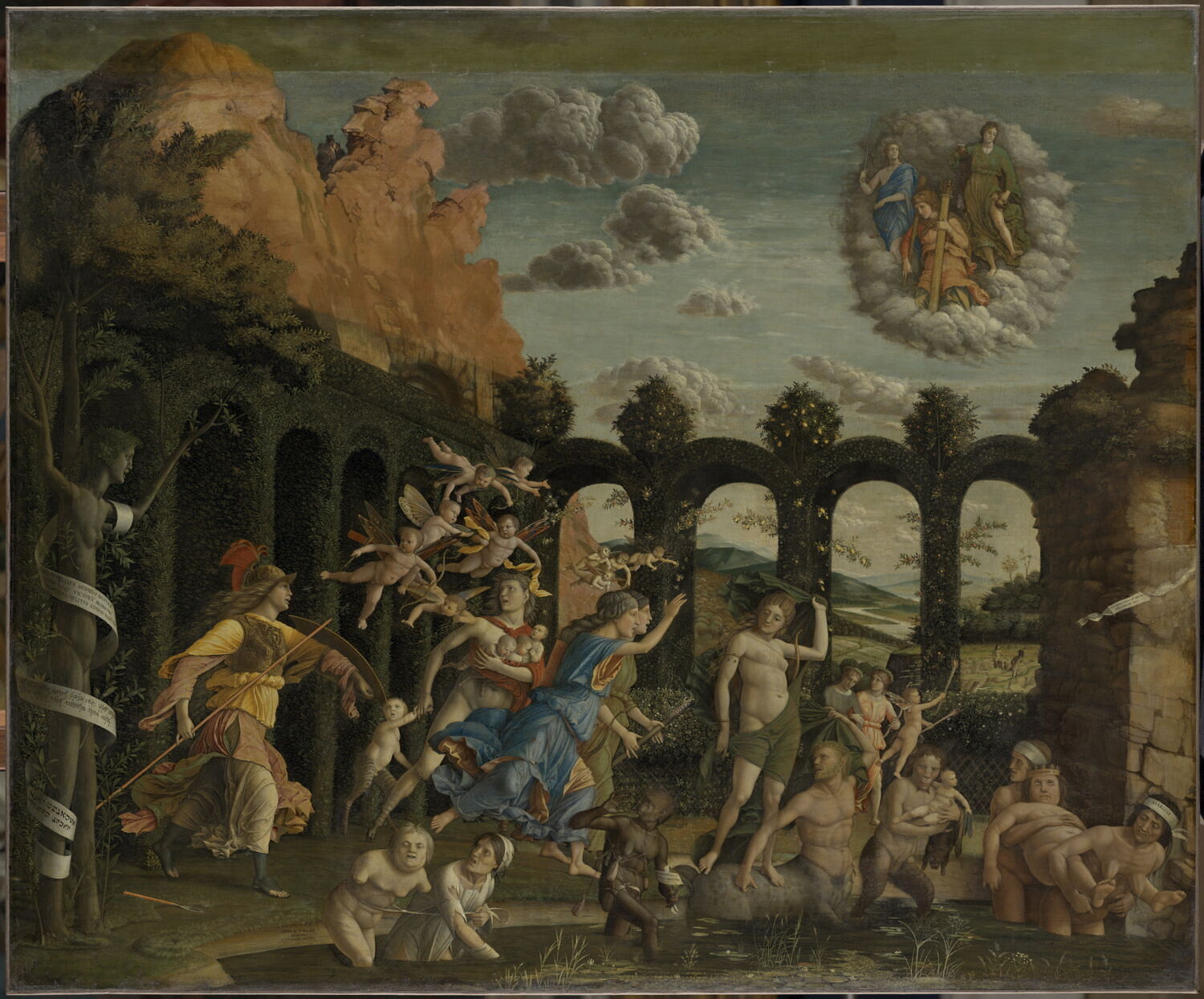
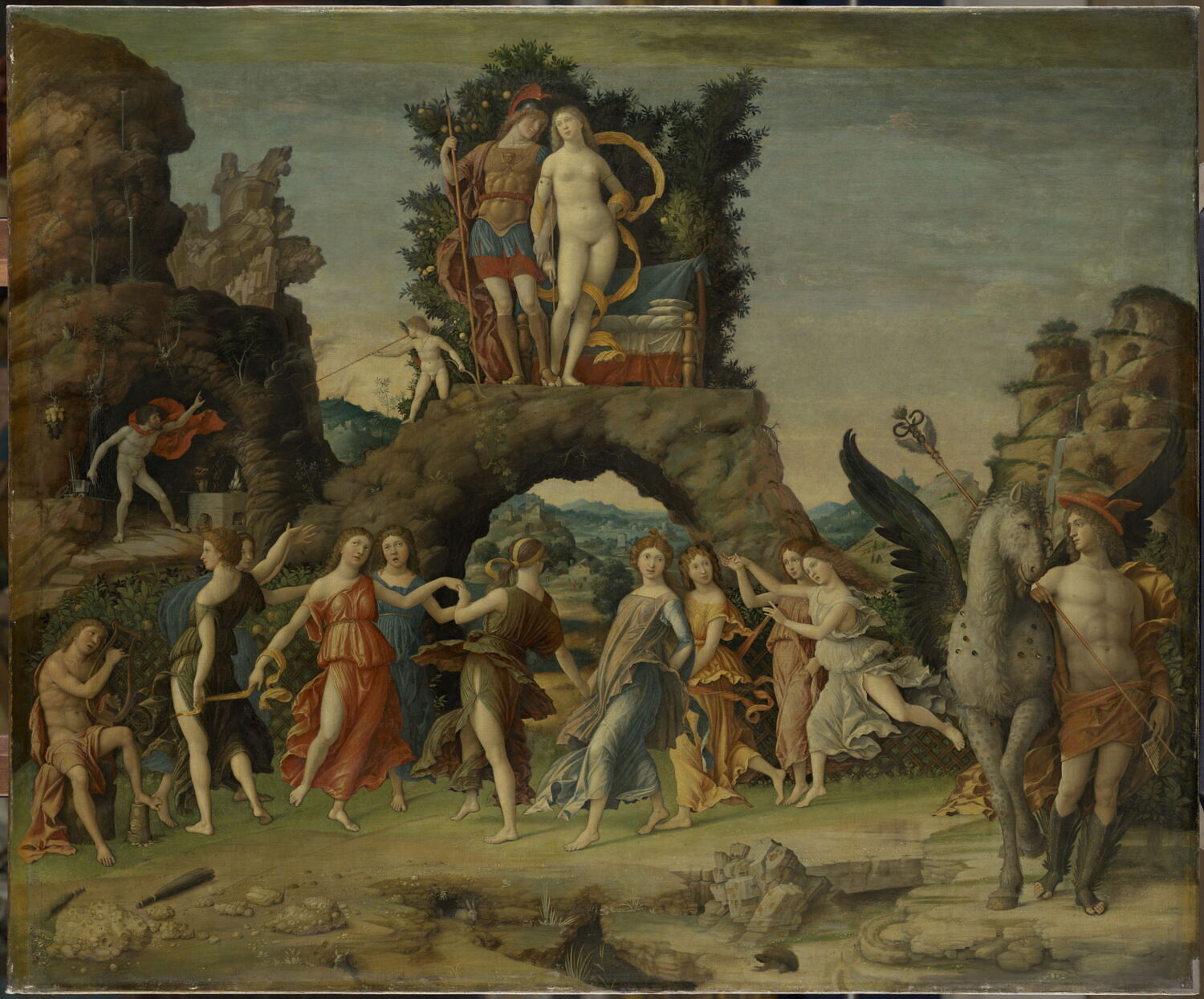
After 1497 Isabella d’Este commissioned Mantegna to turn the mythological themes devised by the court poet Paride Ceresara into paintings for her private apartment (studiolo) in the Palazzo Ducale; he left the “Legend of the God Comus” unfinished, and it was completed by his successor as court painter, Lorenzo Costa. Perugino and Correggio were also commissioned for the studiolo.