 Boris Kustodiev1878–1927
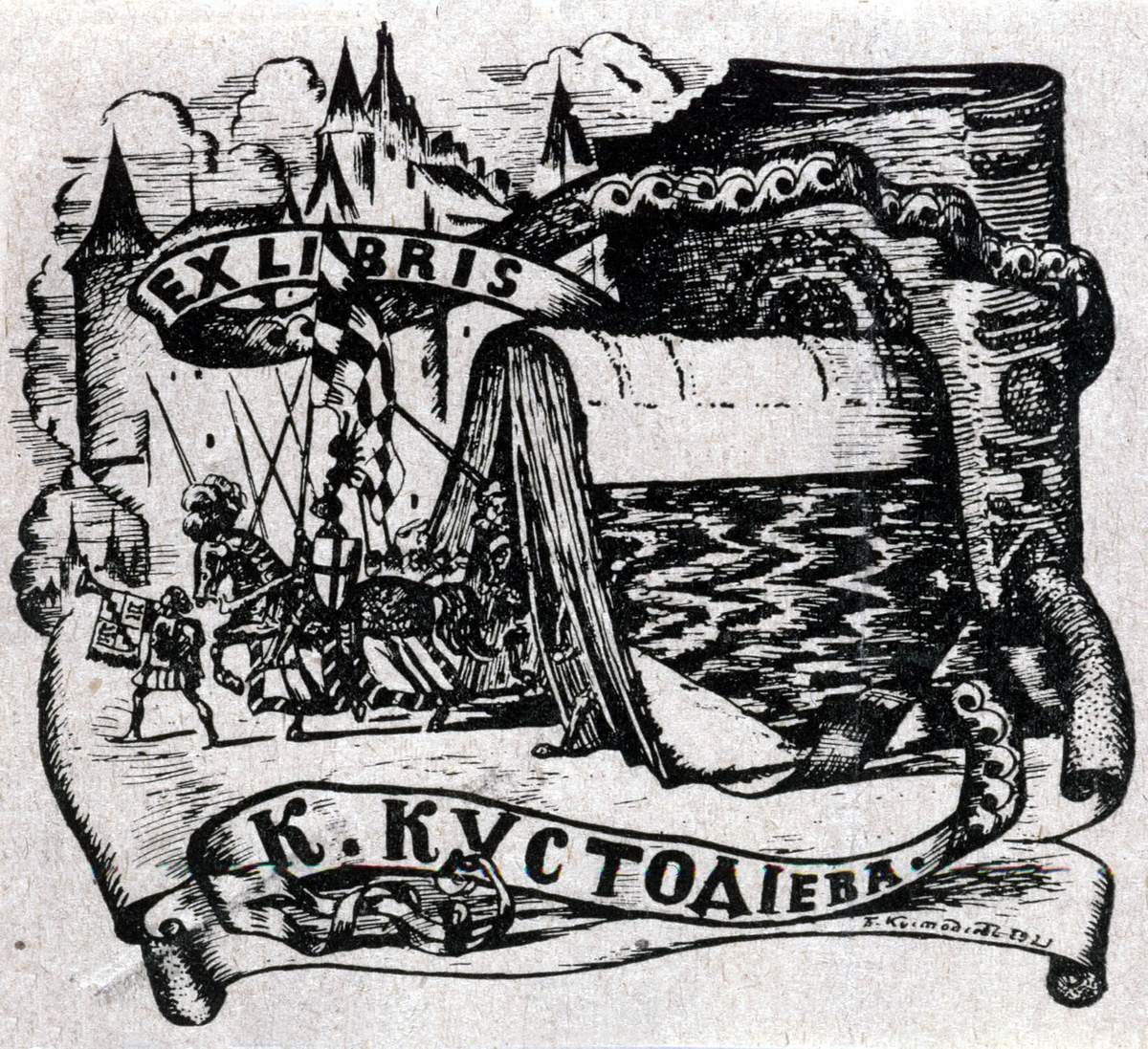
Экслибрис К. Кустодиева
Can I see it?
Unknown
Where is “Экслибрис К. Кустодиева” now? Collection: State Russian Museum, Saint Petersburg. Unknown.

Saint Petersburg, Russia
The owner is known; whether it is on view today is not.
- In this state since
- Source
- The museum
About the work
Museum text in Russian
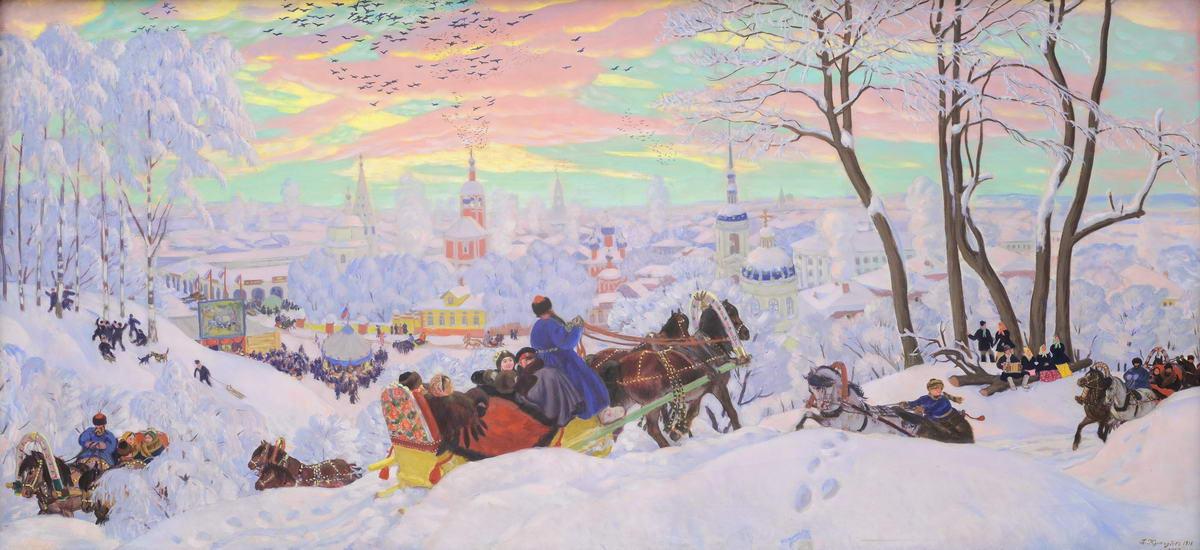
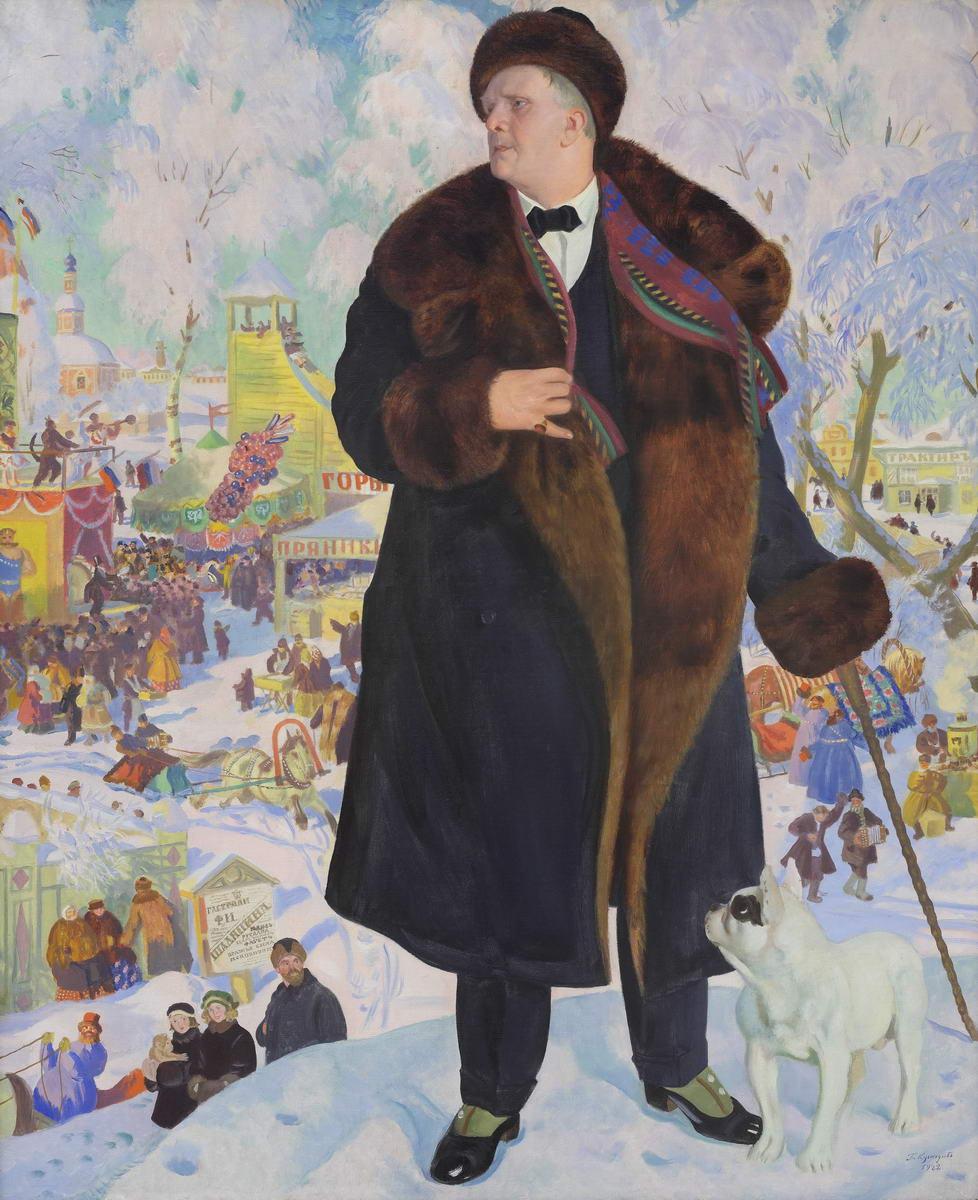
В сравнении с предшествующими периодами его жизни, все созданное в последнее десятилетие поражает количеством, многоплановостью и высоким художественным уровнем. Посетивший его в 1923 году М. В. Нестеров писал: «Был у бедного Кустодиева. Он прикован к креслу или кровати, но энергия его неукротима». Немощный физически, он создает гигантские полотна – «Портрет Ф. И. Шаляпина» (215 х 172), «Праздник на площади Урицкого» (133 х 268), «Ночной праздник на Неве» (107 х 216), «Русская Венера» (200 х 175), пишет картины, делает много станковых рисунков, сочиняет экслибрисы и проектирует плакаты, оформляет и иллюстрирует книги, работает для театра, с энтузиазмом овладевает новыми для него техниками литографии и линогравюры.
State Russian Museum
Details
- Accession number
- Аф-49195
In the catalog
Sources
- State Russian Museum
- Image: State Russian Museum — © State Russian Museum
In the life of Boris Kustodiev
The whole life1918–1921
Opera designs: “The Snow Maiden”, “The Tsar's Bride”
His opera designs were a success: “The Snow Maiden” for the Bolshoi Theatre (1918, never staged), “The Tsar's Bride” at the Bolshoi Opera Theatre of the People's House (1920), and set and costume designs for Serov's “The Power of the Fiend” at the former Mariinsky Theatre (1921).
1922
Illustrates Zamyatin's “How the Monk Erasmus Was Healed”
Kustodiev designed a separate illustrated edition of Yevgeny Zamyatin's story “How the Monk Erasmus Was Healed”. Zamyatin recalled that a seemingly insoluble task was solved with remarkable elegance, tact and a great sense of humour.
1922–1923
Illustrates Leskov
With his fine feeling for line, Kustodiev illustrated Leskov's “The Darner” (1922) and “Lady Macbeth of the Mtsensk District” (1923); he also worked in lithography and linocut.
1923
Joins the Association of Artists of Revolutionary Russia
Kustodiev joined the Association of Artists of Revolutionary Russia, and continued to paint, make engravings, illustrate books and design for the theatre until his death.