 Théodore RousseauFrench, 1812–1867
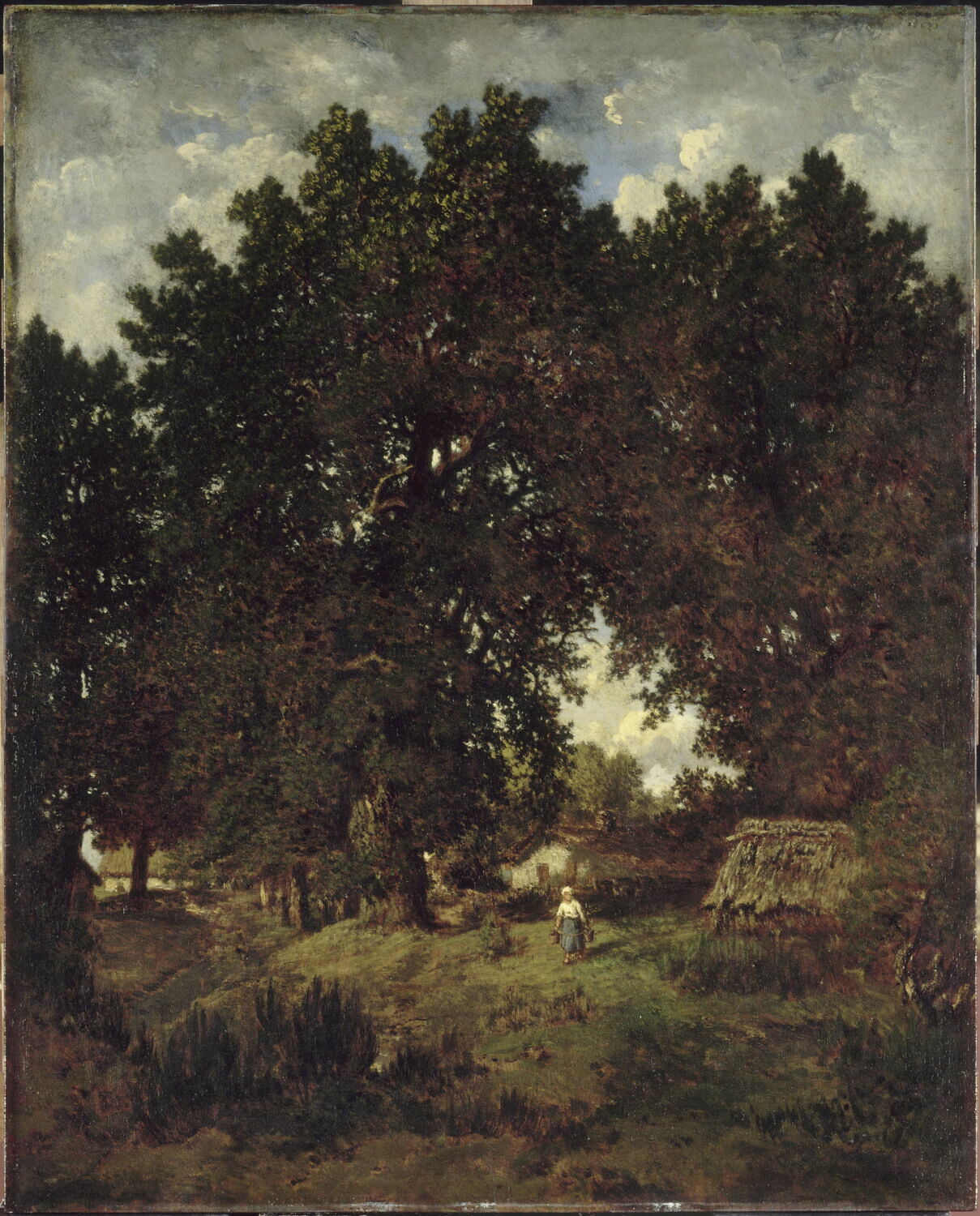
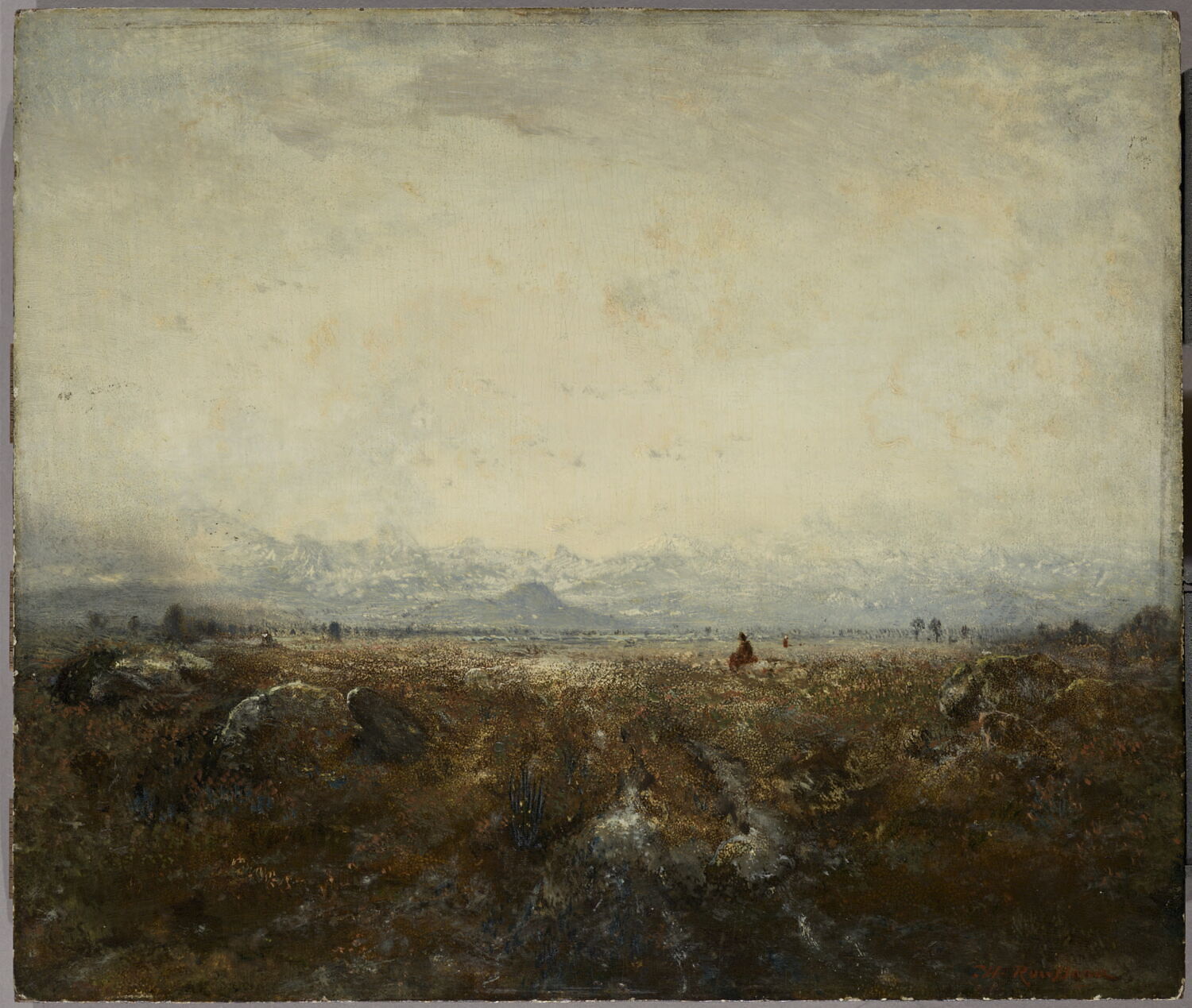
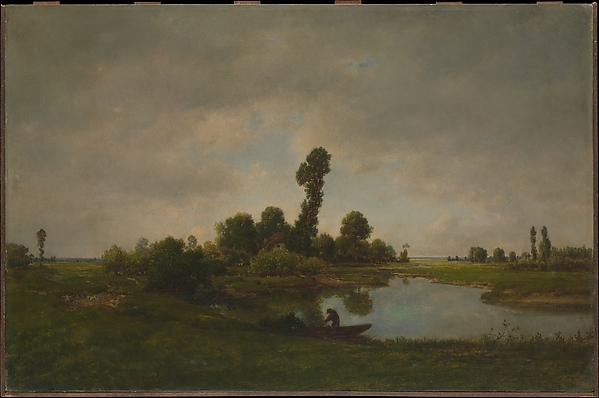
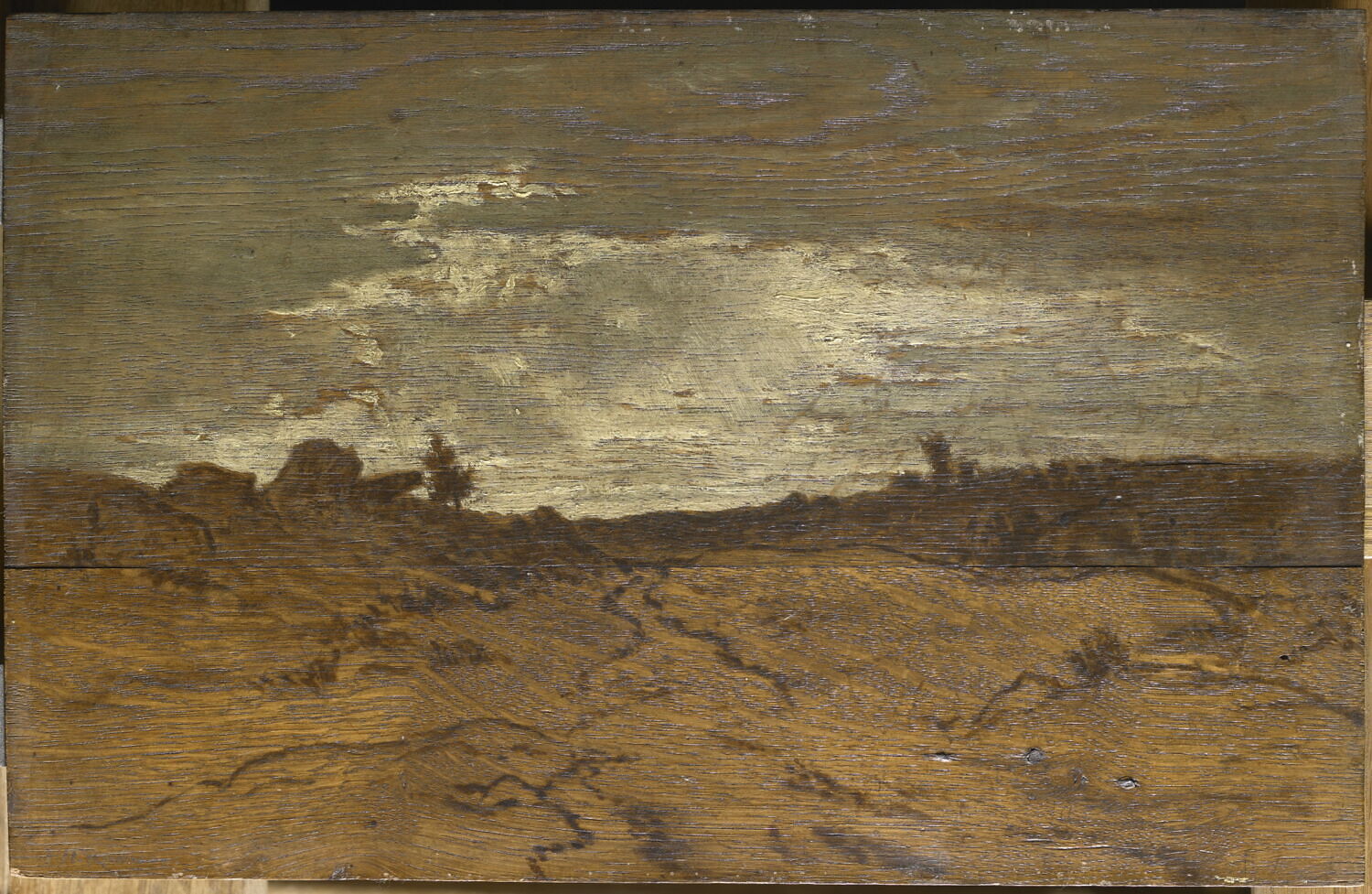
Effet de pluie
Can I see it?
Unknown
Where is “Effet de pluie” now? Collection: Musée du Louvre, Paris. Unknown.

Paris, France
The owner is known; whether it is on view today is not.
- In this state since
- Source
- The museum
Details
- Accession number
- RF 1938 108
In the catalog
Sources
- Musée du Louvre
- Image: Musée du Louvre — © 2011 GrandPalaisRmn (musée du Louvre) / Michel Urtado
In the life of Théodore Rousseau
The whole life1831
Salon debut: a landscape of the Auvergne
The nineteen-year-old Rousseau submitted work to the Paris Salon, and his landscape of the wild Auvergne won recognition for its lively brushwork. At the Salons of 1831, 1833, 1834 and 1835 he showed six works.
1836
The Salon rejects “Landscape of the Jura”
In 1836 the Salon jury rejected Rousseau's great work “Landscape of the Jura” (“The Descent of the Cattle”), and of the eight works he sent to the Salon between 1836 and 1841 none was accepted. By other accounts, the four Salons after his 1831 debut had already gone badly.
winter 1836 – 1837
First winter at Barbizon
Rousseau spent the winter of 1836–1837 at Barbizon with the painters Narcisse Díaz de la Peña and Théodore Caruelle d'Aligny; the nature there impressed him so deeply that from then on he came back every year. In time a circle of painters who, like him, painted nature from life gathered around him — Cabat, Daubigny, Dupré — and so the Barbizon school gradually took shape.
1848
Settles in Barbizon for good
Until then Rousseau had lived at Barbizon only occasionally, but in 1848 he settled in the forest village (with his wife, by some accounts) and spent most of his remaining days in its vicinity. His neighbour, the landscape painter Jules Dupré, recalled how hard Rousseau found it to know when a picture was finished, and how he would sometimes carry off a canvas on which his friend had laboured too long.
1849
Returns to the Salon
In 1849 Rousseau sent work to the Salon again, and all three of his submissions were accepted. He could now obtain fair sums for his pictures, though only about a tenth of their value thirty years after his death, and his admirers grew in number.
1851
Exhibits “The Edge of the Forest”
In 1851, after the reorganization of the Salon of 1848, Rousseau exhibited his masterpiece, “The Edge of the Forest” (now in the Louvre). The authorities still ignored him: that year the Legion of Honour went to Narcisse Diaz, whom Rousseau had taught to paint trees, while he himself received the Cross only soon afterwards.