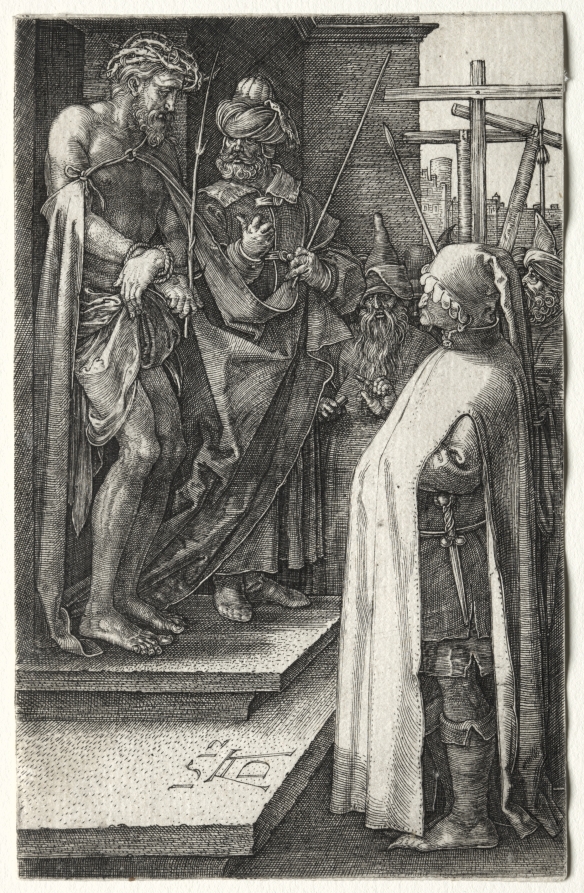
 Albrecht DürerGerman, 1471–1528
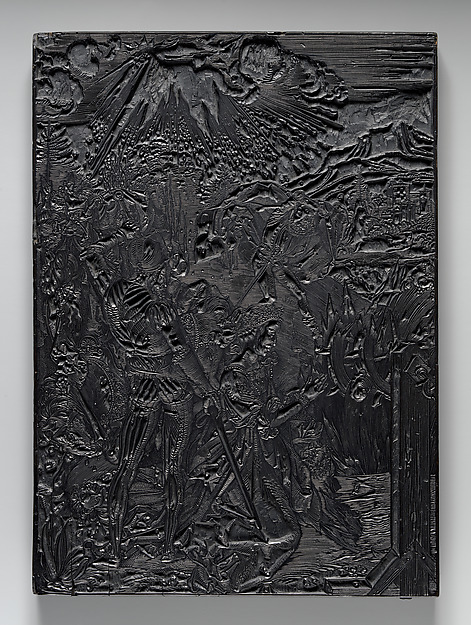
Ecce Homo
May one see it?
Not receiving at present

The Cleveland Museum of Art
Cleveland, United States
It belongs to the collection, but is not on display at present.
- Checked
- 5 hours ago
- In this state since
- Sep 29, 2026
- Source
- The museum's own collection data
Particulars
- Accession number
- 1921.1168
What it shows
In the catalog
Comings and goings
Not on view at present
The Cleveland Museum of Art · Sep 29, 2026 — now · Verified
Was not on view
National Gallery of Art · Sep 29, 2026 — Sep 29, 2026 · Verified
Was not on view
The Cleveland Museum of Art · Sep 28, 2026 — Sep 29, 2026 · Verified
Was not on view
National Gallery of Art · Sep 28, 2026 — Sep 28, 2026 · Verified
Was not on view
The Cleveland Museum of Art · Sep 27, 2026 — Sep 28, 2026 · Verified
Was not on view
National Gallery of Art · Sep 26, 2026 — Sep 27, 2026 · Verified
Was not on view
The Cleveland Museum of Art · Sep 26, 2026 — Sep 26, 2026 · Verified
Was not on view
National Gallery of Art · Sep 25, 2026 — Sep 26, 2026 · Verified
Was not on view
The Cleveland Museum of Art · Aug 19, 2026 — Sep 25, 2026 · Verified
Sources
- The Cleveland Museum of Art: the museum's own open data · fetched 4 days ago
- Image: The Cleveland Museum of Art — Museum open access
Meanwhile, in the life of Albrecht Dürer
The whole life1507–1528 · Workplace
Nuremberg
1513–1516
Three years without painting
Complaining that painting did not pay enough to justify the time compared with his prints, Dürer produced no paintings from 1513 to 1516.
1514
Death of his mother
In the year of Melencolia I and St Jerome in His Study, the artist's mother, Barbara Holper, died.
1515
A life pension from the emperor
The perpetually cash-strapped Maximilian could not pay on time and offered to exempt the artist from city taxes, which the Nuremberg Council opposed. At Dürer's request the emperor granted him a life pension of 100 guilders a year from the sums Nuremberg paid into the imperial treasury.
1517
Joins Nuremberg's circle of reformers
Dürer joined the circle of Nuremberg reformers led by the Augustinian vicar Johann Staupitz and Wenceslaus Linck. Around 1518 he came to know the writings of Martin Luther, which, he said, had “greatly helped” him.
![Madonna and Child [obverse], Albrecht Dürer, c. 1496/1499](https://api.nga.gov/iiif/878db7e6-10ae-4cae-ba5d-6d6f5c413ae8/full/!2400,2400/0/default.jpg)
![Lot and His Daughters [reverse], Albrecht Dürer, c. 1496/1499](https://api.nga.gov/iiif/7565a449-f82a-414b-9bda-c93f55a51b4d/full/!2400,2400/0/default.jpg)