 William ChambersScottish, 1723–1796
Drawing
Can I see it?
Not on view at present
Where is “Drawing” now? Collection: Victoria and Albert Museum, London. Not on view at present. Checked September 25, 2026.

London, United Kingdom
It belongs to the collection, but is not on display at present.
- Checked
- In this state since
- Source
- The museum
About the work
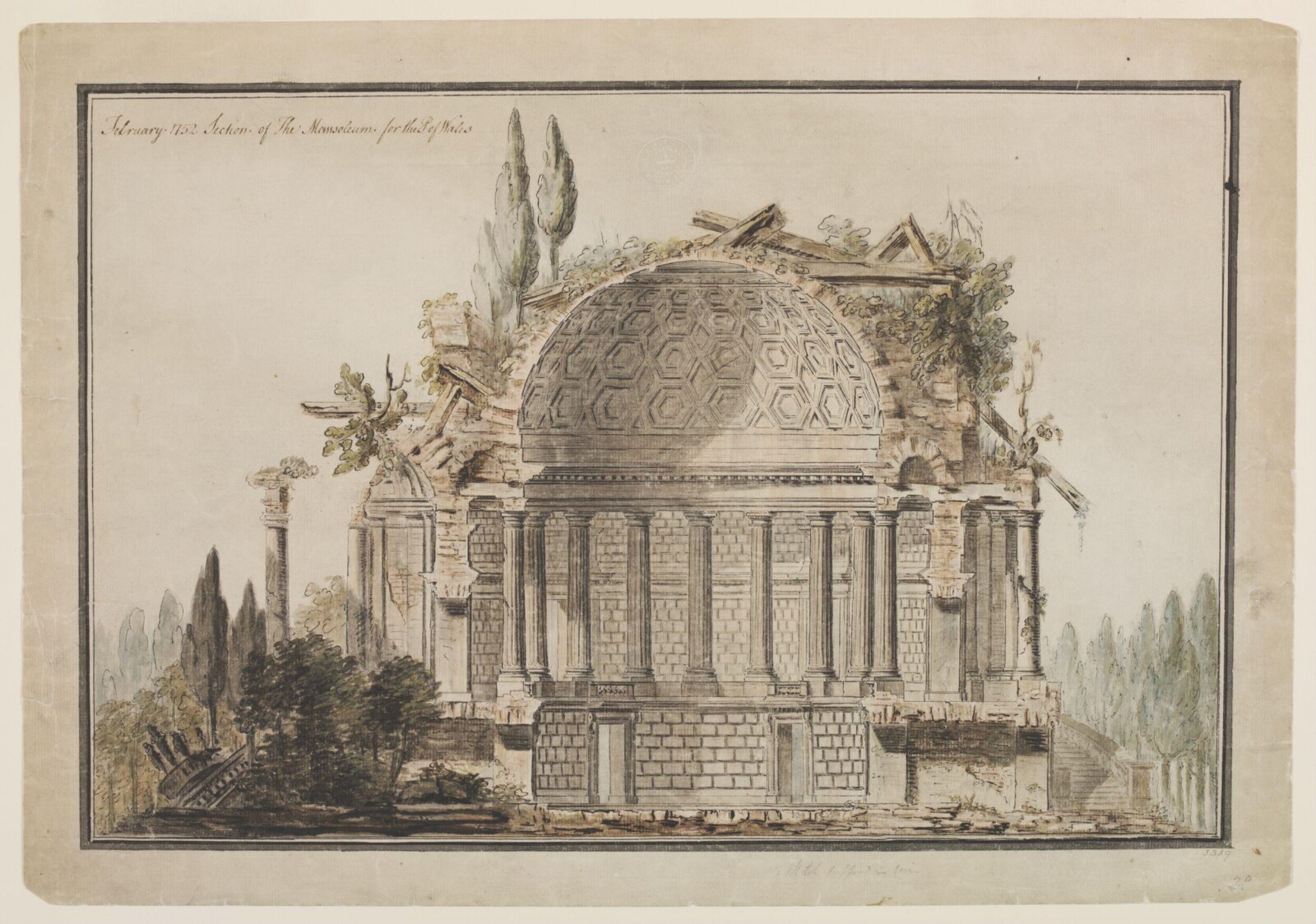
Section of the mausoleum to the Prince of Wales as a ruin dated 1752 by leading architect and designer Sir William Chambers (1723-1796). The mausoleum was not built. There were three known projects for this building. All three drawings borrow both from the architecture of ancient Rome and that of Chambers’s architectural circle in Italy including M.A. Challe, L.J. le Lorrain, N.A. Jardin and especially Jean Laurent Legeay. The interior has elements of the Pantheon, and the exterior borrows from the tomb of Cecilia Metella. This design was part of the second scheme known through this drawing alone. It is drawn in a scratchy picturesque style, of which it is one of the earliest dated examples in Chambers’s oeuvre. Chambers was employed at Kew by the Dowager Princess from 1757 to completely remodel the gardens. Between that date and 1763, Chambers erected twenty-five buildings and other features at Kew, in addition to designing unbuilt projects like the monument to the British poets.
Read on
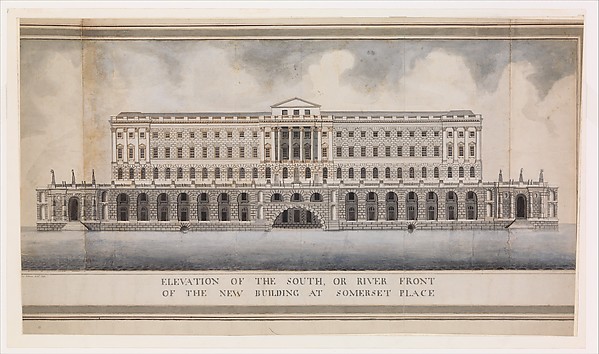
Chambers was born in Sweden and died in London. He travelled widely, visiting China, and studied architecture at the Ecole des Arts, Paris, from 1749 and in Italy from 1750 to 1755. Many of his drawings from this period are contained in his important 'Franco-Italian' album, held in the V&A. Chambers moved to London in 1755 and published his influential Treatise on Civil Architecture in 1759. Chambers demonstrated the breadth of his style in buildings such as Gower (later Carrington) House and Melbourne House, London, in such country houses as Duddingston, Scotland, and in the garden architecture he designed for Wilton House, Wiltshire, and at Kew Gardens. He became head of government building in 1782, and in this capacity built Somerset House, London.
Victoria and Albert Museum
Details
- Accession number
- 3339
What it shows
In the catalog
Sources
- Victoria and Albert Museum
- Image: Victoria and Albert Museum — © Victoria and Albert Museum, London