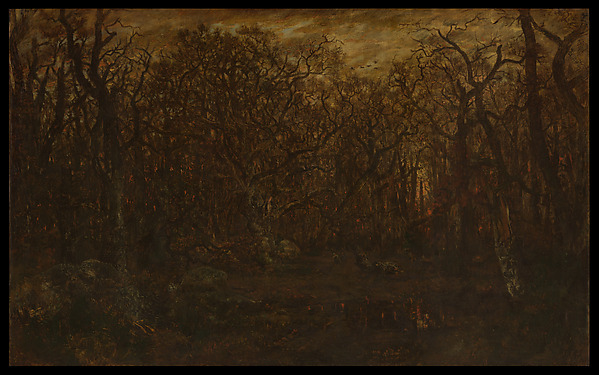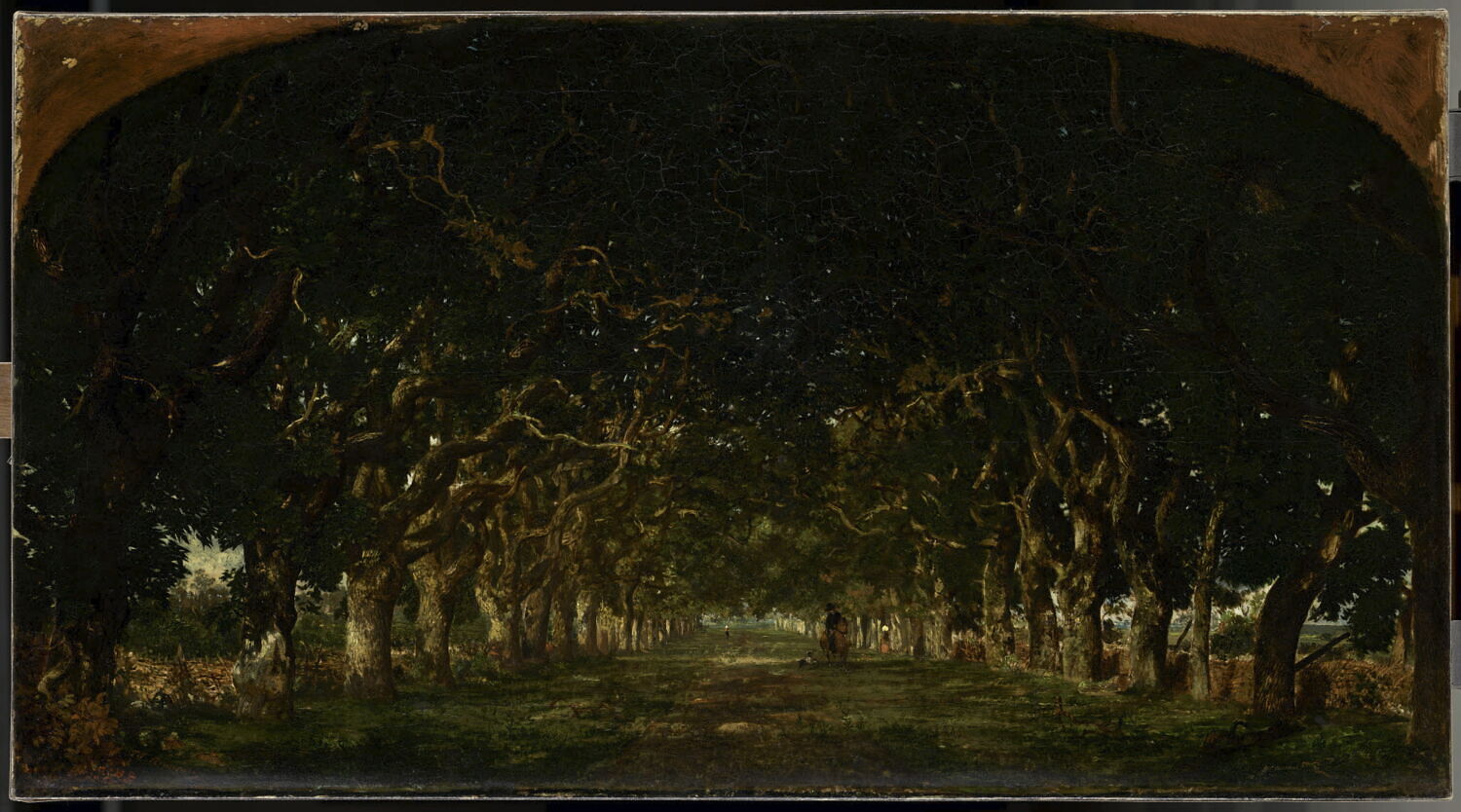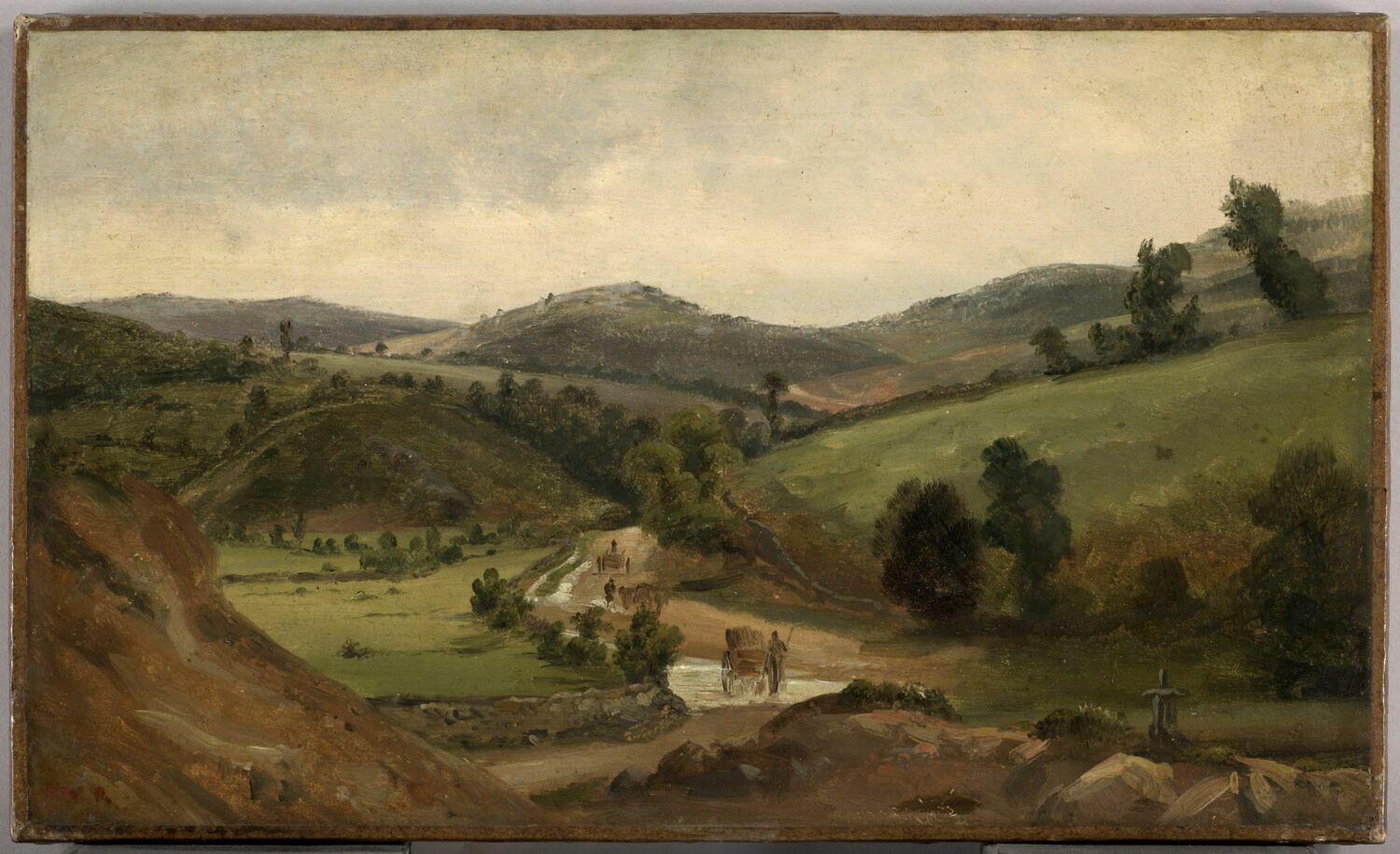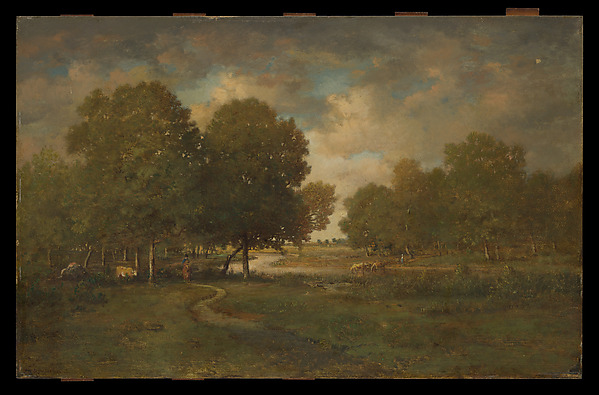
 Théodore RousseauFrench, 1812–1867
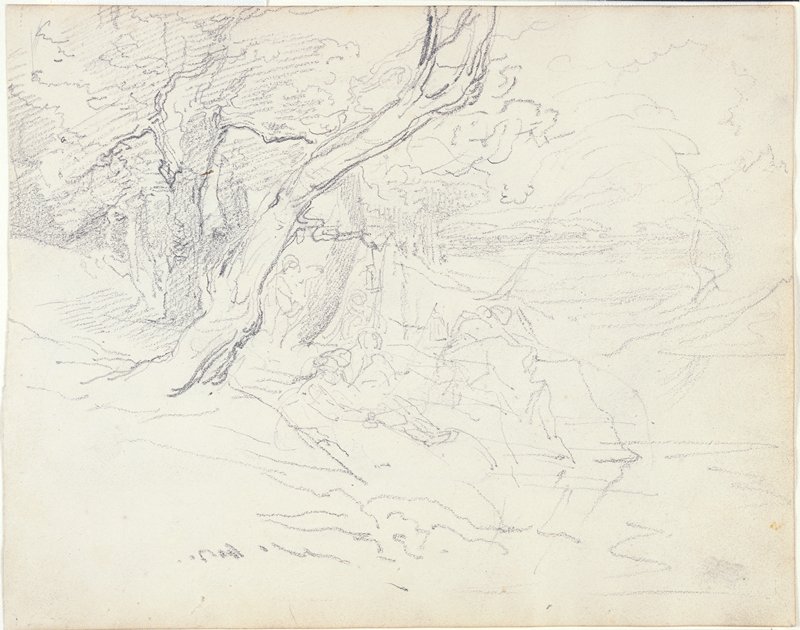
Drawing
May one see it?
Not receiving at present

Minneapolis Institute of Art
Minneapolis, United States
It belongs to the collection, but is not on display at present.
- Checked
- yesterday
- In this state since
- Sep 25, 2026
- Source
- The museum's own collection data
Particulars
- Accession number
- 82.104.5a, b
In the catalog
Sources
- Minneapolis Institute of Art: the museum's own open data · fetched 5 days ago
- Image: Minneapolis Institute of Art — public domain
Meanwhile, in the life of Théodore Rousseau
The whole life1824
The forests of Franche-Comté
Three years later Rousseau accompanied his father to Besançon and discovered the forests of Franche-Comté. Later he travelled through Auvergne and Normandy, journeys reflected in his painting.
c. 1827
Breaks with Rémond's academic teaching
At fifteen Rousseau was taken on for two years by the landscape painter Jean-Charles Rémond, but the young man utterly rejected his teacher's academic system; a conflict broke out, and he was not allowed to compete for the Prix de Rome. From then on Rousseau taught himself, copying the old masters in the Louvre, especially Claude Lorrain and the Dutch minor masters he felt close to, and studying contemporary English landscape painters.
1831
Salon debut: a landscape of the Auvergne
The nineteen-year-old Rousseau submitted work to the Paris Salon, and his landscape of the wild Auvergne won recognition for its lively brushwork. At the Salons of 1831, 1833, 1834 and 1835 he showed six works.
1836
The Salon rejects “Landscape of the Jura”
In 1836 the Salon jury rejected Rousseau's great work “Landscape of the Jura” (“The Descent of the Cattle”), and of the eight works he sent to the Salon between 1836 and 1841 none was accepted. By other accounts, the four Salons after his 1831 debut had already gone badly.
winter 1836 – 1837
First winter at Barbizon
Rousseau spent the winter of 1836–1837 at Barbizon with the painters Narcisse Díaz de la Peña and Théodore Caruelle d'Aligny; the nature there impressed him so deeply that from then on he came back every year. In time a circle of painters who, like him, painted nature from life gathered around him — Cabat, Daubigny, Dupré — and so the Barbizon school gradually took shape.
1836–1849
“Le grand refusé”
After 1841 Rousseau stopped sending work to the Salon until 1849; dubbed “le grand refusé”, he became known through the writings of his friend, the critic Théophile Thoré, while his father, who had at first regretted his son's forsaking business, sided with him in all his conflicts with the Salon. In these years of “artistic exile” Rousseau painted some of his best pictures: “The Chestnut Avenue”, “The Marsh in the Landes” (now in the Louvre) and “Hoar-Frost”.