 Käthe KollwitzGerman, 1867–1945
Downtrodden
May one see it?
Not receiving at present

Minneapolis Institute of Art
Minneapolis, United States
It belongs to the collection, but is not on display at present.
- Checked
- In this state since
- Source
- The museum's own collection data
About the work
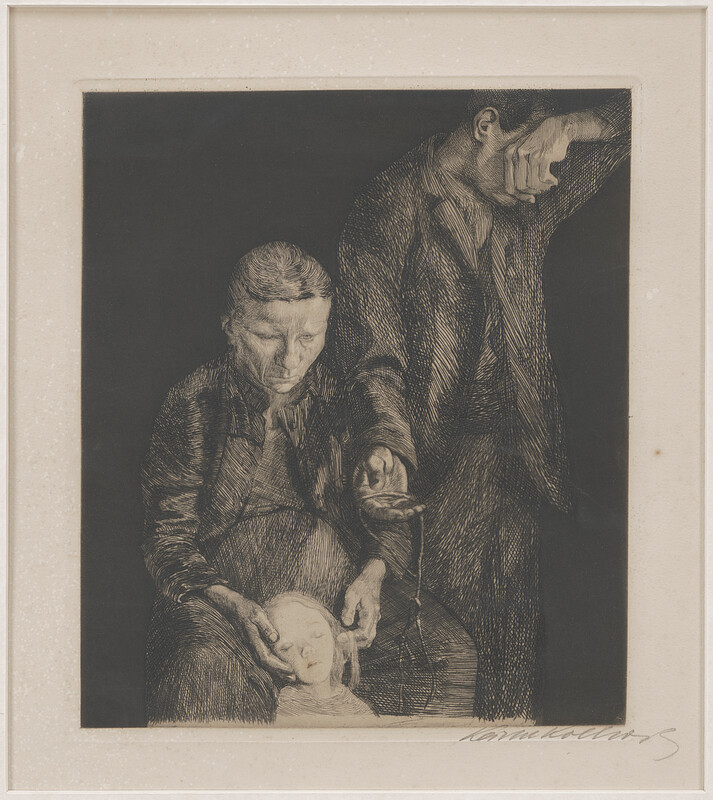
A care-worn couple grieve for a sick or dead child. The man stands leaning against a wall, his face buried in his left arm, while his right is slightly extended in a gesture of supplication or benediction. The woman leans over slightly, using her hands to support the head of the limp child. Käthe Kollwitz originally intended this image to serve as the left panel of a 34-inch-wide triptych, whose central panel featured a naked male corpse laid out on a cloth-covered slab (derived from Hans Holbein’s famous painting of the dead Christ in the Kunstmuseum Basel) with another sword-bearing figure leaning over him. The right wing of the triptych showed nude women, one bound to a tree trunk, one embracing the trunk, and another seeming to mourn the others while imploring the viewer.
Read on
Kollwitz credited the symbolist Max Klinger with inspiring much of her interest in printmaking, and the triptych shows her employing his brand of hyperdramatic otherworldliness. The result was an odd juxtaposition of melodrama in the center and right sections versus the restrained tragedy of the left. After printing just a few impressions of the full composition, Kollwitz cut the plate, separating the left section from the others. She then went on to print editions of the separate plates. This impression of the left section shows the inner drama that Kollwitz would continue to pursue throughout her career.
Minneapolis Institute of Art
Particulars
- Accession number
- 2023.57.7
In the catalog
Sources
- Minneapolis Institute of Art: the museum's own open data · fetched 7 days ago
- Image: Minneapolis Institute of Art — public domain
Meanwhile, in the life of Käthe Kollwitz
The whole life1898
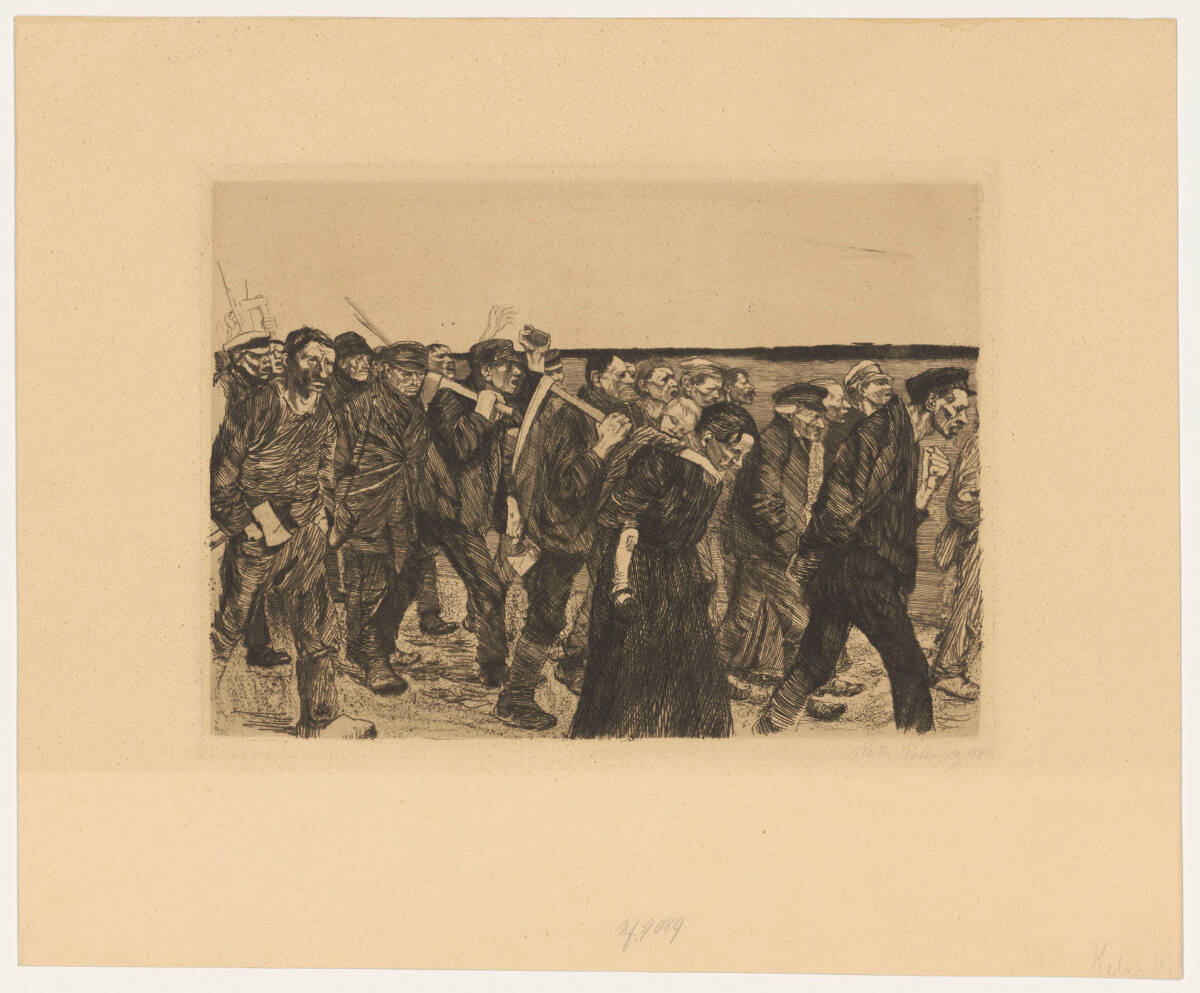
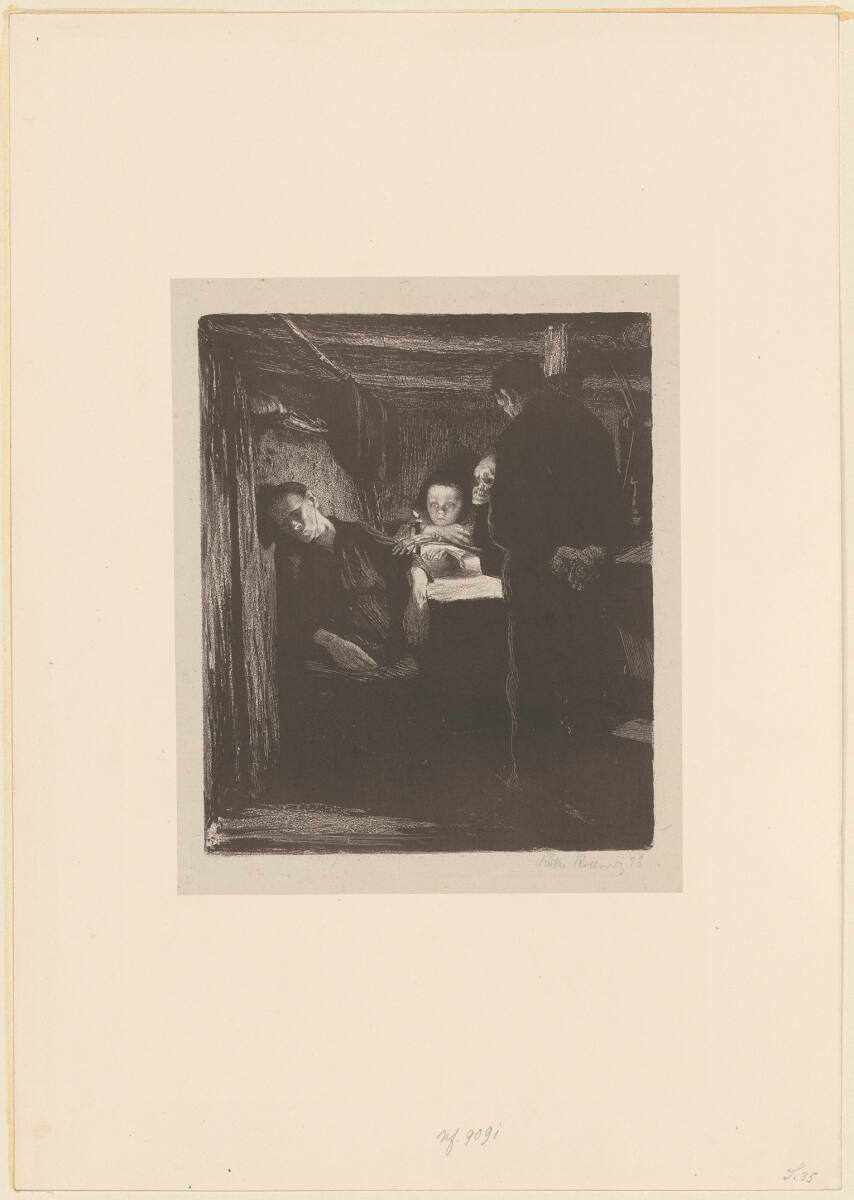
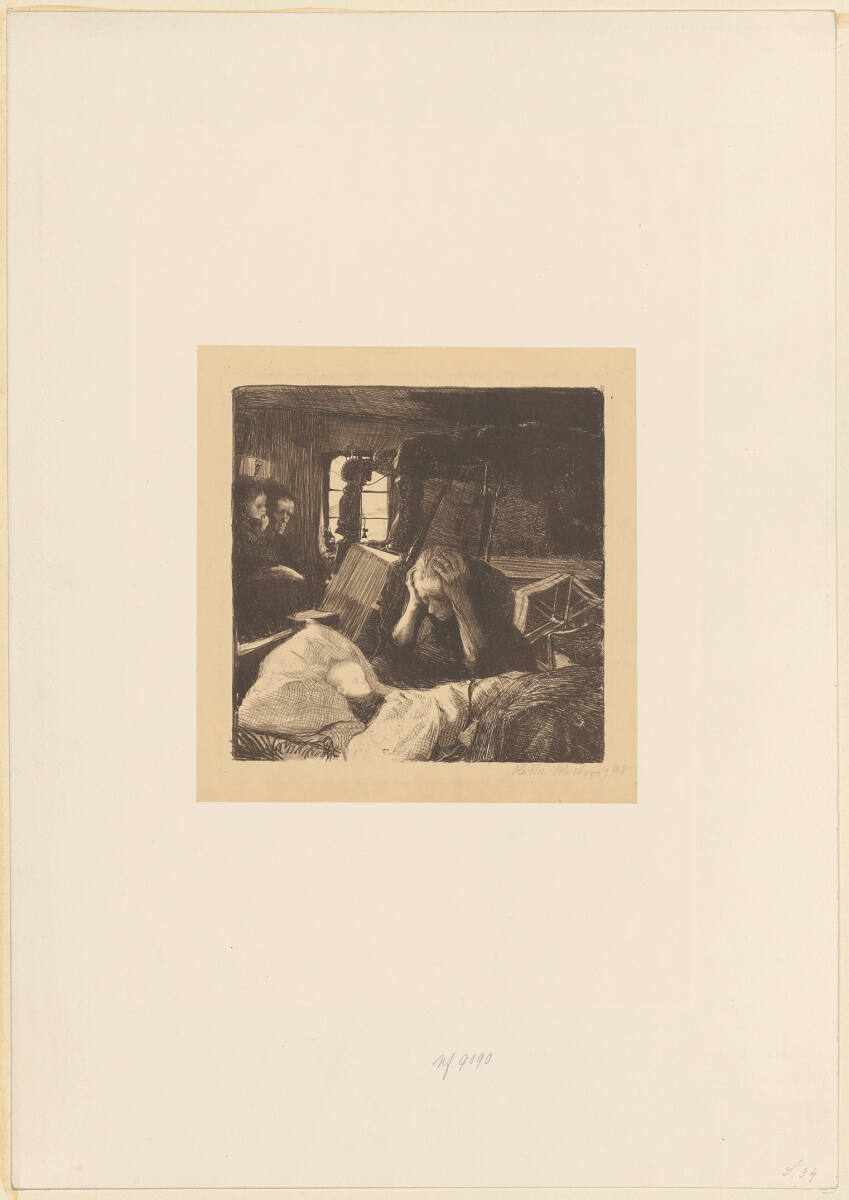
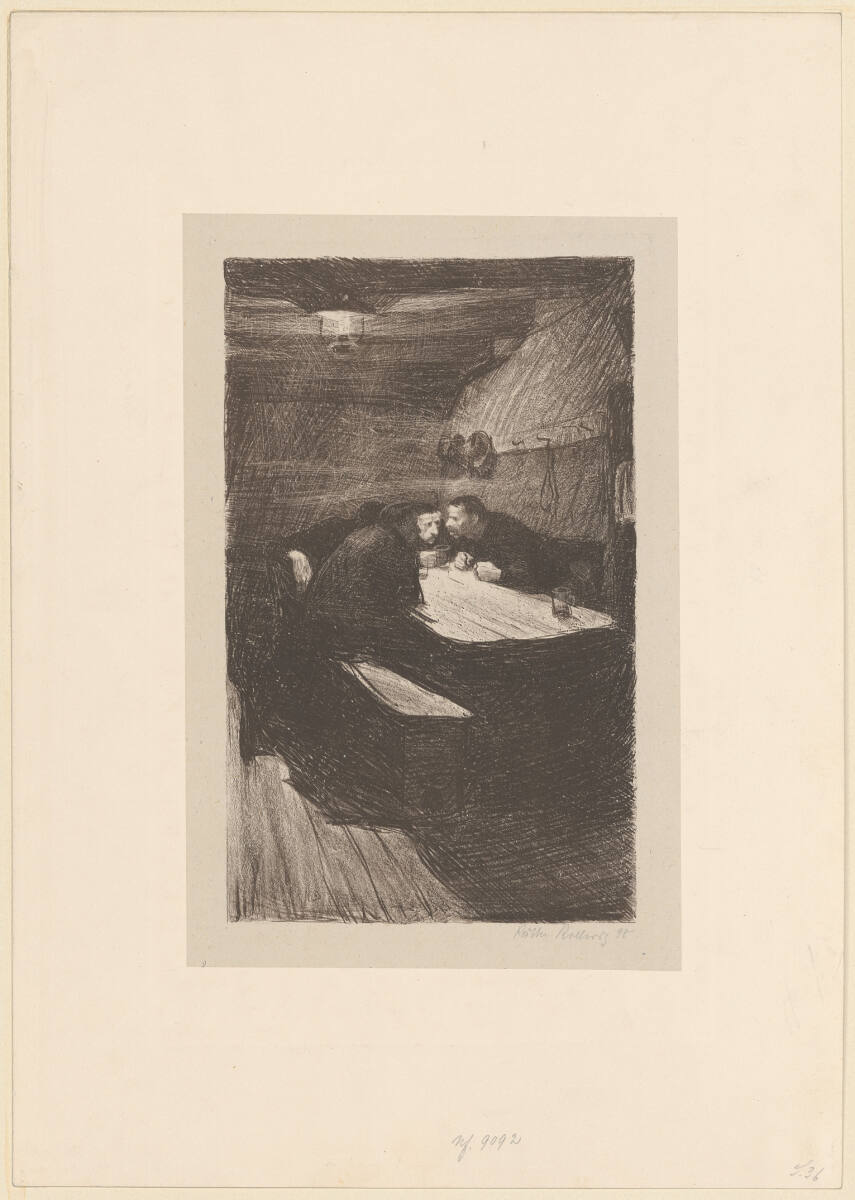
“The Weavers” at the Great Berlin Art Exhibition
In 1898 the cycle was shown publicly at the Great Berlin Art Exhibition and was widely acclaimed.
1898
The Kaiser refuses a gold medal to a woman
Adolph Menzel nominated her work for the gold medal of the 1898 Great Berlin Art Exhibition, but Kaiser Wilhelm II withheld his approval, saying that a medal for a woman would be going too far and that orders and medals belonged on the breasts of worthy men.
1898–1903
Teaches at the Women’s Art School
From 1898 to 1903 she taught at the Women’s Art School in Berlin.