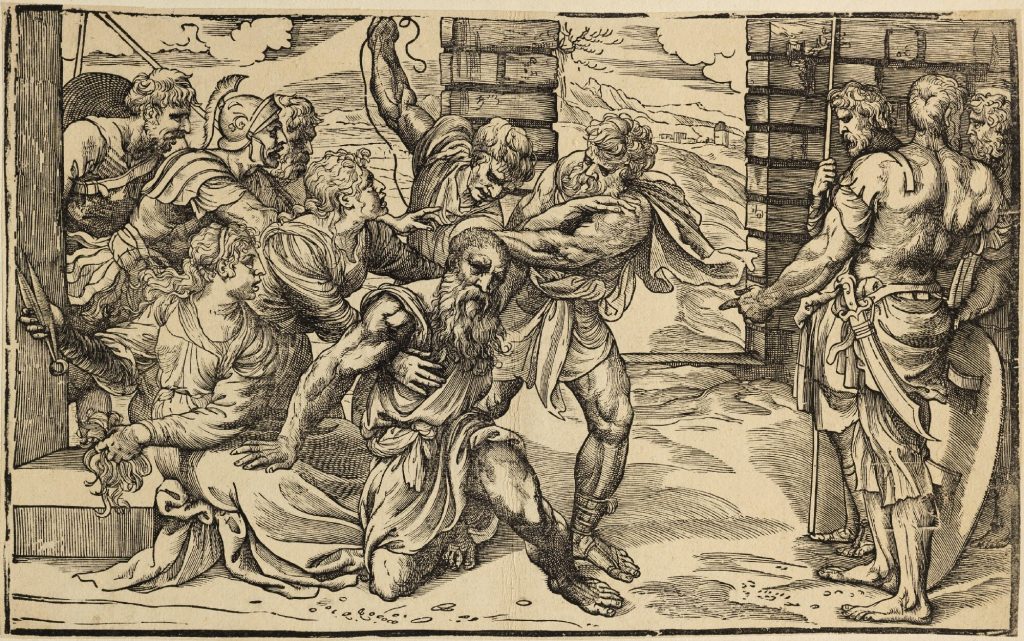
 TitianItalian, 1490–1576
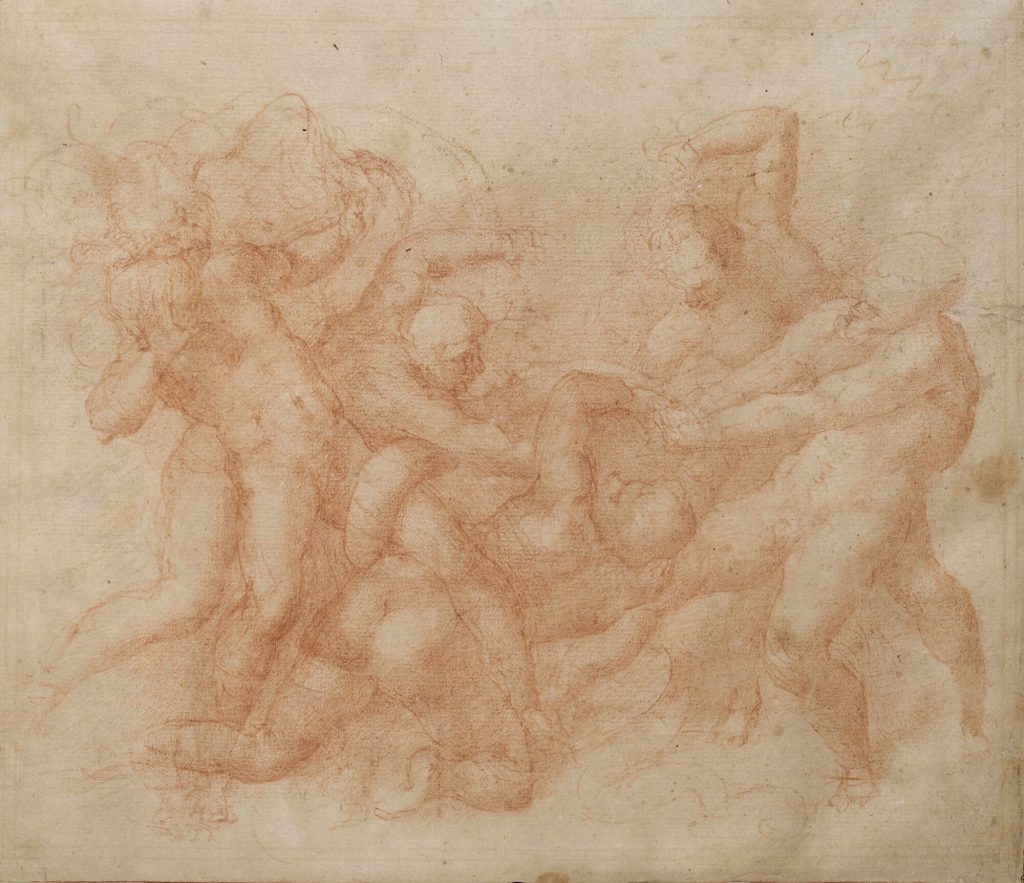
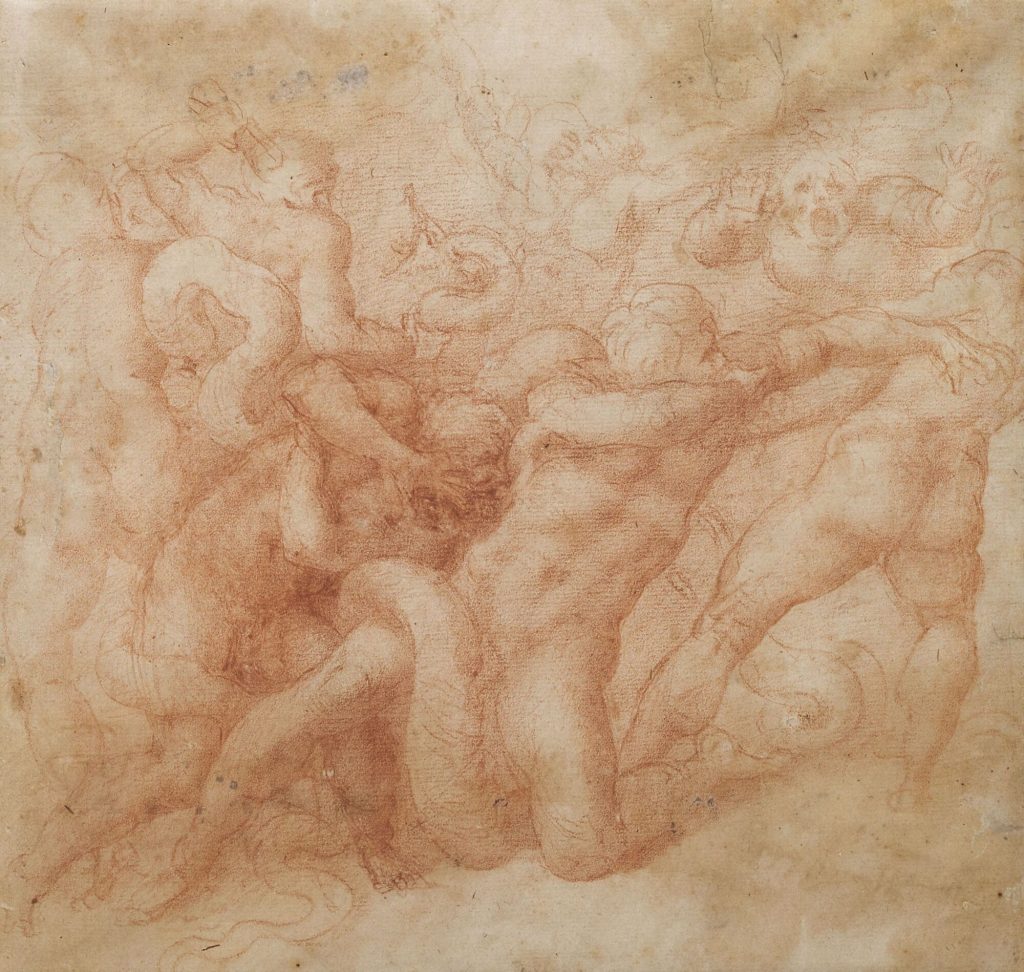
Die Gefangennahme Samsons
Can I see it?
Unknown
Where is “Die Gefangennahme Samsons” now? Collection: Kunstpalast, Düsseldorf. Unknown.

Düsseldorf, Germany
The owner is known; whether it is on view today is not.
- In this state since
- Source
- The museum
Details
In the catalog
Sources
- Kunstpalast
- Image: Kunstpalast — In Copyright
In the life of Titian
The whole life1530–1539
The young Tintoretto in Titian's workshop
According to Tom Nichols, the very young Tintoretto, brought to Titian's studio by his father, probably entered the workshop between 1530 and 1539, but only for a very brief time. According to Ridolfi, after being cast out of the studio he resolved to become a painter by studying the canvases of Titian and the reliefs of Michelangelo, and wrote on his wall the motto “Michelangelo's design and Titian's colour”.
1537–1538
“The Battle of Cadore”: a threat to repay the money
The battle canvas for the Doge's Palace, commissioned in 1513, remained unfinished by June 1537: according to a document dated 23 June 1537 the Council demanded he return the funds paid for the years in which he had done no work, and a serious competitor, Pordenone, who since at least 1520 had challenged Titian's primacy in Venice, was available to replace him. He completed the canvas, the “Battle of Cadore”, in 1538; it was later lost in a fire at the Doge's Palace.
1540 · Workplace
Milan
1545–1546
A triumphant trip to Rome
In 1545–1546 Titian made a triumphant trip to Rome, painting portraits of Pope Paul III and meeting Michelangelo. Returning to Venice, he found that the most lucrative commissions were going to other, younger artists.
1545–1546 · Workplace
Rome
1547–1548
Augsburg: the “Equestrian Portrait of Charles V”
In 1547 Titian was summoned from Venice to Augsburg to paint portraits of Charles V and other dignitaries; at the Diet in early 1548 he completed six paintings, among them the “Equestrian Portrait of Charles V”. He also made the emperor aware that he had not received a single payment of his stipend, and on 10 July 1548 Charles V granted him a second annual pension of 100 scudi.