 Käthe KollwitzGerman, 1867–1945
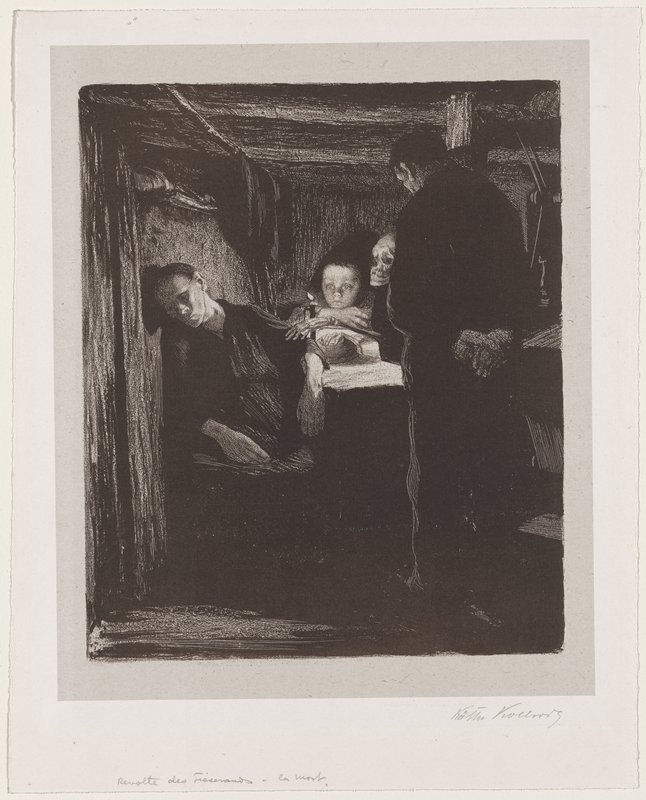
Death
May one see it?
Not receiving at present

Minneapolis Institute of Art
Minneapolis, United States
It belongs to the collection, but is not on display at present.
- Checked
- 2 days ago
- In this state since
- Sep 25, 2026
- Source
- The museum's own collection data
About the work
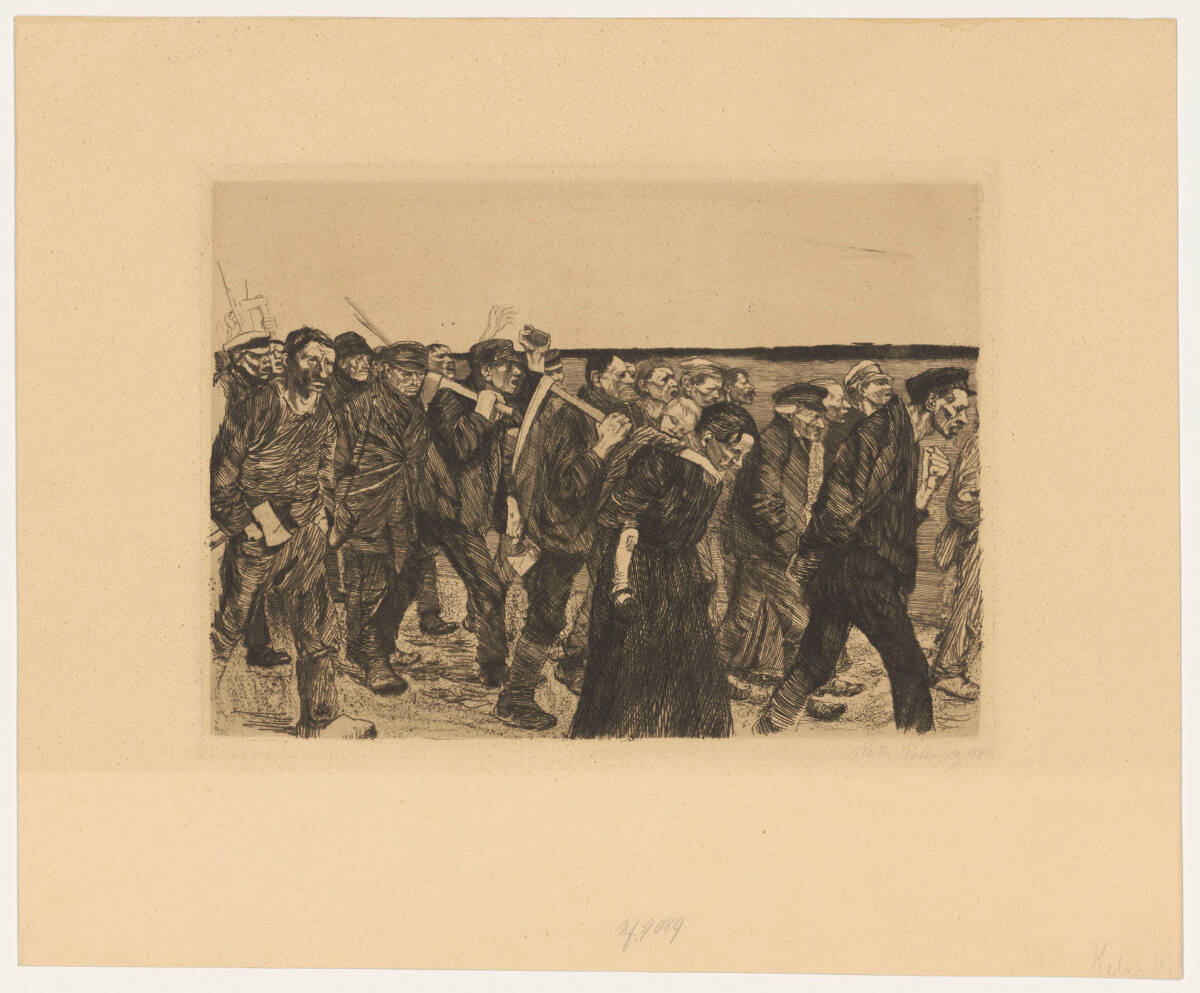
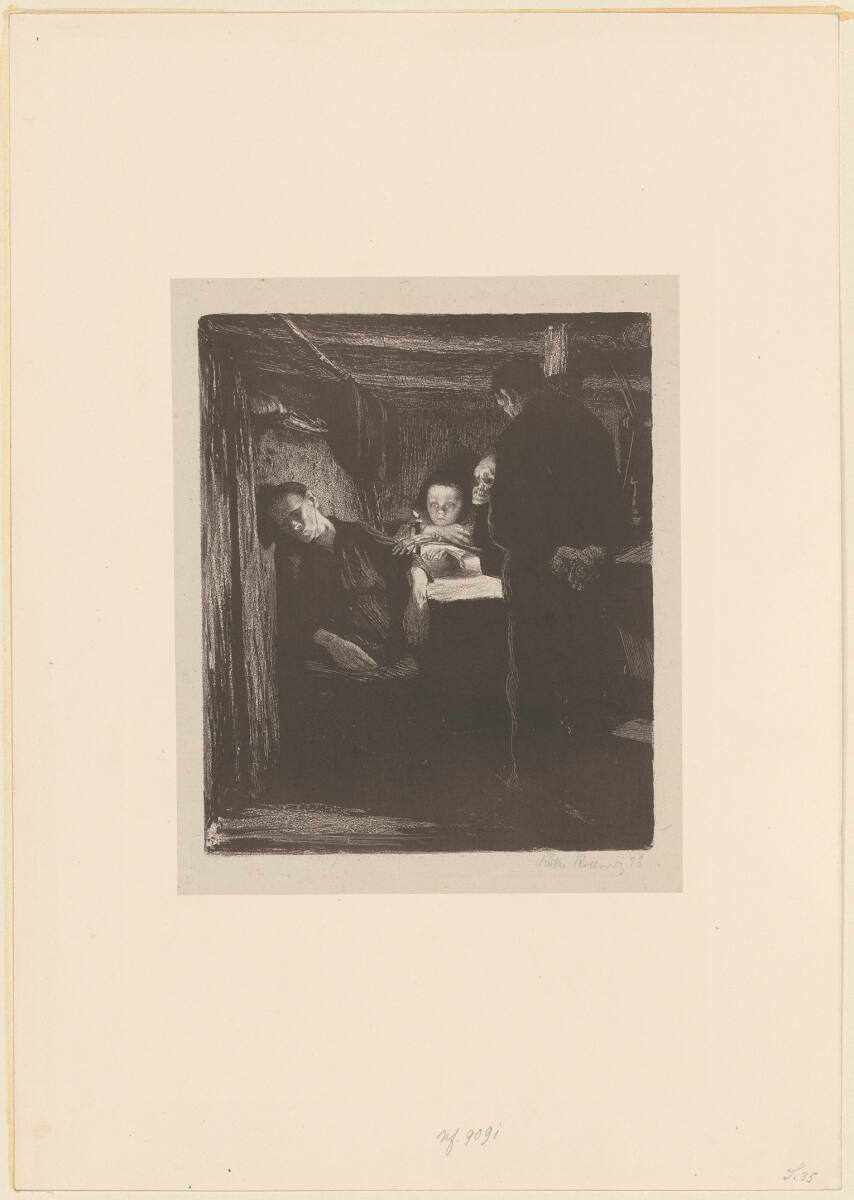
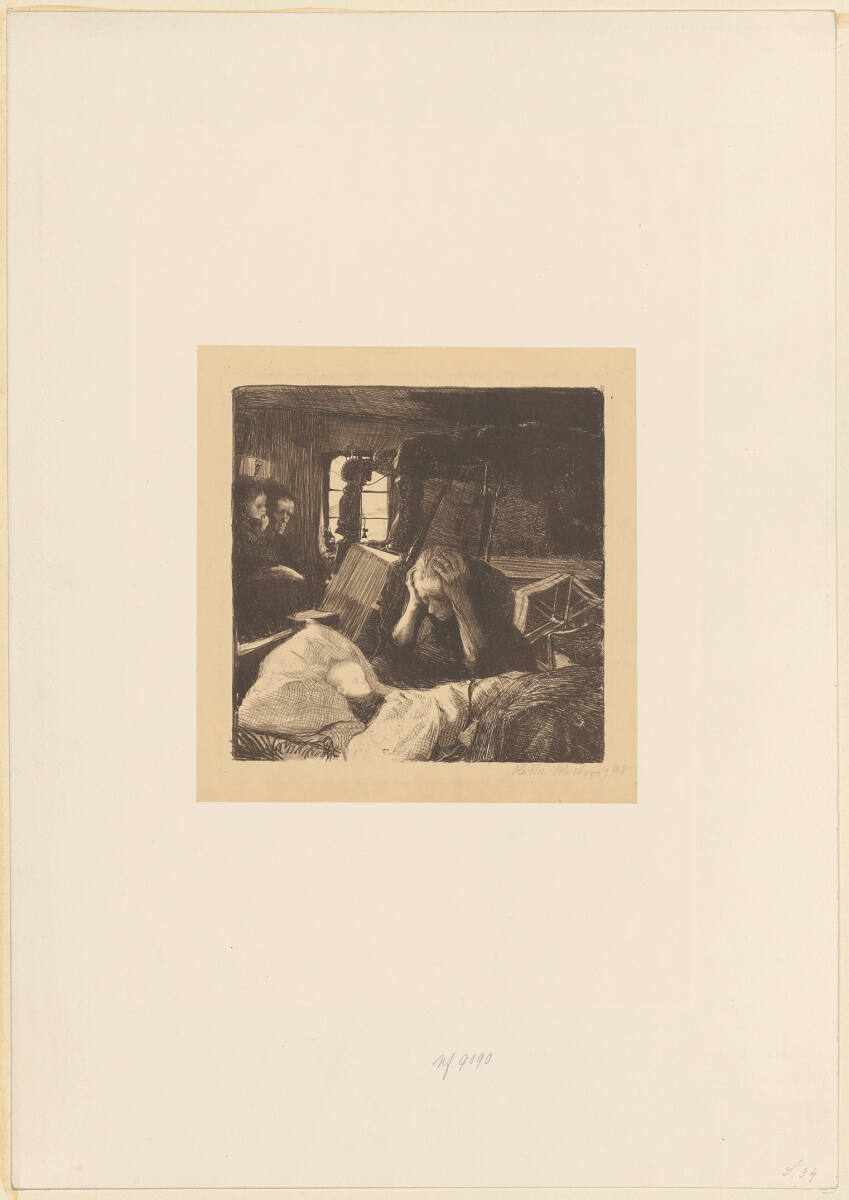
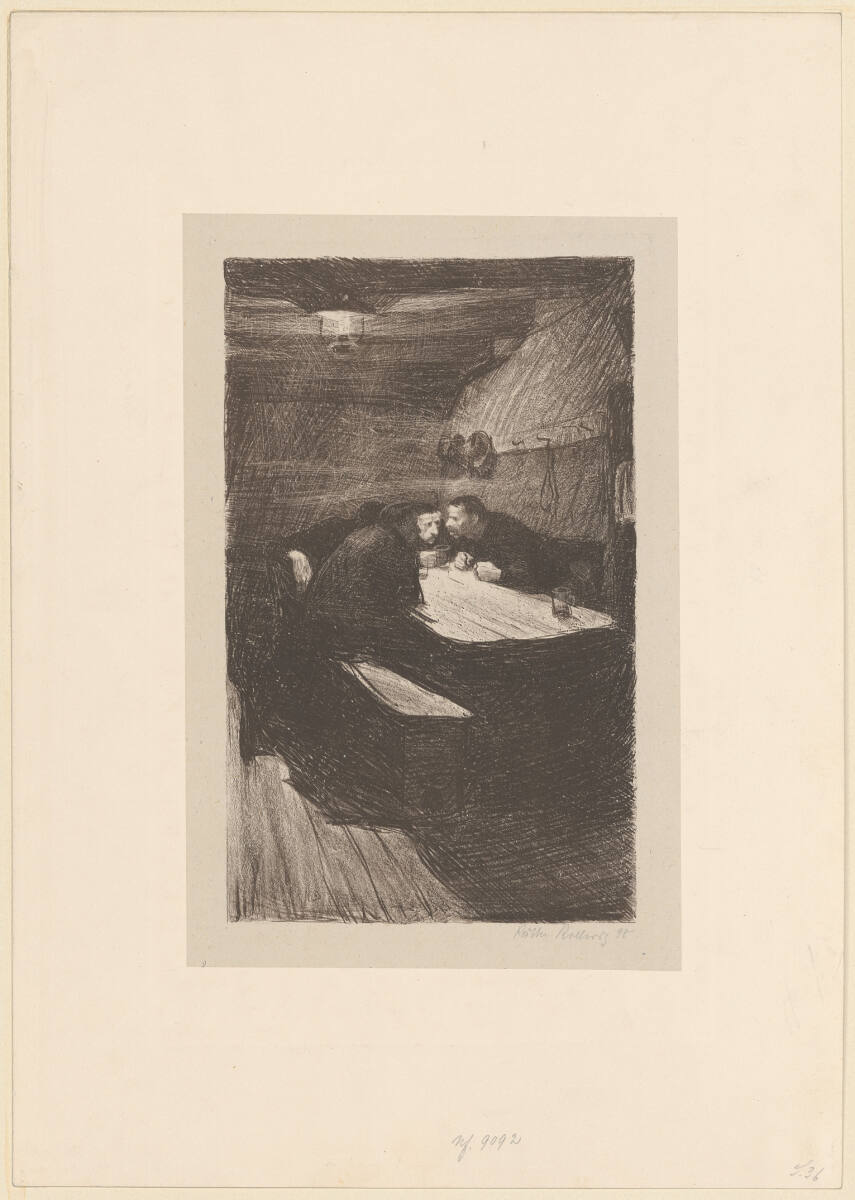
Death has made himself at home in the spare dwelling of a family of weavers in Prussian-dominated Silesia. He reaches for the exhausted woman with one hand while holding an overturned, empty bowl in the other. In the early 1840s, foreign competition and increasing population drove down the wages of textile workers. They responded with violent protests that further destabilized the economy. Despite their deepening misery, they gave inspiration to later generations of laborers seeking fair treatment. After seeing a performance of Gerhart Hauptmann's The Weavers, which dramatized the revolt, Käthe Kollwitz immediately set to work on a cycle of six prints on the plight of the Silesians.
Minneapolis Institute of Art
Particulars
- Accession number
- P.363
In the catalog
Sources
- Minneapolis Institute of Art: the museum's own open data · fetched 5 days ago
- Image: Minneapolis Institute of Art — © Minneapolis Institute of Art
Meanwhile, in the life of Käthe Kollwitz
The whole life1892–1896
Hauptmann’s “The Weavers” inspires a new cycle
Between the births of her sons Hans and Peter she saw Gerhart Hauptmann’s play The Weavers, about the failed revolt of the Silesian weavers in Langenbielau in 1844. It inspired her to drop a series of etchings she had planned to illustrate Émile Zola’s Germinal and to produce a cycle on the weavers instead.
1896
Birth of her son Peter
In 1896 her younger son, Peter, was born; he was killed at the front in 1914.
6 February 1896
Son born: Peter Kollwitz
1898
“The Weavers” at the Great Berlin Art Exhibition
In 1898 the cycle was shown publicly at the Great Berlin Art Exhibition and was widely acclaimed.
1898
The Kaiser refuses a gold medal to a woman
Adolph Menzel nominated her work for the gold medal of the 1898 Great Berlin Art Exhibition, but Kaiser Wilhelm II withheld his approval, saying that a medal for a woman would be going too far and that orders and medals belonged on the breasts of worthy men.
1898–1903
Teaches at the Women’s Art School
From 1898 to 1903 she taught at the Women’s Art School in Berlin.