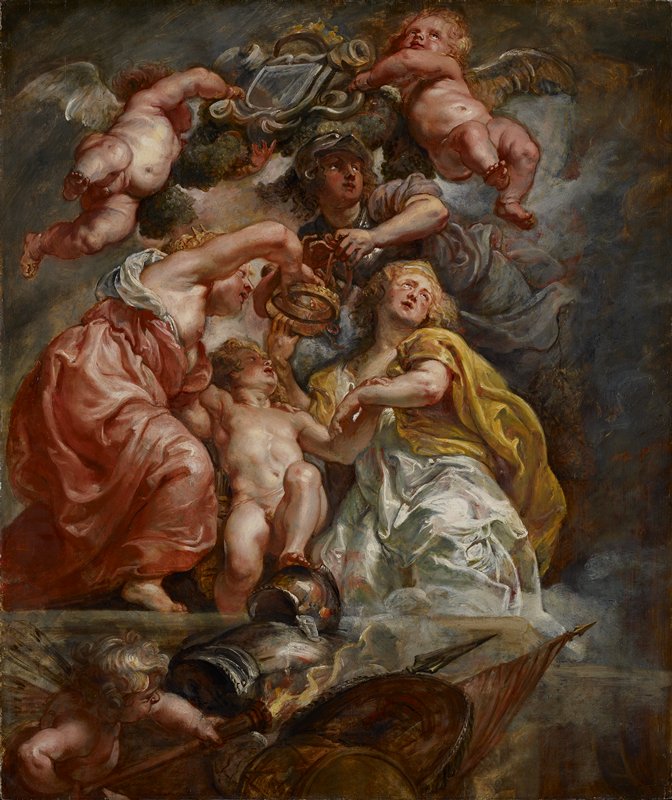
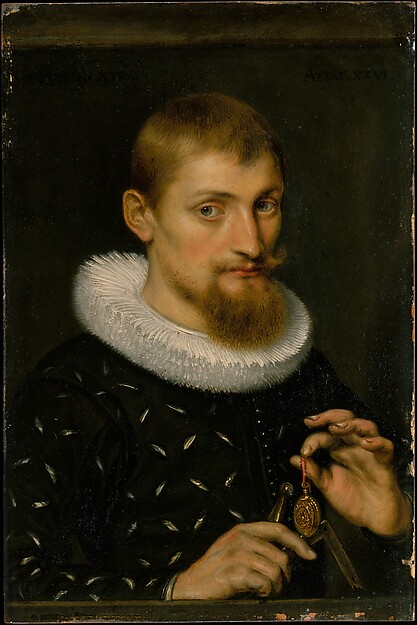
Peter Paul RubensFlemish, 1577–1640
Cimon and Pero
Can I see it?
Unknown
Where is “Cimon and Pero” now? Collection: Mauritshuis, The Hague. Whether it is on view today is unknown.

The Hague, Netherlands
The owner is known; whether it is on view today is not.
- In this state since
- Source
- The museum
About the painting
Cimon and Pero is a 1630 oil on canvas painting by Peter Paul Rubens, now in the Siegerlandmuseum in Siegen, Germany. It shows a return to the subject Roman Charity, which Rubens had previously painted around 1612.
In the museum's words
Peter Paul Rubens (1577 - 1640). Cimon and Pero, c. 1630. The remarkable story of Cimon and Pero dates from ancient Rome. Cimon was an old man who was held prisoner and was given nothing to eat. His daughter Pero kept him alive by secretly feeding him from her breast. The story was regarded as the epitome of filial devotion and sacrifice. It is also referred to as Caritas Romana: Roman charity. Rubens portrayed the old man with loose brushstrokes, characteristic for his later work. He accentuated the contrast between this wrinkled figure and the beautiful young woman. The nosey wardens stealing a glimpse also liven up the scene. Purchased by the Mauritshuis in The Hague in 1822 from Stier van Aerstelaer collection, Antwerp, Acquired by the Rijksmuseum in exchange in 1825.
Mauritshuis
Details
- Accession number
- SK-A-345
What it shows
In the catalog
Display history
Whether it is on view today is unknown
Mauritshuis · Sep 29, 2026 — now · Unconfirmed
Whether it was on view is unknown
Rijksmuseum · Unconfirmed
Sources
- Rijksmuseum
- Image: Mauritshuis — Rijksmuseum (public domain)
In the life of Peter Paul Rubens
The whole life1635
Purchase of the Castle at Elewijt, Title of Lord
With the acquisition in 1635 of the castle at Elewijt (the Het Steen estate near Antwerp), Rubens received the title of lord of the manor; he spent much time there, and his late landscapes are associated with the place.
1635
Decorations for the Entry of the Cardinal-Infante Ferdinand
Rubens directed the creation of the ephemeral decorations for the ceremonial entry into Antwerp of the new governor, the Cardinal-Infante Ferdinand of Austria.
1 March 1637
Son born: Peter Paul Rubens III