 Annibale CarracciItalian, 1560–1609
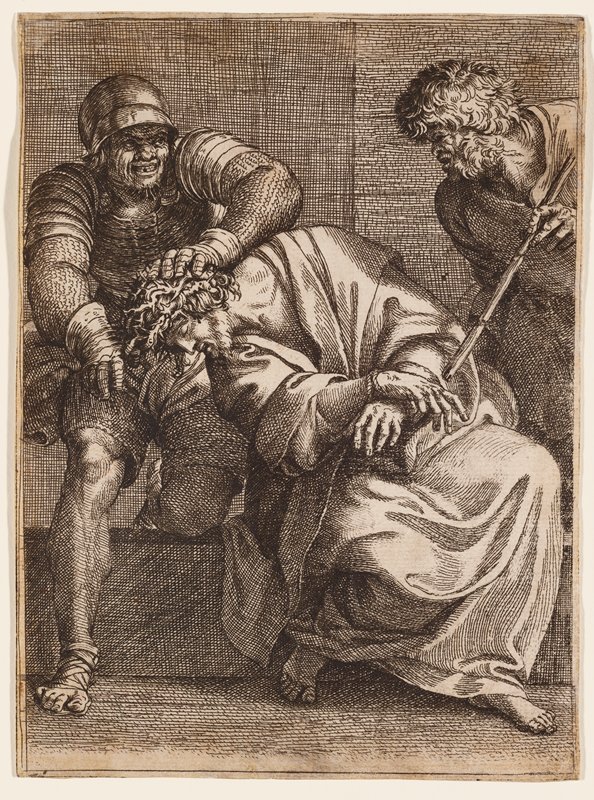
Christ Crowned with Thorns
May one see it?
Not receiving at present

Minneapolis, United States
It belongs to the collection, but is not on display at present.
- Checked
- In this state since
- Source
- The museum
About the work
Annibale made this brutal depiction of Christ crowned with thorns shortly after suffering a catastrophic mental breakdown, from which he never fully recovered. No longer able to cope with large-scale painting commissions, he devoted himself almost exclusively to drawings and prints. In this period, his works are affecting and intimate—seemingly expressing the depths of his despair. Here, Jesus is shown in a state of anguish. Annibale’s use of insistent parallel lines for the background creates an inescapable, claustrophobic space, while squiggling lines on his tormentor’s forearms add nervous energy to the brutality that Jesus calmly endures.
Minneapolis Institute of Art
Particulars
- Accession number
- 2012.93.2
In the catalog
Sources
- Minneapolis Institute of Art
- Image: Minneapolis Institute of Art — public domain
Meanwhile, in the life of Annibale Carracci
The whole life1595–1609 · Workplace
Rome
1597–1605
Assistants at the Palazzo Farnese: the masters to come
Many of Annibale’s assistants and pupils on the projects at the Palazzo Farnese and the Herrera Chapel became pre-eminent artists of the next decades, among them Domenichino, Francesco Albani, Giovanni Lanfranco, Domenico Viola, Guido Reni and Sisto Badalocchio.
c. 1605
A mental breakdown after a meagre fee
Carracci was a melancholic, and around 1605 he suffered a mental breakdown which, biographers explain, was caused by the unexpectedly low fee of 500 scudi for the frescoes of the Farnese gallery.
March 1605
Serious illness: rheumatism keeps him from painting
In March 1605 Annibale fell seriously ill and apparently never recovered enough to resume work. From 1605 severe rheumatic pains deprived him of the ability to paint.
1606
Leaves the Palazzo Farnese
In 1606 Annibale left the Palazzo Farnese and lived in the Roman parish of San Lorenzo in Lucina.
April 1606
The cardinal laments the painter’s “heavy melancholic humour”
In 1606 Annibale signed a “Madonna of the Bowl”, but in a letter of April 1606 Cardinal Odoardo Farnese lamented that a “heavy melancholic humour” kept Annibale from painting for him.