ART WIKI32,963 on view
MapCollectionArtistsMuseumsExhibitionsJournal
Sign in

ART WIKI

Where the masterpiece hangs, and when they let you in.

Collections: Art Institute of Chicago, Getty Villa, Harvard Art Museums, Hirshhorn Museum and Sculpture Garden, J. Paul Getty Museum, Minneapolis Institute of Art, Musée du Louvre, National Gallery of Art, National Museum of Asian Art, National Portrait Gallery (Smithsonian), Pushkin State Museum of Fine Arts, Rijksmuseum, Smithsonian American Art Museum, SMK — National Gallery of Denmark, State Hermitage Museum, State Russian Museum, The Cleveland Museum of Art, The Metropolitan Museum of Art, The Museum of Modern Art, Tretyakov Gallery, Victoria and Albert Museum, Whitney Museum of American Art, State Catalogue of the Museum Fund of Russia (274 museums), Europeana (19 museums), Wikidata (6 museums), Paris Musées (12 museums), and Joconde, the French Ministry of Culture's museum database (495 museums). Images belong to their rights holders.

Sections

  • Map
  • Search
  • Collection
  • Masterpieces
  • On view now
  • Artists

More

  • Museums & galleries
  • Exhibitions
  • Journal
  • Where the data comes from
  • Privacy & cookies
HomeMapBrowse
  1. Collection/
  2. Art Institute of Chicago/
  3. Cheese Mold Standard with Olive
Cheese Mold Standard with Olive, Ed Ruscha, 1969
Edward Ruscha, portraitEdward RuschaAmerican, 1937

Cheese Mold Standard with Olive

1969 · Print

May one see it?

Not receiving at present

Art Institute of Chicago

Chicago, United States

It belongs to the collection, but is not on display at present.

Checked
2 days ago
In this state since
Aug 19, 2026
Source
The museum
On the mapMuseum page

About the work

Ed Ruscha is a California-based artist whose work is associated with the Pop art movement. Standard Station marks the first time that Ruscha collaborated with a print publisher, who financed the edition but left the execution up to the artist. Ruscha’s book of photographs Twenty-six Gasoline Stations—specifically the page depicting a Standard Oil station in Amarillo, Texas—provided the model for this print as well as a painting he made in 1963. Perhaps the most notable feature of the print version of the image is the gradation of the colors in the sky. Ruscha achieved this effect through the “Split-Fountain” technique, which blends ink to create a rainbow effect. The technique originated in commercial printing and had been used in lithographic and screenprinting shops for many years, but Ruscha was one of the first to use it in fine-art printing. As art historian Riva Castleman has pointed out, the garish rainbow effect achieved by Ruscha in this print was so often imitated by other artists that, by the late 1960s, it had become a printing cliché.

Art Institute of Chicago · CC BY 4.0

Particulars

1969 · aged 32
1937now
Accession number
1974.59c

In the catalog

PrintsScreenprintPost-war art20th centuryUnited States

Sources

  • Art Institute of Chicago
  • Image: Art Institute of Chicago — © the artist or rights holder

Meanwhile, in the life of Edward Ruscha

The whole life
  1. 1965–1969

    Layout designer at Artforum as “Eddie Russia”

    After college he worked as a layout artist for the Carson-Roberts advertising agency in Los Angeles, and from 1965 to 1969 as layout designer for Artforum magazine under the pseudonym “Eddie Russia”; in 1969 he was a visiting professor of printing and drawing at UCLA.

  2. 1967

    Marries Danna Knego

    He marries Danica “Danna” Knego, whom he met in 1965; the couple has two children, a son, Edward “Eddie”, and a daughter, Sonny.

  3. 1967–1970

    Self-imposed exile from painting: gunpowder and graphite drawings

    During a period of self-imposed exile from painting (1967–1970) he makes gunpowder and graphite drawings: single words in a trompe l'oeil technique, as if formed from ribbons of curling paper.

  4. 1968

    First solo show in Europe, in Cologne

    His first European solo show takes place in Cologne, at Galerie Rudolf Zwirner.

  5. 1970

    The “Chocolate Room” at the Venice Biennale

    Ruscha represents the United States at the Venice Biennale as part of a survey of American printmaking with an on-site workshop, and constructs “Chocolate Room”: 360 sheets of paper permeated with chocolate hang like shingles on the gallery walls, and the pavilion smells like a chocolate factory. In 2003 the Museum of Contemporary Art in Los Angeles acquires the installation (then worth about $1.5 million).

  6. 1970

    Joins the Leo Castelli Gallery

    He joins the Leo Castelli Gallery; his first solo exhibition there will come only in 1973.
More by Edward Ruscha

All works
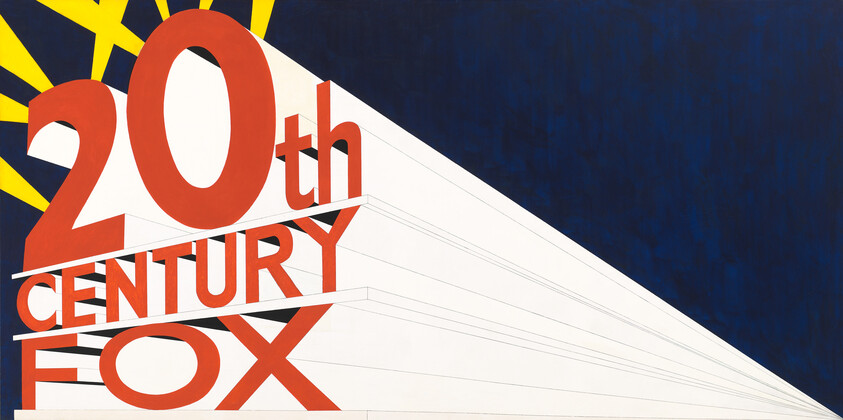
Large Trademark with Eight Spotlights, Edward Ruscha, 1962

Large Trademark with Eight Spotlights

1962 · Whitney Museum of American Art

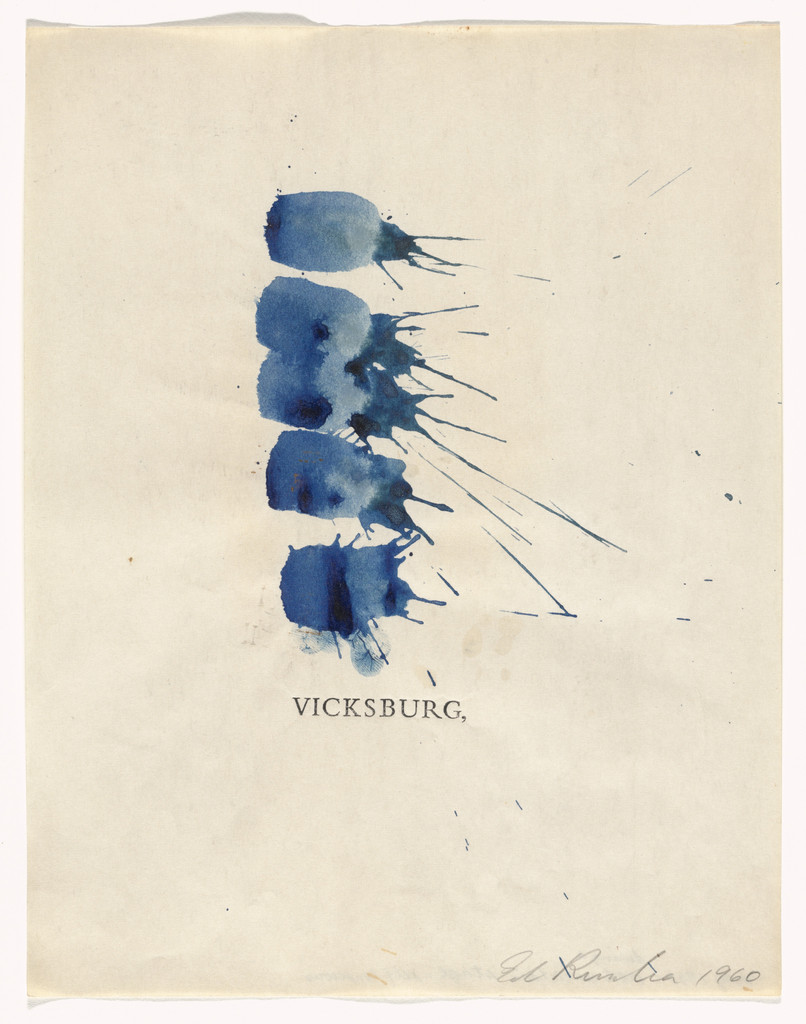
Vicksburg, Edward Ruscha, 1960

Vicksburg

1960 · Not on view · The Museum of Modern Art

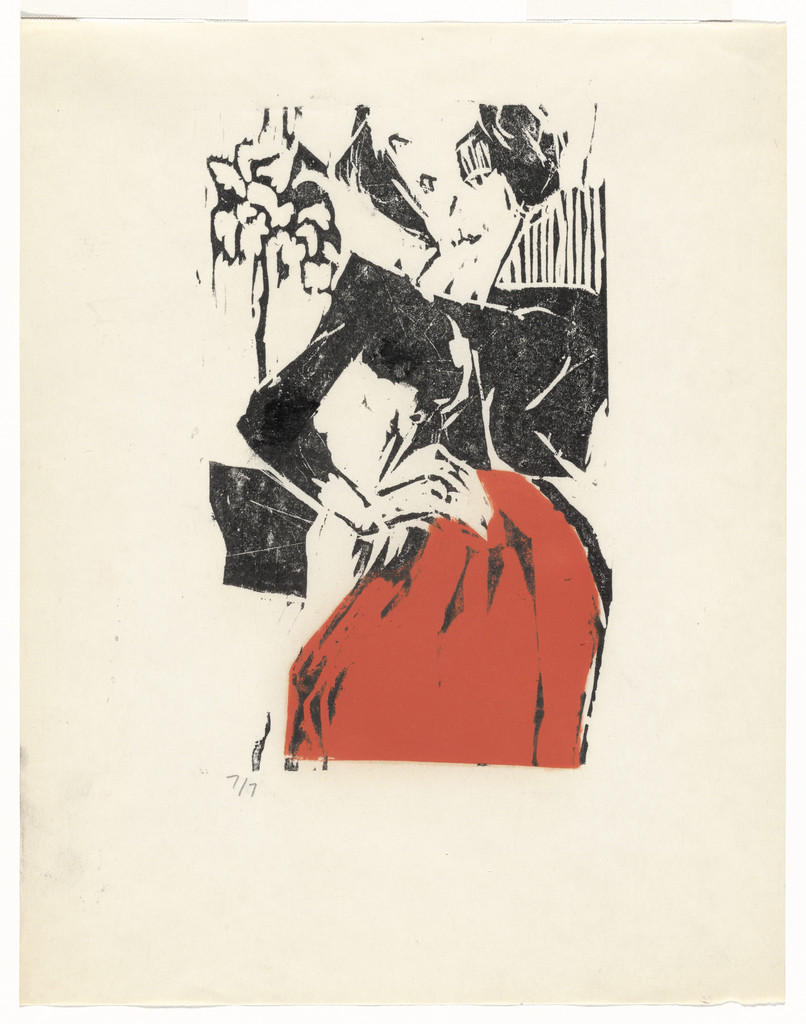
Dorothy Ruscha, Edward Ruscha, 1960

Dorothy Ruscha

1960 · Not on view · The Museum of Modern Art

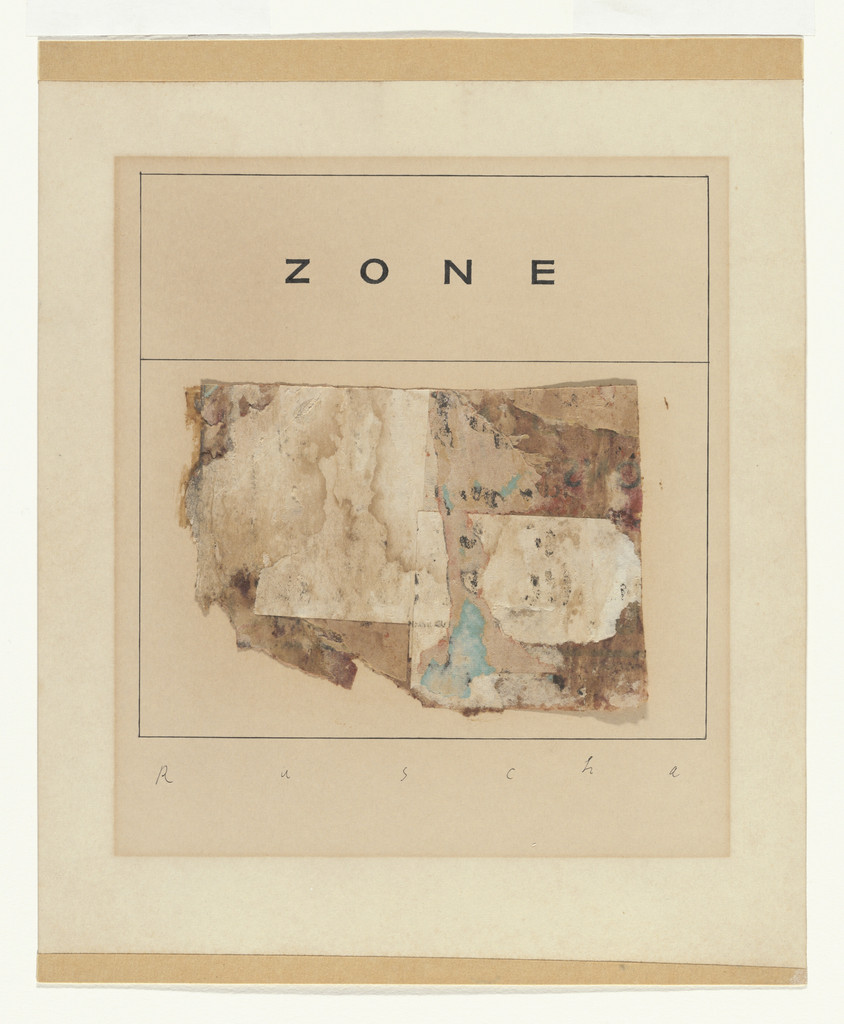
Zone, Edward Ruscha, 1961

Zone

1961 · Not on view · The Museum of Modern Art

Study for “OOF", Ed Ruscha, 1962

Study for “OOF"

1962 · Not on view · National Gallery of Art

3327 Division ('39 Ford), Ed Ruscha, 1962

3327 Division ('39 Ford)

1962 · Not on view · National Gallery of Art

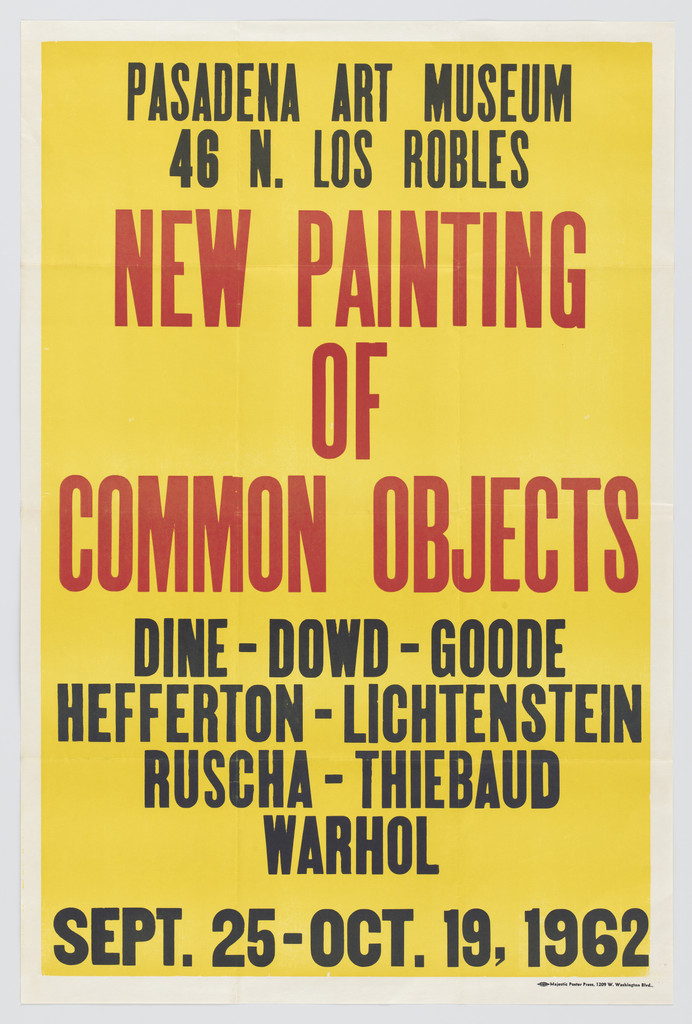
New Painting of Common Objects, Edward Ruscha, 1962

New Painting of Common Objects

1962 · Not on view · The Museum of Modern Art

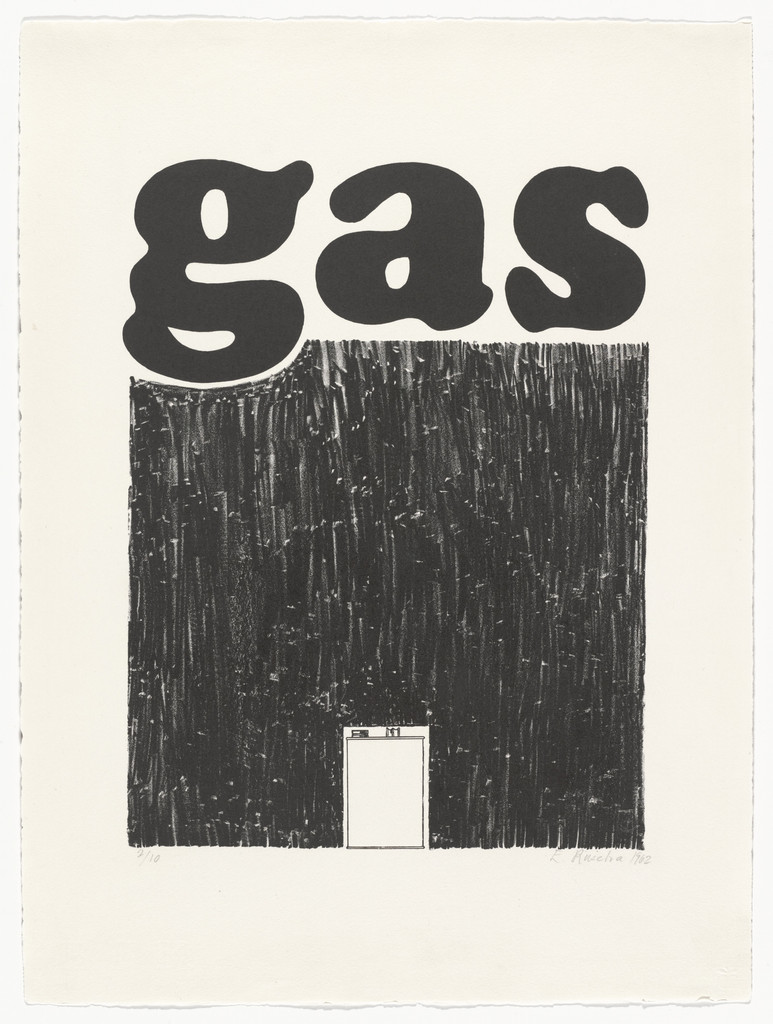
Gas, Edward Ruscha, 1962

Gas

1962 · Not on view · The Museum of Modern Art

Neighbors at Art Institute of Chicago

Museum page
The Bedroom, Vincent van Gogh, 1889

Vincent van Gogh

The Bedroom, 1889

A Sunday on La Grande Jatte — 1884, Georges Seurat, 1884–86, border added 1888–89

Georges Seurat

A Sunday Afternoon on the Island of La Grande Jatte, 1884–86, border added 1888–89

Paris Street; Rainy Day, Gustave Caillebotte, 1877

Gustave Caillebotte

Paris Street; Rainy Day, 1877

Two Sisters (On the Terrace), Pierre-Auguste Renoir, 1881

Pierre-Auguste Renoir

Two Sisters (On the Terrace), 1881

The Basket of Apples, Paul Cézanne, c. 1893

Paul Cézanne

The Basket of Apples, c. 1893

Stacks of Wheat (End of Summer), Claude Monet, 1890–91

Claude Monet

Stacks of Wheat (End of Summer), 1890–91

American Gothic, Grant Wood, 1930

Grant Wood

American Gothic, 1930

Nighthawks, Edward Hopper, 1942

Edward Hopper

Nighthawks, 1942