ART WIKI32,963 on view
MapCollectionArtistsMuseumsExhibitionsJournal
Sign in

ART WIKI

Where the masterpiece hangs, and when they let you in.

Collections: Art Institute of Chicago, Getty Villa, Harvard Art Museums, Hirshhorn Museum and Sculpture Garden, J. Paul Getty Museum, Minneapolis Institute of Art, Musée du Louvre, National Gallery of Art, National Museum of Asian Art, National Portrait Gallery (Smithsonian), Pushkin State Museum of Fine Arts, Rijksmuseum, Smithsonian American Art Museum, SMK — National Gallery of Denmark, State Hermitage Museum, State Russian Museum, The Cleveland Museum of Art, The Metropolitan Museum of Art, The Museum of Modern Art, Tretyakov Gallery, Victoria and Albert Museum, Whitney Museum of American Art, State Catalogue of the Museum Fund of Russia (274 museums), Europeana (19 museums), Wikidata (6 museums), Paris Musées (12 museums), and Joconde, the French Ministry of Culture's museum database (495 museums). Images belong to their rights holders.

Sections

  • Map
  • Search
  • Collection
  • Masterpieces
  • On view now
  • Artists

More

  • Museums & galleries
  • Exhibitions
  • Journal
  • Where the data comes from
  • Privacy & cookies
HomeMapBrowse
  1. Collection/
  2. Art Institute of Chicago/
  3. Calvary
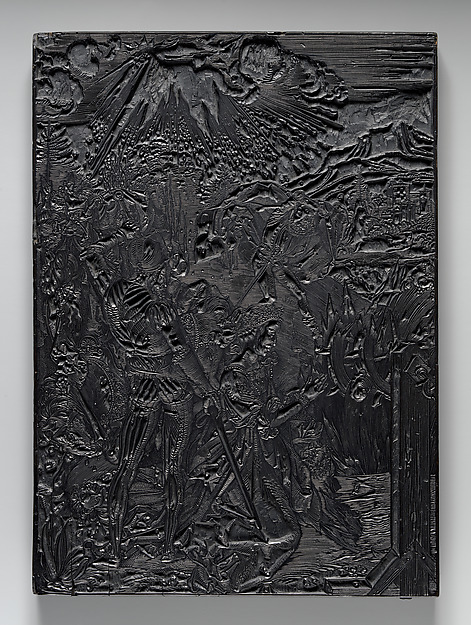
Calvary, Albrecht Dürer, c. 1503–04
Albrecht Dürer, portraitAlbrecht DürerGerman, 1471–1528

Calvary

c. 1503–04 · Print

May one see it?

Not receiving at present

Art Institute of Chicago

Chicago, United States

It belongs to the collection, but is not on display at present.

Checked
3 days ago
In this state since
Aug 19, 2026
Source
The museum
On the mapMuseum page

About the work

Albrecht Dürer described this deceptively simple image of Jesus Christ’s Crucifixion as one of his “schlechtes Holzwerk,” his “plain” or “homely woodcuts.” Yet the number of figures represented, the receding landscape, and the pathos embodied by the swooning Virgin Mary and the kneeling Mary Magdalene exceed the artist’s own modest assessment of the work. In comparison with earlier woodcuts, especially the quickly produced book illustrations undertaken in Wolgemut’s workshop, the woodblock must have been cut particularly closely to the artist’s own design. While busier than Dürer’s monumental Passion woodcuts from the same period, this moving woodcut hints at the artist’s past and future.

Art Institute of Chicago · CC BY 4.0

Particulars

c. 1503–04
14711528
Accession number
1959.527

In the catalog

PrintsWoodcutRenaissance16th centuryGermany

Sources

  • Art Institute of Chicago
  • Image: Art Institute of Chicago — CC0

Meanwhile, in the life of Albrecht Dürer

The whole life
  1. 1501–1502

    In the circle of Nuremberg's humanists

    Through his lifelong friend Willibald Pirckheimer, Dürer entered the circle of Nuremberg's humanists. He engraved illustrations for Conrad Celtis's editions of Hrotsvitha (1501) and of his Four Books of Love (1502), and decorated 14 books in Pirckheimer's library with drawings.

  2. 1502

    Death of his father

    Albrecht Dürer the Elder died, and his son took on the care of his mother and his two younger brothers, Endres and Hans.

  3. 1504 · Workplace

    Lutherstadt Wittenberg

  4. 1505

    Second journey to Italy

    Dürer set off for Italy again — perhaps not only to earn money but also to stop Marcantonio Raimondi from copying his prints. His stay in Venice is known from ten surviving letters to Pirckheimer.

  5. 1505–1507

    To Bologna for the secrets of perspective

    Dürer travelled to the university city of Bologna, hoping to learn the secrets of geometric perspective from its scholars. He then meant to visit Mantegna in Padua but received news of his death, which he greatly regretted afterwards.

  6. 1505–1507

    Friendship with Giovanni Bellini

    Dürer considered Giovanni Bellini “the best in painting”, the only Venetian master with whom he became friends. The Madonna of the Siskin may have been painted at Bellini's request.
More by Albrecht Dürer

All works
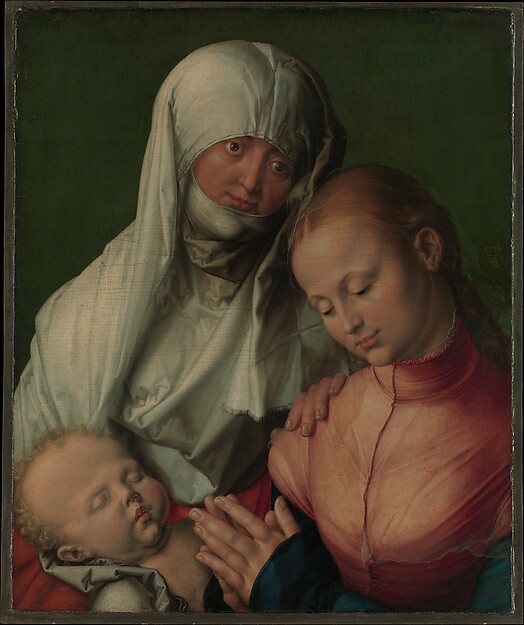
Virgin and Child with Saint Anne, Albrecht Dürer, probably 1519

Virgin and Child with Saint Anne

probably 1519 · The Metropolitan Museum of Art

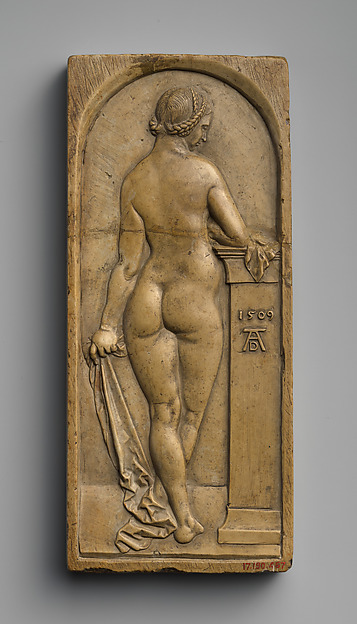
Female Nude Seen from Behind, Albrecht Dürer, early 17th century

Female Nude Seen from Behind

early 17th century · The Metropolitan Museum of Art

Madonna and Child [obverse], Albrecht Dürer, c. 1496/1499

Haller Madonna

c. 1496/1499 · National Gallery of Art

Lot and His Daughters [reverse], Albrecht Dürer, c. 1496/1499

Lot and His Daughters [reverse]

c. 1496/1499 · National Gallery of Art

The Martyrdom of Saint Catherine, Albrecht Dürer, ca. 1498

The Martyrdom of Saint Catherine

ca. 1498 · The Metropolitan Museum of Art

Nemesis (The Great Fortune), Albrecht Dürer, c. 1501/1502

Nemesis (The Great Fortune)

c. 1501/1502 · The Cleveland Museum of Art

Large Horse, Albrecht Dürer, 1505

Large Horse

1505 · The Cleveland Museum of Art

The Lamentation, Albrecht Dürer, 1507

The Lamentation

1507 · The Cleveland Museum of Art

Neighbors at Art Institute of Chicago

Museum page
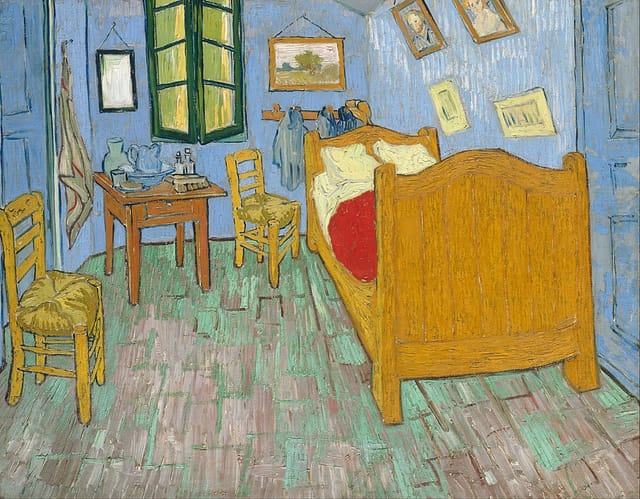
The Bedroom, Vincent van Gogh, 1889

Vincent van Gogh

The Bedroom, 1889

A Sunday on La Grande Jatte — 1884, Georges Seurat, 1884–86, border added 1888–89

Georges Seurat

A Sunday Afternoon on the Island of La Grande Jatte, 1884–86, border added 1888–89

Paris Street; Rainy Day, Gustave Caillebotte, 1877

Gustave Caillebotte

Paris Street; Rainy Day, 1877

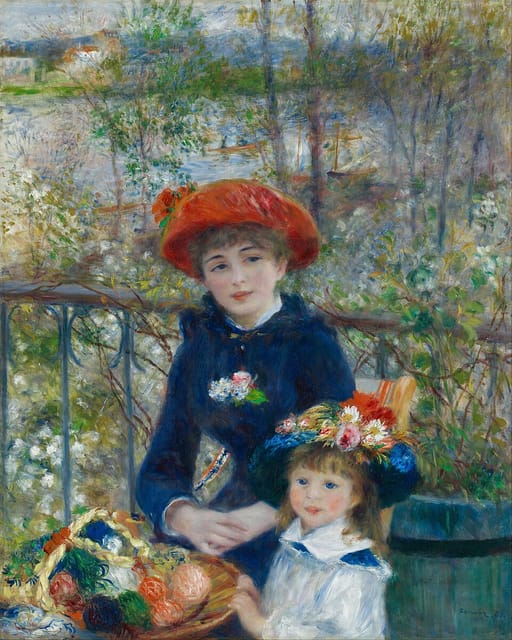
Two Sisters (On the Terrace), Pierre-Auguste Renoir, 1881

Pierre-Auguste Renoir

Two Sisters (On the Terrace), 1881

The Basket of Apples, Paul Cézanne, c. 1893

Paul Cézanne

The Basket of Apples, c. 1893

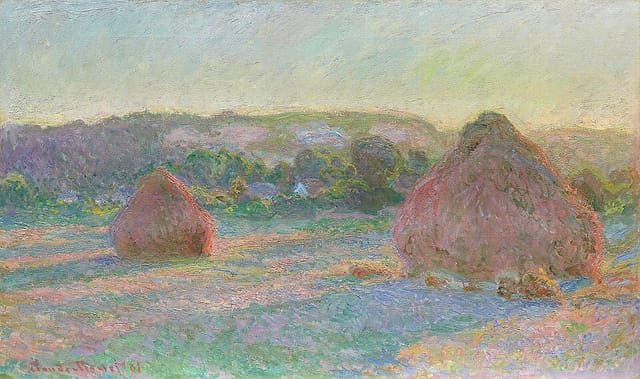
Stacks of Wheat (End of Summer), Claude Monet, 1890–91

Claude Monet

Stacks of Wheat (End of Summer), 1890–91

American Gothic, Grant Wood, 1930

Grant Wood

American Gothic, 1930

Nighthawks, Edward Hopper, 1942

Edward Hopper

Nighthawks, 1942