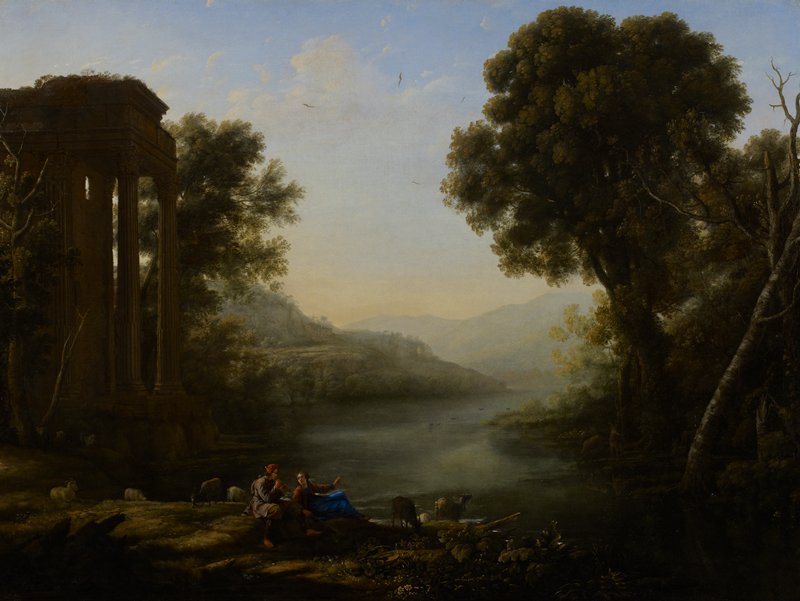
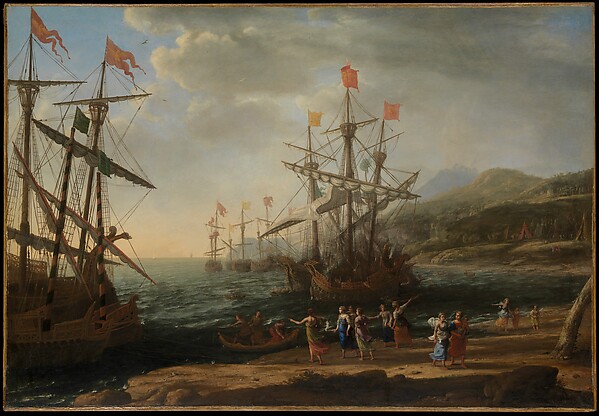
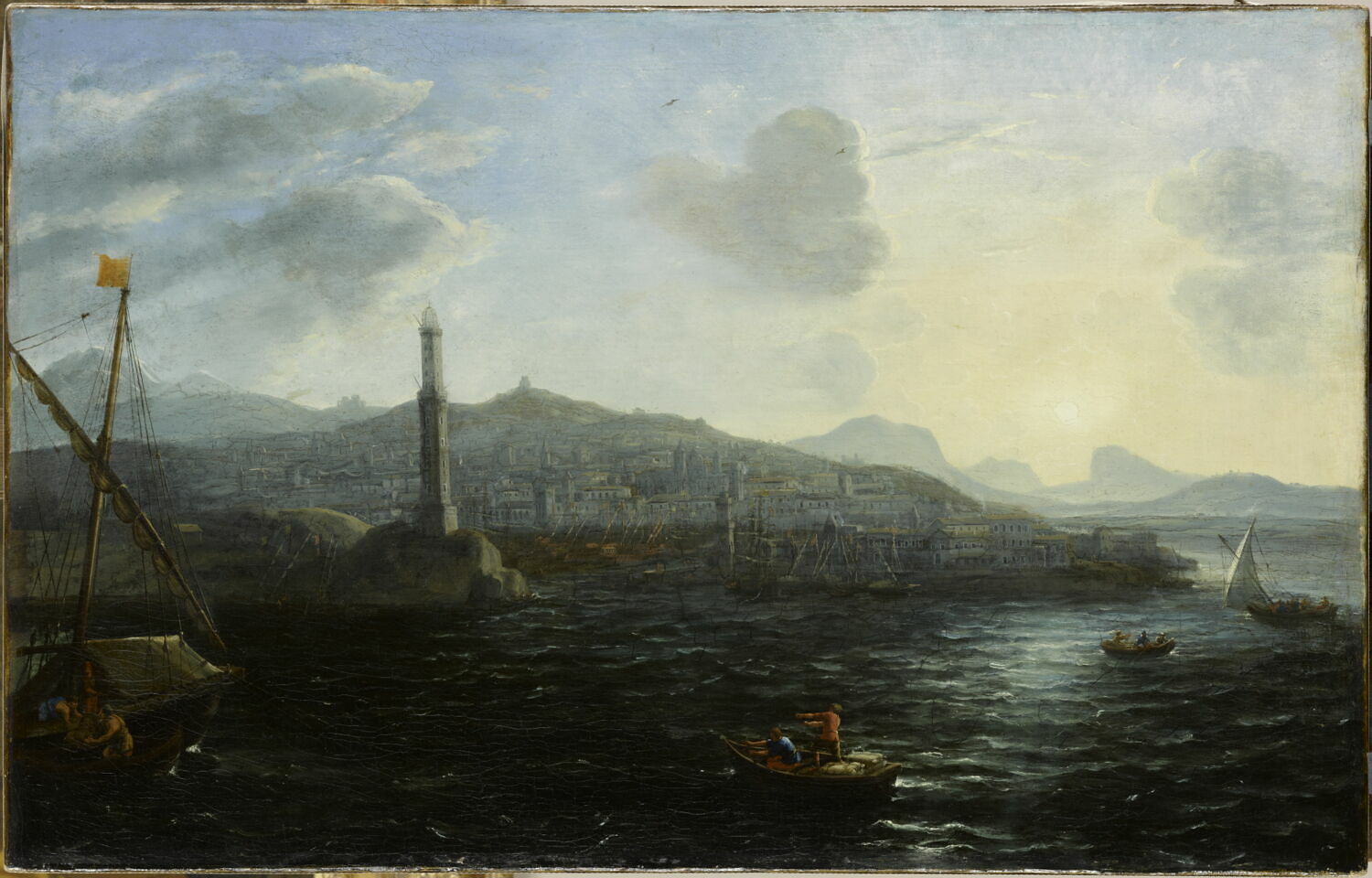
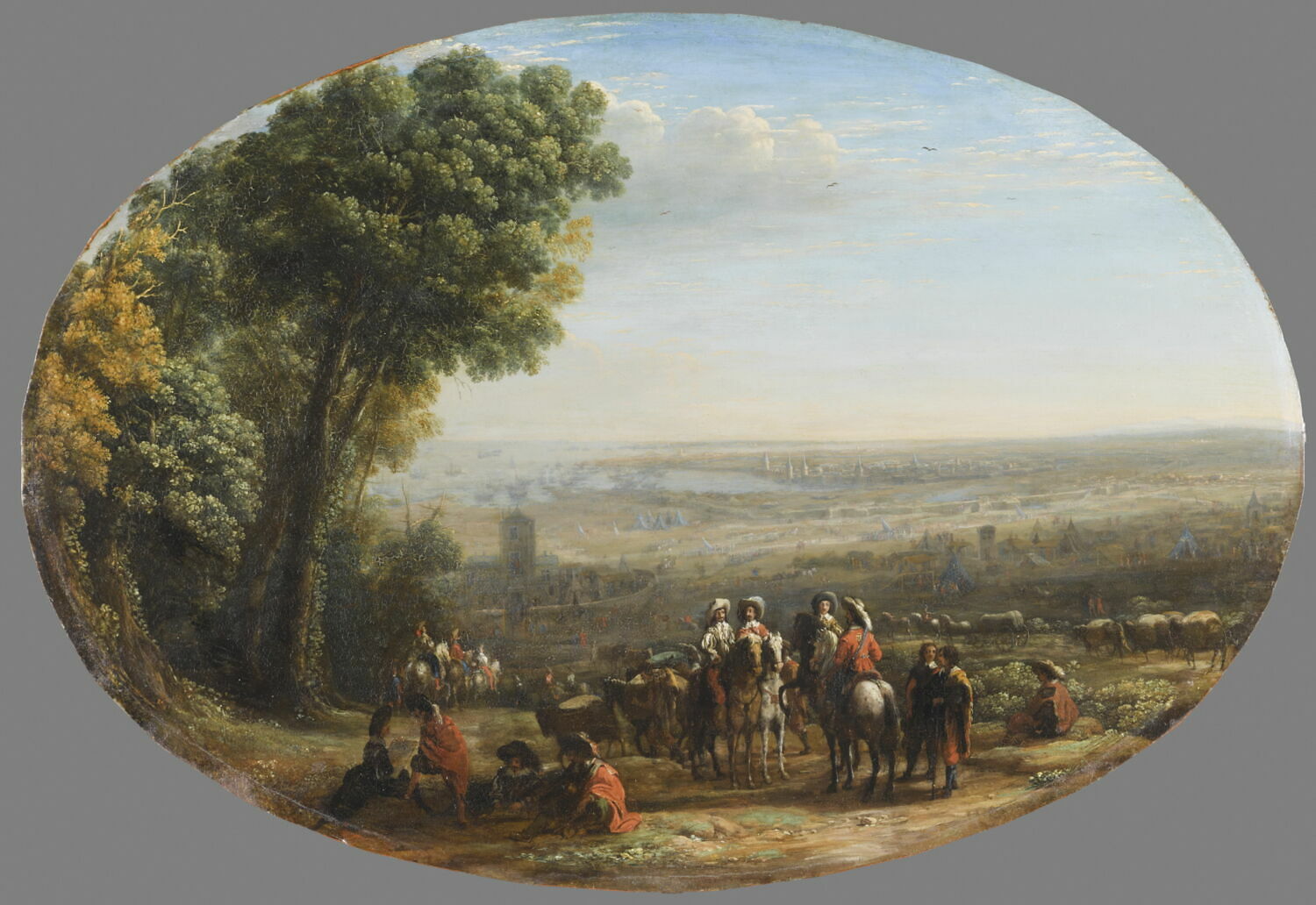
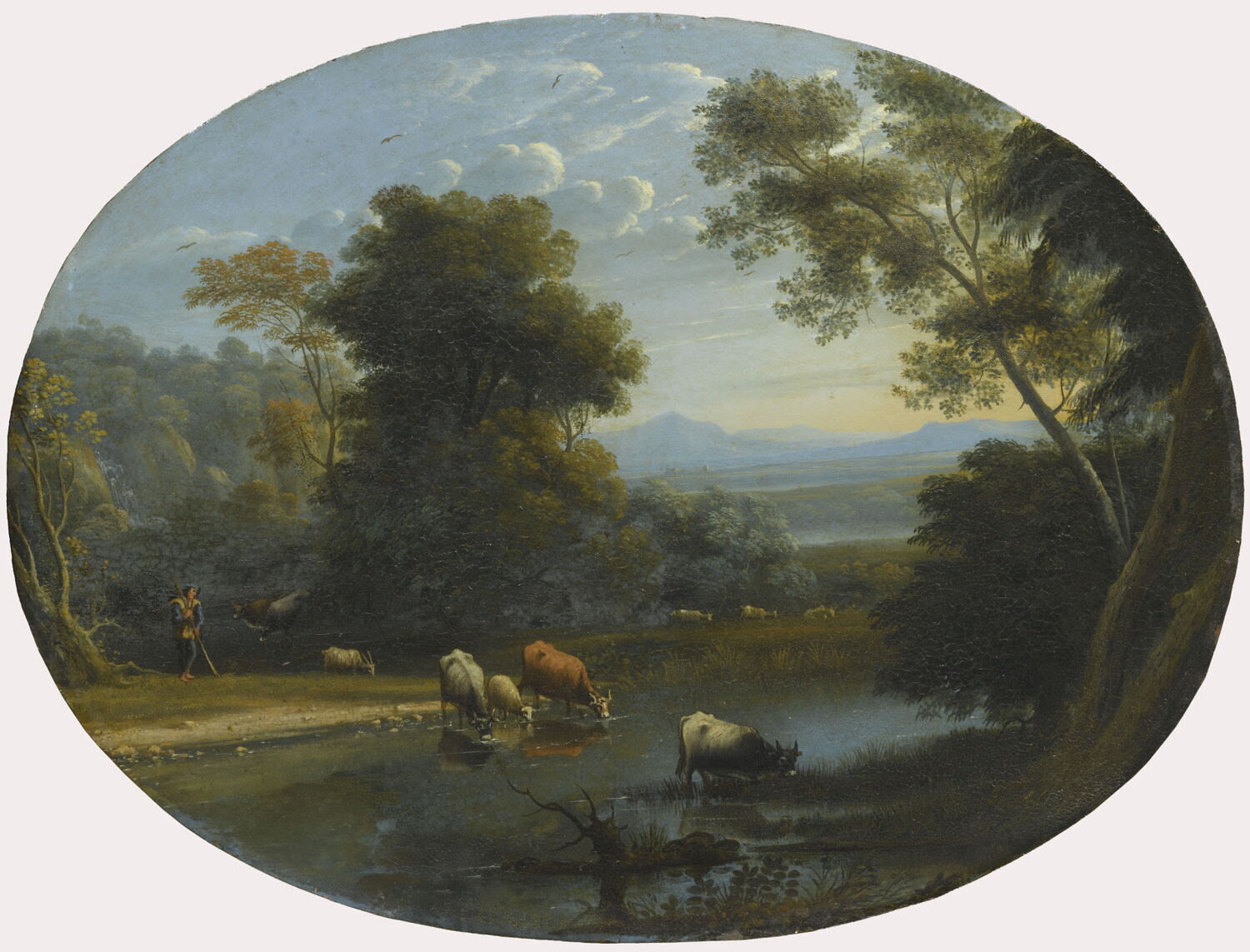
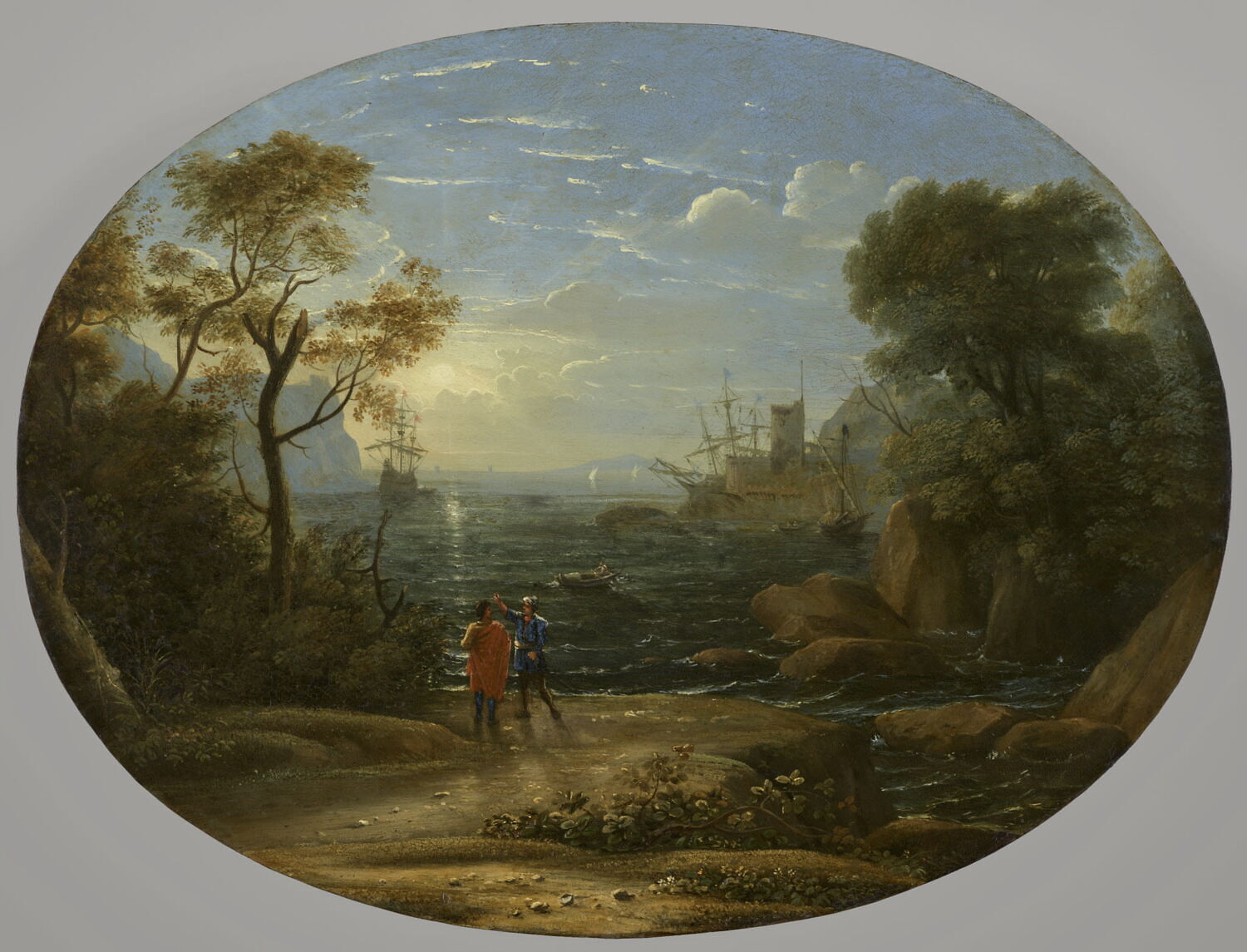
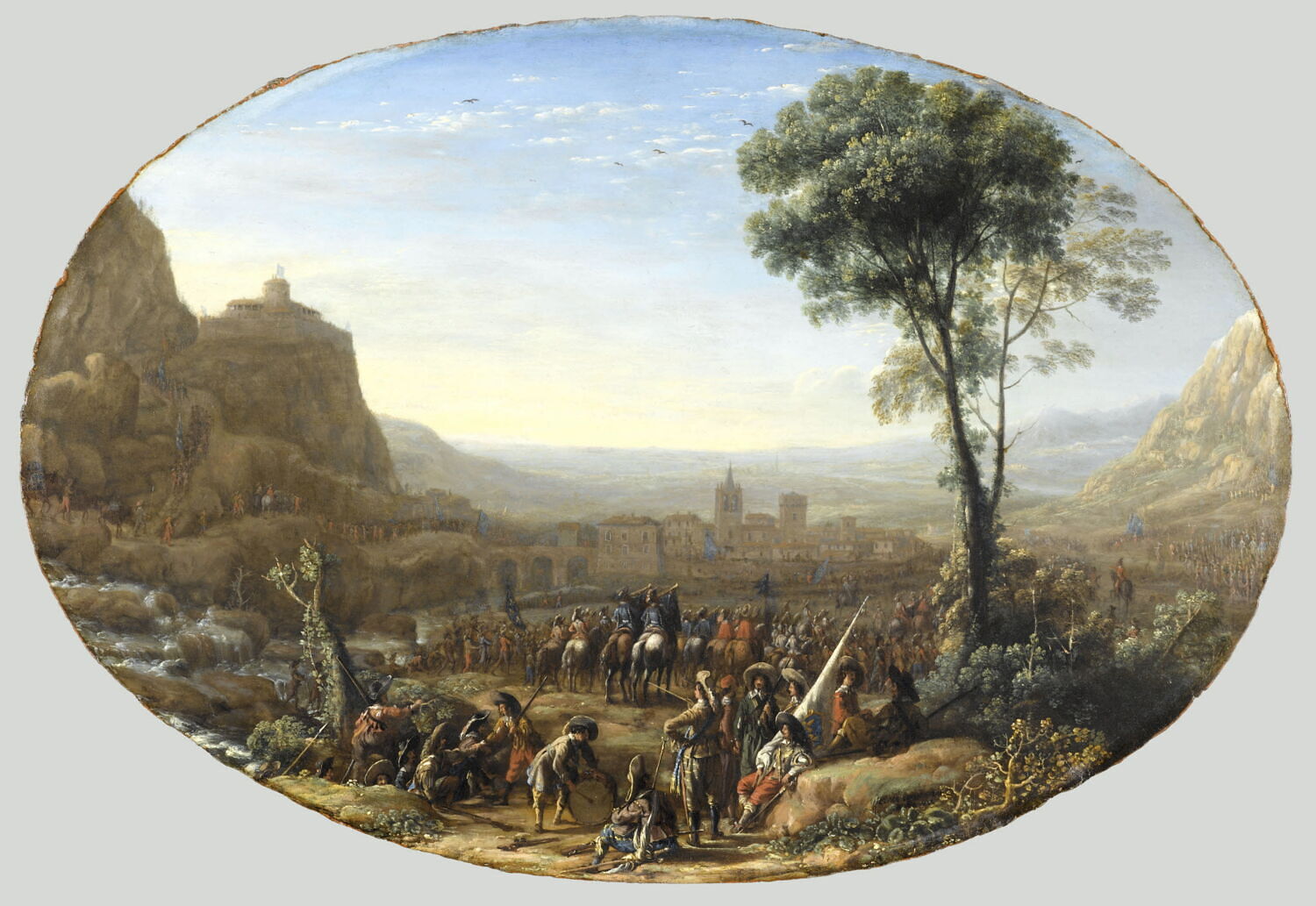
Claude LorrainFrench, 1600–1682
Boom
May one see it?
Unknown: the museum keeps its counsel

Rijksmuseum
Amsterdam, Netherlands
The owner is known. Whether it is on view today, the museum does not say, and we were not trained to guess.
- Source
- The museum's own collection data
Particulars
- Accession number
- RP-P-1965-1049
What it shows
Sources
- Rijksmuseum: the museum's own open data · fetched 3 days ago
- Image: Rijksmuseum — public domain
Meanwhile, in the life of Claude Lorrain
The whole life1620s
Stops in Marseille, Genoa and Venice
On his travels Claude stayed briefly in Marseille, Genoa and Venice and had the opportunity to study nature in France, Italy and Bavaria.
1625–1627
Back to Lorraine: Nancy and Claude Deruet
At twenty-five Claude left Italy and made long journeys to France and Switzerland; in 1625–27 he lived in his homeland, in Nancy, and worked with Claude Deruet, court painter to the Duke of Lorraine, on the decoration of a Carmelite church. According to Baldinucci, he left Deruet’s studio comparatively soon, in 1626 or 1627.
c. 1626
Settles permanently in Rome, on the Via Margutta
By the end of 1626 Claude had settled permanently in Rome, in a house on the Via Margutta in the artists’ quarter, and spent most of his life in the city; there he joined the society of foreign artists known as the “Birds of Passage” (Bent vogels).
late 1620s
Meets Joachim von Sandrart
In the late 1620s Claude met Joachim von Sandrart, who would write one of his early biographies and lived with him for a while; Sandrart reported that Claude already had a habit of sketching outdoors, particularly at dawn and dusk, and of making oil studies on the spot.
1633–1635
Growing fame: commissions from the French ambassador and Philip IV
Claude’s growing reputation was shown by commissions from the French ambassador in Rome (1633) and from Philip IV of Spain (1634–35).
1634
Admitted to the Academy of Saint Luke
In 1634 Claude was admitted to the Academy of Saint Luke.