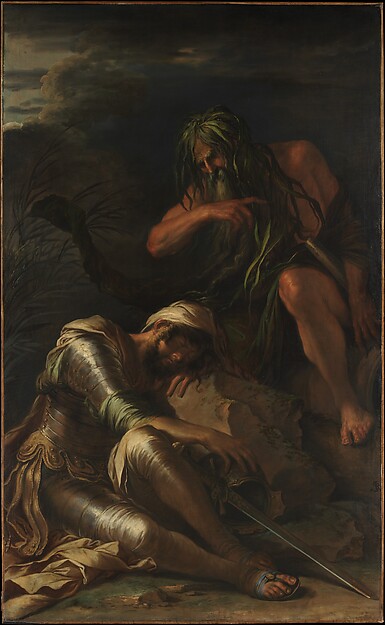
Salvator RosaItalian, 1615–1673
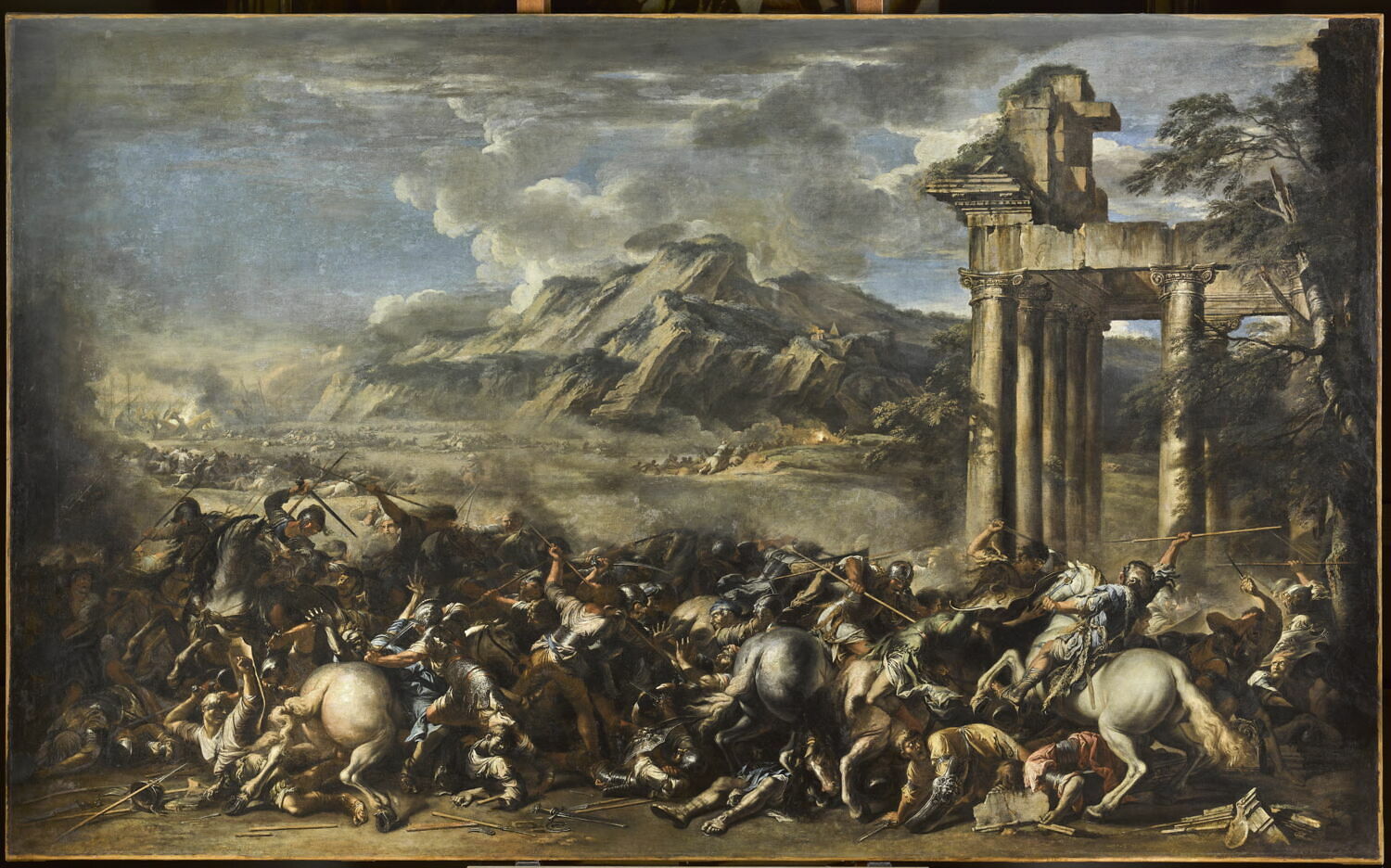
Bojová scéna
Can I see it?
Unknown
Where is “Bojová scéna” now? Collection: Slovak National Gallery, Bratislava. Unknown.

Bratislava, Slovakia
The owner is known; whether it is on view today is not.
- In this state since
- Source
- The museum
Details
In the catalog
Sources
- Slovak National Gallery
- Image: Slovak National Gallery — Public Domain Mark 1.0
In the life of Salvator Rosa
The whole lifec. 1633
Wanderings through Apulia and Calabria, Captivity among Bandits
At eighteen he set out on a journey through Apulia and Calabria, fell into the hands of local bandits, and lived among them for a time, studying their types and ways.
1634–1636
First Roman Period on Lanfranco's Advice
Giovanni Lanfranco, who had noticed his works in Falcone's studio, advised him to move to Rome, where Rosa remained from 1634 to 1636.
1638
Move to Rome under the Protection of Cardinal Brancaccio
He settled in Rome under the patronage of the influential Cardinal Francesco Maria Brancaccio, a lover of the arts and theater who was close to the Barberini family.
1640
Meeting Lucrezia Paolini
In Florence he met Lucrezia Paolini, who had been abandoned by her husband; she became his lifelong companion and was probably the model for the allegory of Music (c. 1641).
1640–1649
Florentine Period at the Medici Court
After scandalous quarrels with Bernini and his failure to gain admission to the Accademia di San Luca, he moved to Florence at the invitation of Giovanni Carlo de' Medici, where he remained until 1649.
1647
Participation in Masaniello's Revolt
According to a widespread account, he took part in the popular uprising led by Masaniello in Naples; he painted a portrait of Masaniello and expressed sympathy for the revolt in one of his satires.