ART WIKI32,963 on view
MapCollectionArtistsMuseumsExhibitionsJournal
Sign in

ART WIKI

Where the masterpiece hangs, and when they let you in.

Collections: Art Institute of Chicago, Getty Villa, Harvard Art Museums, Hirshhorn Museum and Sculpture Garden, J. Paul Getty Museum, Minneapolis Institute of Art, Musée du Louvre, National Gallery of Art, National Museum of Asian Art, National Portrait Gallery (Smithsonian), Pushkin State Museum of Fine Arts, Rijksmuseum, Smithsonian American Art Museum, SMK — National Gallery of Denmark, State Hermitage Museum, State Russian Museum, The Cleveland Museum of Art, The Metropolitan Museum of Art, The Museum of Modern Art, Tretyakov Gallery, Victoria and Albert Museum, Whitney Museum of American Art, State Catalogue of the Museum Fund of Russia (274 museums), Europeana (19 museums), Wikidata (6 museums), Paris Musées (12 museums), and Joconde, the French Ministry of Culture's museum database (495 museums). Images belong to their rights holders.

Sections

  • Map
  • Search
  • Collection
  • Masterpieces
  • On view now
  • Artists

More

  • Museums & galleries
  • Exhibitions
  • Journal
  • Where the data comes from
  • Privacy & cookies
HomeMapBrowse
  1. Collection/
  2. State Hermitage Museum/
  3. Prodigal Son
Prodigal Son, Salvator Rosa, 1650s
Salvator Rosa, portraitSalvator RosaItalian, 1615–1673

Prodigal Son

1650s · Painting · 253.5 × 201 cm

May one see it?

Yes, receiving visitors

State Hermitage Museum

Saint Petersburg, Russia

Room238

On public display.

Checked
29 Aug 2026
In this state since
Aug 30, 2026
Source
The museum
On the mapMuseum page

About the painting

In the museum's own words — in Russian

В живописи XVII столетия были очень распространены сюжеты покаяния. Чаще других обращались к притче о блудном сыне (Евангелие от Луки, 15, 11-19), в которой рассказывается о юноше, покинувшем отчий дом. Он промотал свое состояние и, испытав множество невзгод, раскаялся и вернулся к отцу. На полотне Сальватора Розы блудный сын предстает в образе пастуха из Южной Италии. Крепкое тело и загорелые мускулистые ноги – свидетельство привычки к долгим переходам и жизни под открытым небом. Козы, овцы, кабан, бык – всё доверенное ему стадо – показаны с великолепным знанием повадок животных и строения их тела. В этом отношении картина итальянского мастера не уступает работам голландцев, прославленных анималистов. Однако полотно Розы не носит жанрового характера. Глубокое волнение, охватившее молодого пастуха, передано правдиво, без всякой аффектации. За бытовой обыденностью раскрывается настоящая драма человеческой души.

State Hermitage Museum

Particulars

1650s · aged 35
16151673
Accession number
ГЭ-34

In the catalog

PaintingsOilItalian paintingBaroque17th centuryItaly

Sources

  • State Hermitage Museum
  • Image: State Hermitage Museum — Museum open access

Meanwhile, in the life of Salvator Rosa

The whole life
  1. 1640–1649

    Florentine Period at the Medici Court

    After scandalous quarrels with Bernini and his failure to gain admission to the Accademia di San Luca, he moved to Florence at the invitation of Giovanni Carlo de' Medici, where he remained until 1649.

  2. 1640s

    Founding of the Accademia dei Percossi in Florence

    In Florence he founded the Accademia dei Percossi — a combination of studio and salon of poets, playwrights, and painters, where satires and comedies were read at dinners.

  3. 1640s

    The Satires "Music," "Poetry," "Painting," and "War"

    While staying with the Maffei brothers in Volterra, he wrote four satires — Music, Poetry, Painting, and War; at the same time he painted the picture Philosophy (now in the National Gallery, London).

  4. 1650

    Return to Rome, Seclusion

    He returned to Rome, kept to himself, and accepted no commissions, devoting himself to battle scenes and enigmatic landscapes, which he sold through his friend, the banker Carlo de Rossi.

  5. 1650s

    Scandal over the "Allegory of Fortune"

    The painting Allegory of Fortune provoked a storm of indignation among the religious and secular authorities, who saw in it a satire on themselves; Rosa came close to arrest and published a text offering innocuous interpretations of its imagery.
More by Salvator Rosa

All works
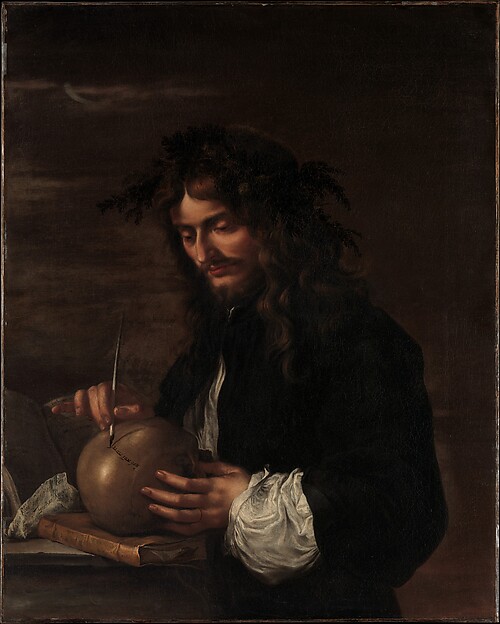
Self-Portrait, Salvator Rosa, ca. 1647

Self-Portrait

ca. 1647 · The Metropolitan Museum of Art

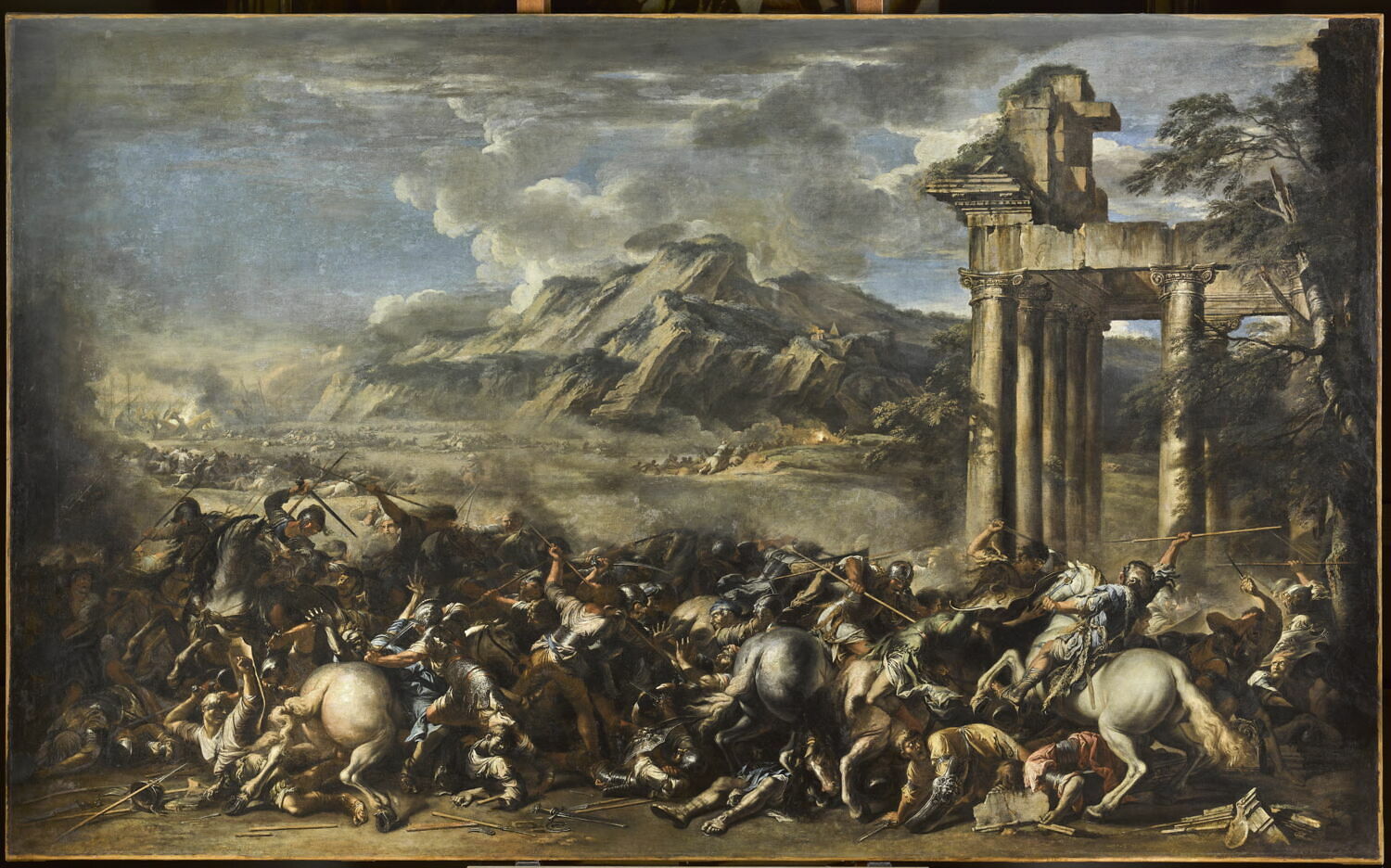
Bataille héroïque (La Bataille d'Eurymédon), Rosa, Salvator, Milieu du XVIIe siècle (1652)

Bataille héroïque (La Bataille d'Eurymédon)

mid 17th century (1652) · Musée du Louvre

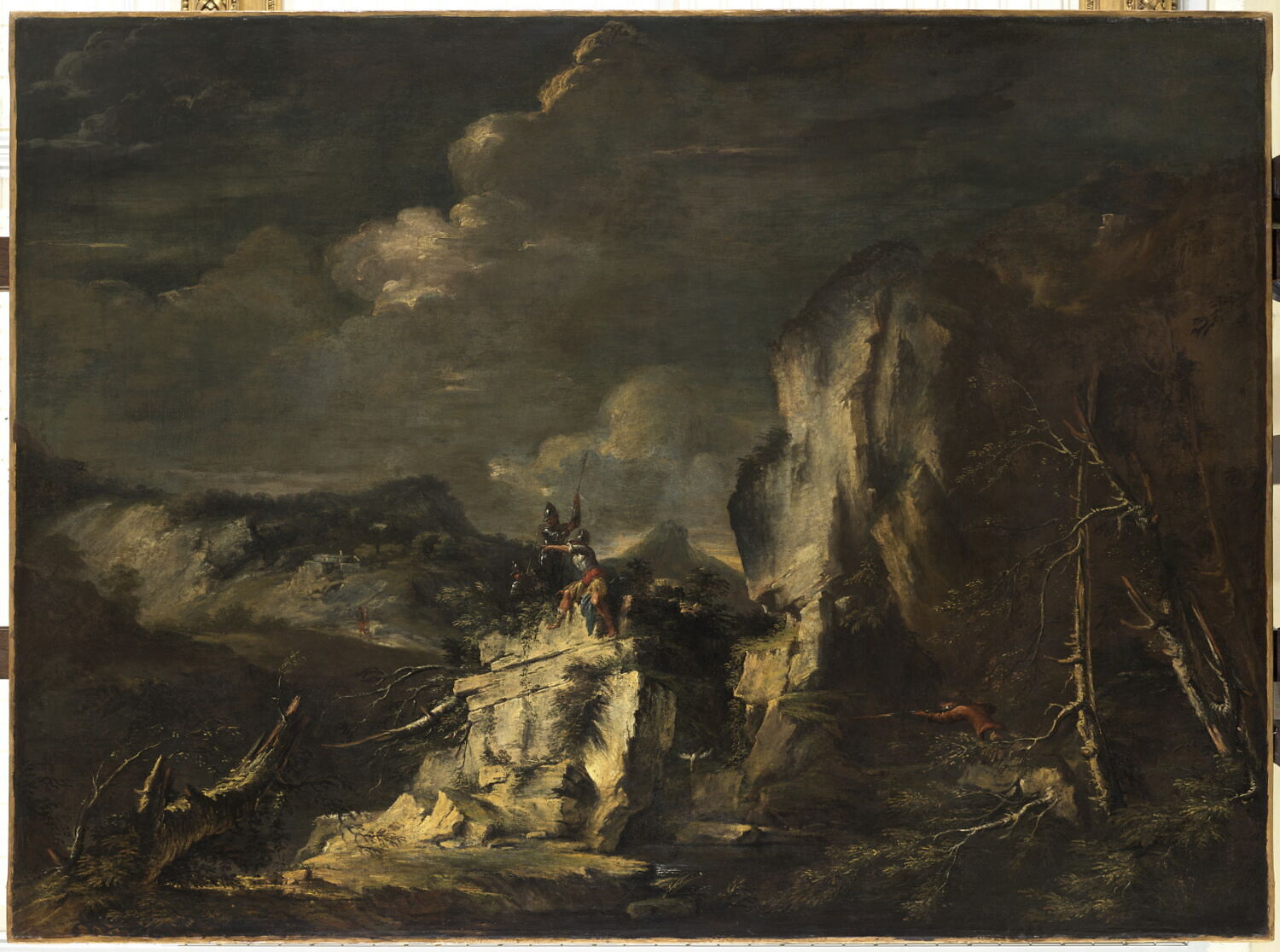
Paysage rocheux avec un chasseur et des guerriers, Rosa, Salvator, 3e quart du XVIIe siècle (1652)

Paysage rocheux avec un chasseur et des guerriers

third quarter of the 17th century (1652) · Musée du Louvre

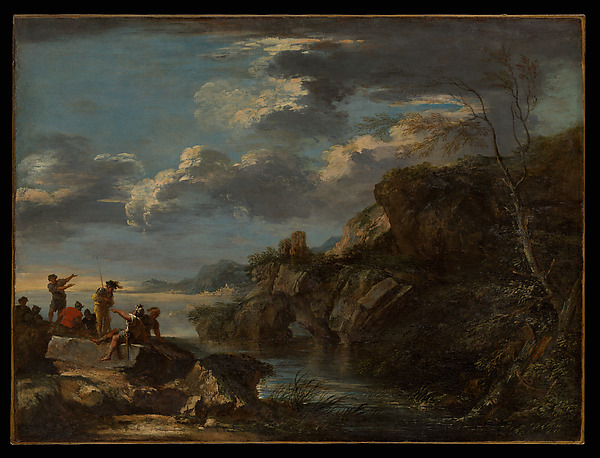
Bandits on a Rocky Coast, Salvator Rosa, 1655–60

Bandits on a Rocky Coast

1655–60 · The Metropolitan Museum of Art

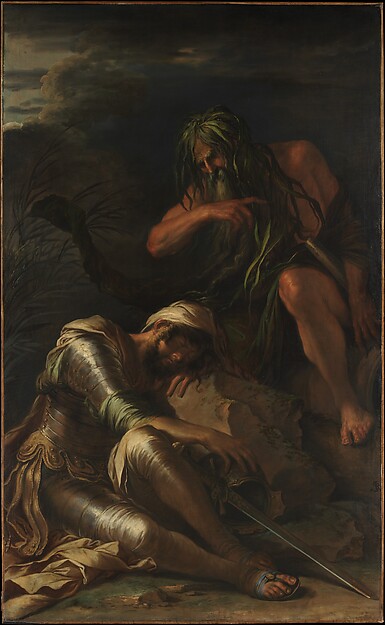
The Dream of Aeneas, Salvator Rosa, 1660–65

The Dream of Aeneas

1660–65 · The Metropolitan Museum of Art

Democritus and Protagoras, Salvator Rosa, 1663

Democritus and Protagoras

1663 · State Hermitage Museum

Odysseus and Nausicaa (Ulysses and Nausicaa), Salvator Rosa, 1663

Odysseus and Nausicaa (Ulysses and Nausicaa)

1663 · State Hermitage Museum

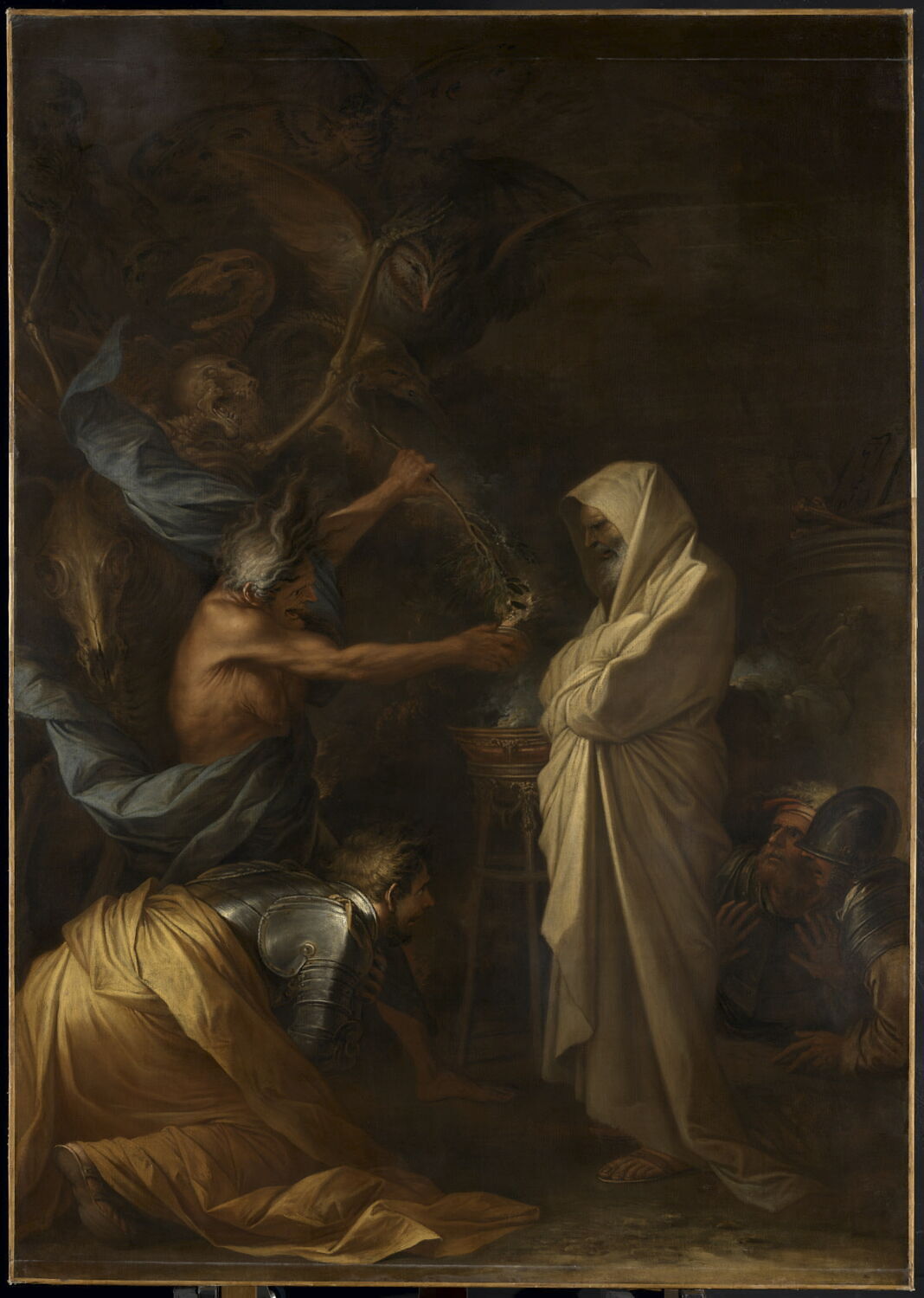
L'ombre de Samuel apparaissant à Saül chez la pythonisse d'Endor, Rosa, Salvator, XVIIe siècle (1668)

L'ombre de Samuel apparaissant à Saül chez la pythonisse d'Endor

17th century (1668) · Musée du Louvre

In the same room · Зал 238, State Hermitage Museum

Museum page
Arrival of the French Ambassador in Venice, Canaletto, 1720s

Canaletto

Arrival of the French Ambassador in Venice, 1720s

Dictatorship Offered to Cincinnatus, Giovanni Battista Tiepolo, c. 1730

Giovanni Battista Tiepolo

Dictatorship Offered to Cincinnatus, c. 1730

Coriolanus at the Walls of Rome, Giovanni Battista Tiepolo, c. 1730

Giovanni Battista Tiepolo

Coriolanus at the Walls of Rome, c. 1730

Triumph of Manius Curius Dentatus, Giovanni Battista Tiepolo, c. 1726

Giovanni Battista Tiepolo

Triumph of Manius Curius Dentatus, c. 1726

Mucius Scaevola before Porsenna, Giovanni Battista Tiepolo, 1720s

Giovanni Battista Tiepolo

Mucius Scaevola before Porsenna, 1720s

Quintus Fabius Maximus Before the Senate of Carthage, Giovanni Battista Tiepolo, 1720s

Giovanni Battista Tiepolo

Quintus Fabius Maximus Before the Senate of Carthage, 1720s

Rape of the Sabine Women, Giovanni Battista Tiepolo, 1710s

Giovanni Battista Tiepolo

Rape of the Sabine Women, 1710s

View of Pirna from the Right Bank of the Elba, Bernardo Bellotto, 1750s

Bernardo Bellotto

View of Pirna from the Right Bank of the Elba, 1750s