 Willem de KooningAmerican, 1904–1997
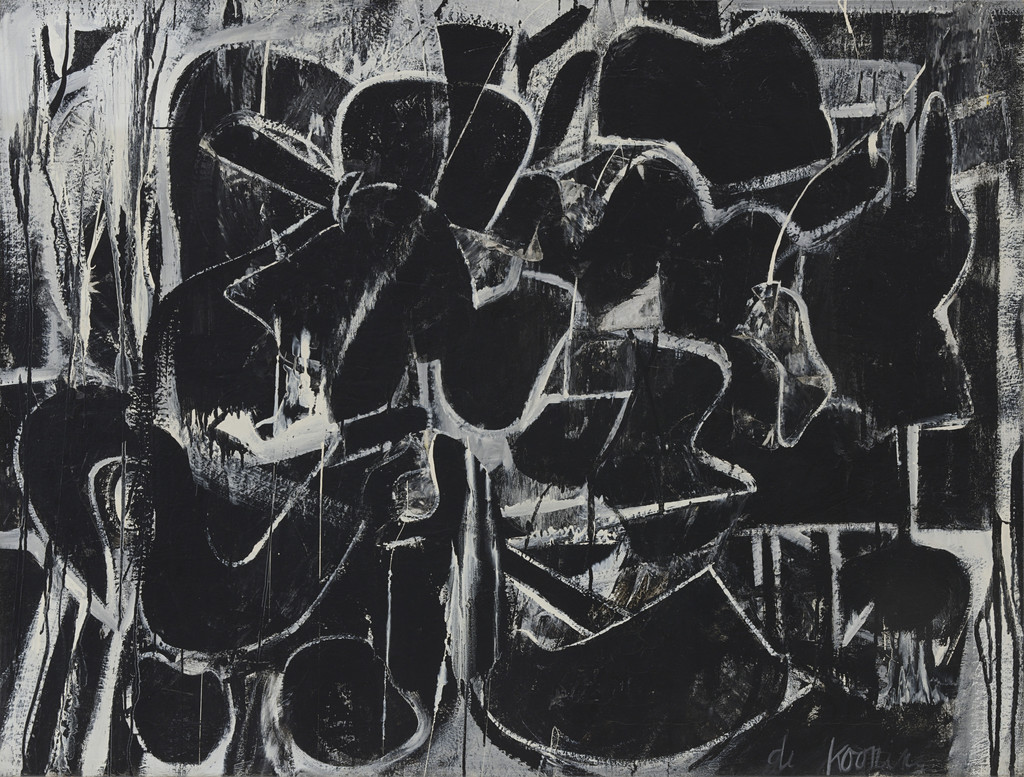
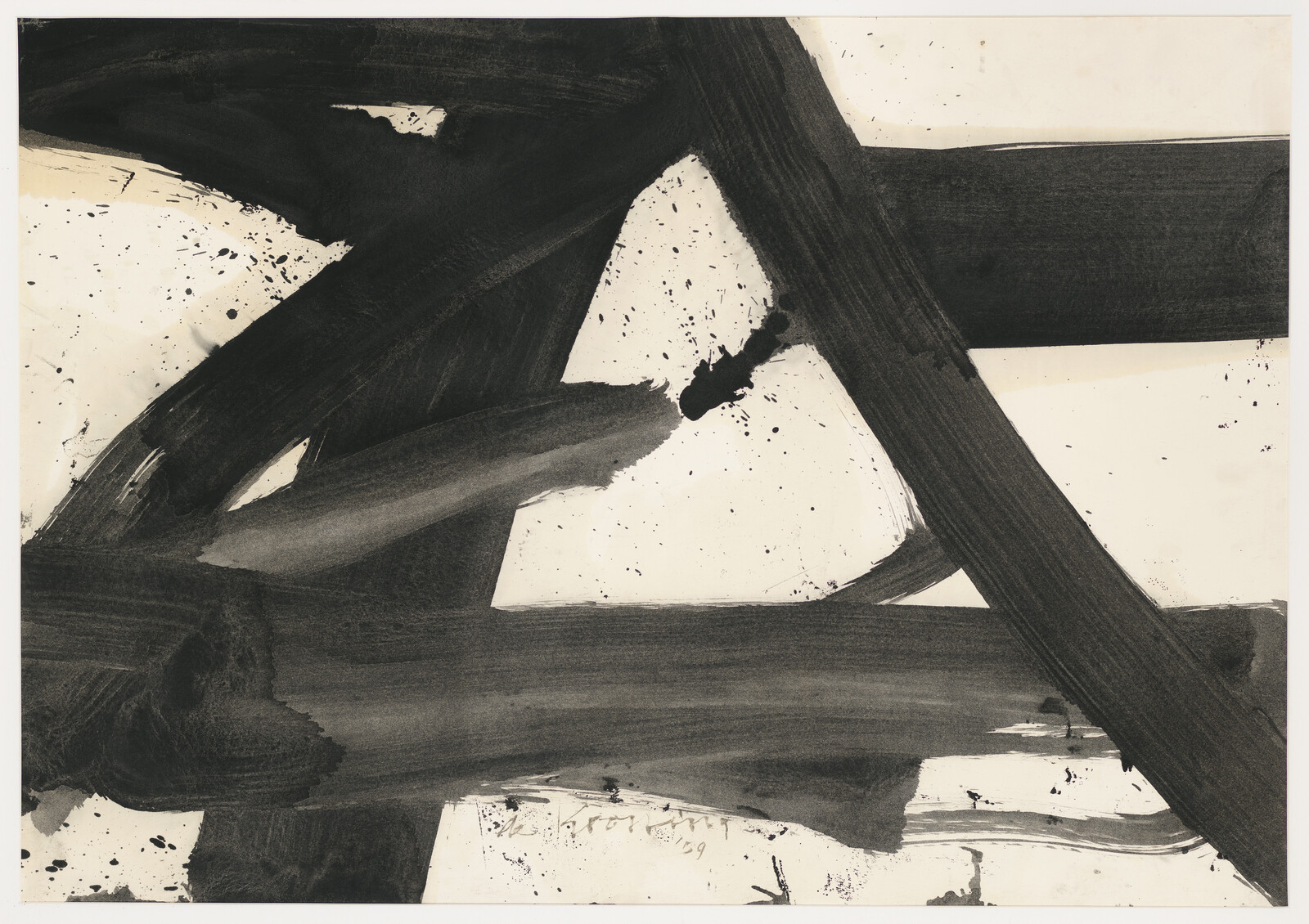
Black and White
Can I see it?
Not on view at present
Where is “Black and White” now? Collection: Whitney Museum of American Art, New York. Not on view at present. Checked September 25, 2026.

New York, United States
It belongs to the collection, but is not on display at present.
- Checked
- Source
- The museum
Details
- Accession number
- 75.21a-b
In the catalog
Sources
- Whitney Museum of American Art
- Image: Whitney Museum of American Art — © the artist or rights holder
In the life of Willem de Kooning
The whole life1943–1957
An “open” marriage with Elaine
Willem and Elaine’s marriage was later called an open marriage: both were casual about sex and about each other’s affairs. Elaine had affairs with men who helped further Willem’s career, such as the art critic Harold Rosenberg, the ARTnews editor Thomas B. Hess and Charles Egan, owner of the Charles Egan Gallery.
1948–1966
Fourteen solo exhibitions
From 1948 to 1966 De Kooning had 14 solo exhibitions, many in New York but also nationally and internationally, among them the Egan Gallery, the Sidney Janis Gallery, the Martha Jackson Gallery, the Allan Stone Gallery and museums such as the Museum of Fine Arts, Boston and the Smith College Museum of Art. There were two a year in 1953, 1964 and 1965.
1950s
The path of “figurative abstractions”
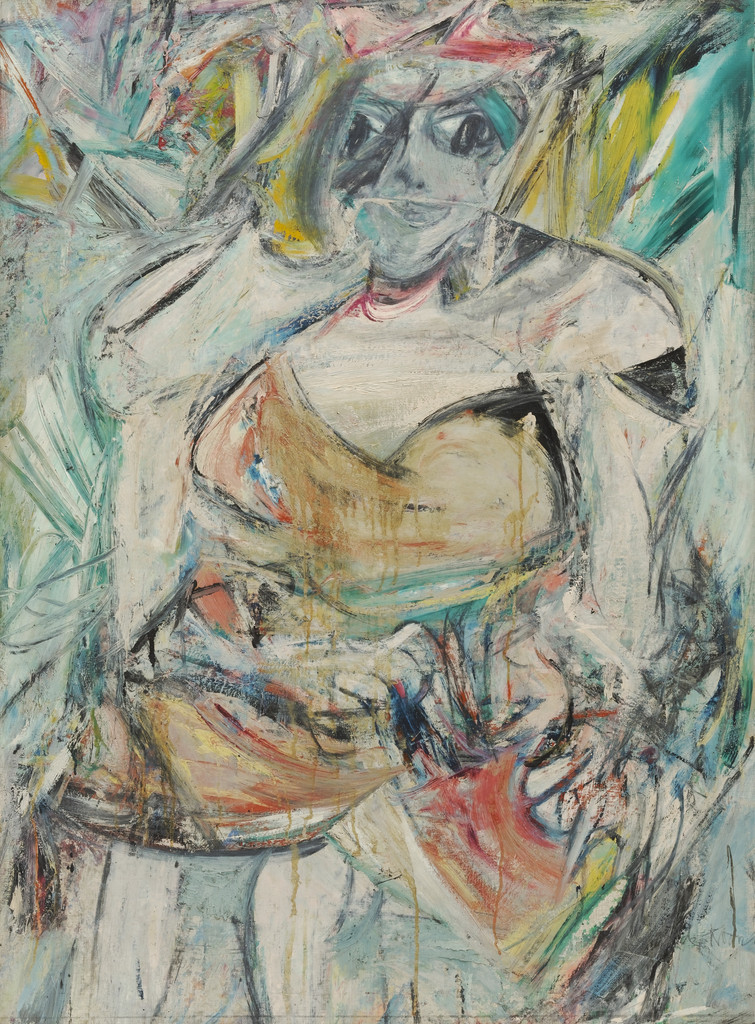
In the 1950s De Kooning followed a path of primitivisation and developed so-called “figurative abstractions”: a solitary female figure, under furious, pasty “blow-like” brushstrokes, turns into a painterly totem open to radical Freudian readings.
1957
Separates from Elaine because of alcoholism
The alcoholism from which both suffered led to Willem and Elaine’s separation in 1957. Elaine stayed in New York, struggling with poverty, while Willem moved to Long Island and dealt with depression; both kept painting.
late 1950s
From female figures to abstraction
In the late 1950s De Kooning’s work shifted away from the figurative images of women, though he returned to the subject on occasion, and began to show an interest in more abstract, less representational imagery.
11 July 1959 – 11 October 1959
Exhibition: Documenta II