 Albrecht AltdorferGerman, 1480–1538
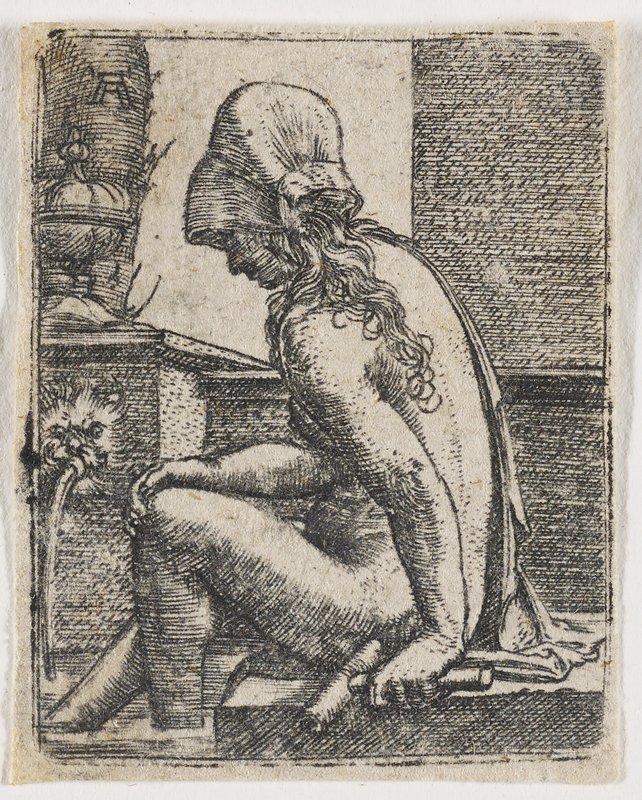
Bathing Woman
Can I see it?
Not on view at present
Where is “Bathing Woman” now? Collection: Minneapolis Institute of Art, Minneapolis. Not on view at present. Checked October 12, 2026.

Minneapolis, United States
It belongs to the collection, but is not on display at present.
- Checked
- In this state since
- Source
- The museum
About the work
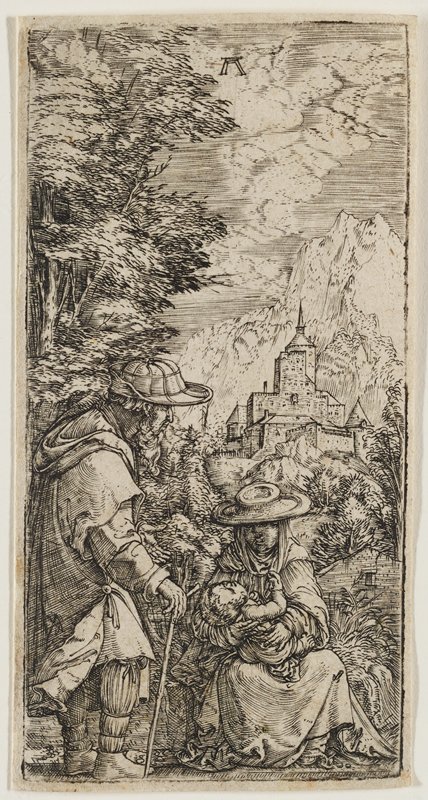
Albrecht Altdorfer made some of the smallest Renaissance prints and also contributed to some of the largest, including Maximilian I’s giant Triumphal Arch woodcut (more than 11 feet high). The son of a miniaturist, Altdorfer helped instigate the northern craze for tiny prints. In this example, his perspectival lines (he was also an architect) form a counterpoint to the rounded forms of the bather and her bonnet.
Minneapolis Institute of Art
Details
- Accession number
- 2015.93.35
In the catalog
Sources
- Minneapolis Institute of Art
- Image: Minneapolis Institute of Art — public domain
In the life of Albrecht Altdorfer
The whole life1516–1518
Works at St. Florian's monastery near Linz
In 1516–1518 he works at the monastery of St. Florian near Linz.
1519
Takes part in the expulsion of the Jews from Regensburg
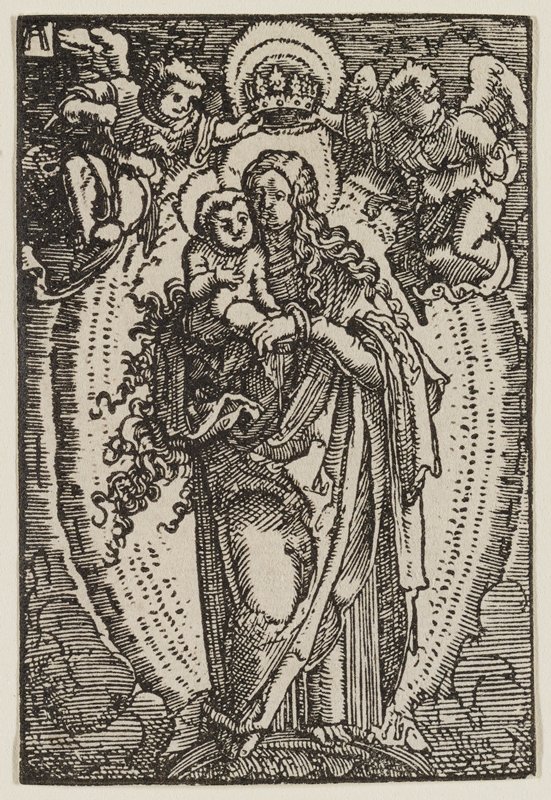
As a member of the city's “Council on External Affairs” he is involved in the expulsion of the Jews, the destruction of the synagogue and the building in its place of a church and shrine to the Schöne Maria (Beautiful Mary). He also made etchings of the synagogue's interior and designed a woodcut of the cult image of the Schöne Maria.
1526
Becomes the chief architect of Regensburg
From 1526 he is the city's chief architect, responsible among other things for its fortifications; during the Reformation he devoted himself mainly to architecture. Contemporaries saw in him above all an architect: his gravestone says that a builder lies buried beneath it.
c. 1526
A possible trip to Italy
Around 1526 he possibly visited Italy.
by 1529
Gives up the office of mayor for the Duke's commission
William IV, Duke of Bavaria, commissions “The Battle of Alexander” as part of a series of eight historical battle scenes for the Residenz in Munich; to accept the commission, Altdorfer renounces the office of Mayor of Regensburg. The painting is thought to be the earliest to show the curvature of the Earth from a great height.
1529–1530
Reinforces the city's defences against the Turkish threat
In 1529–1530 he is charged with reinforcing certain fortifications of Regensburg in response to the Turkish threat.