 Dorothea LangeAmerican, 1895–1965
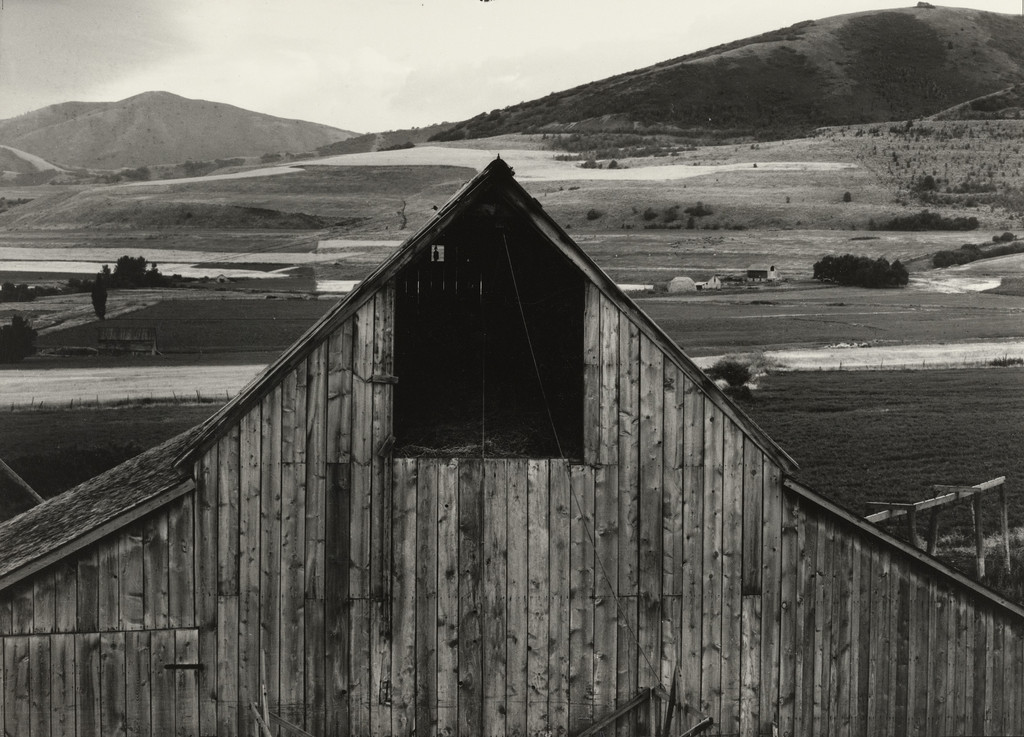
Barn, Utah
May one see it?
Not receiving at present

The Museum of Modern Art
New York, United States
It belongs to the collection, but is not on display at present.
- Checked
- Source
- The museum
Particulars
- Accession number
- 614.1995
In the catalog
Sources
- The Museum of Modern Art
- Image: The Museum of Modern Art — © the artist or rights holder
Meanwhile, in the life of Dorothea Lange
The whole life1935–1940
Five years on the road with Paul Taylor
For the next five years the couple travelled the California coast and the Midwest, documenting rural poverty, above all the exploitation of sharecroppers and migrant labourers: Taylor interviewed people and gathered economic data while Lange made photographs and the accompanying records. They lived and worked from Berkeley for the rest of her life.
1939
The book “An American Exodus” with Paul Taylor
Lange and her husband, the economist Paul Schuster Taylor, were the authors of the book “An American Exodus: A Record of Human Erosion” (first published in 1939).
1940
Her photographs inspire the film “The Grapes of Wrath”
Lange’s photographs served as an inspiration for the 1940 film adaptation of “The Grapes of Wrath”.
1941 · Award
Guggenheim Fellowship
1941–1942
Gives up her Guggenheim Fellowship for the WRA
In 1941 Lange became the first woman to win a Guggenheim Fellowship for photography, but after the attack on Pearl Harbor she gave it up to work for the War Relocation Authority (WRA), documenting the forced evacuation of Japanese Americans from the US West Coast.
c. 1942
Photographing the removal of Japanese Americans: Manzanar
Lange travelled through the towns and countryside of California photographing families that the government ordered out of their homes; she visited several temporary assembly centres as they opened and settled on Manzanar, the first of the permanent camps, in eastern California about 300 miles from the coast. The authorities impounded most of these photographs, and they were not seen publicly during the war.