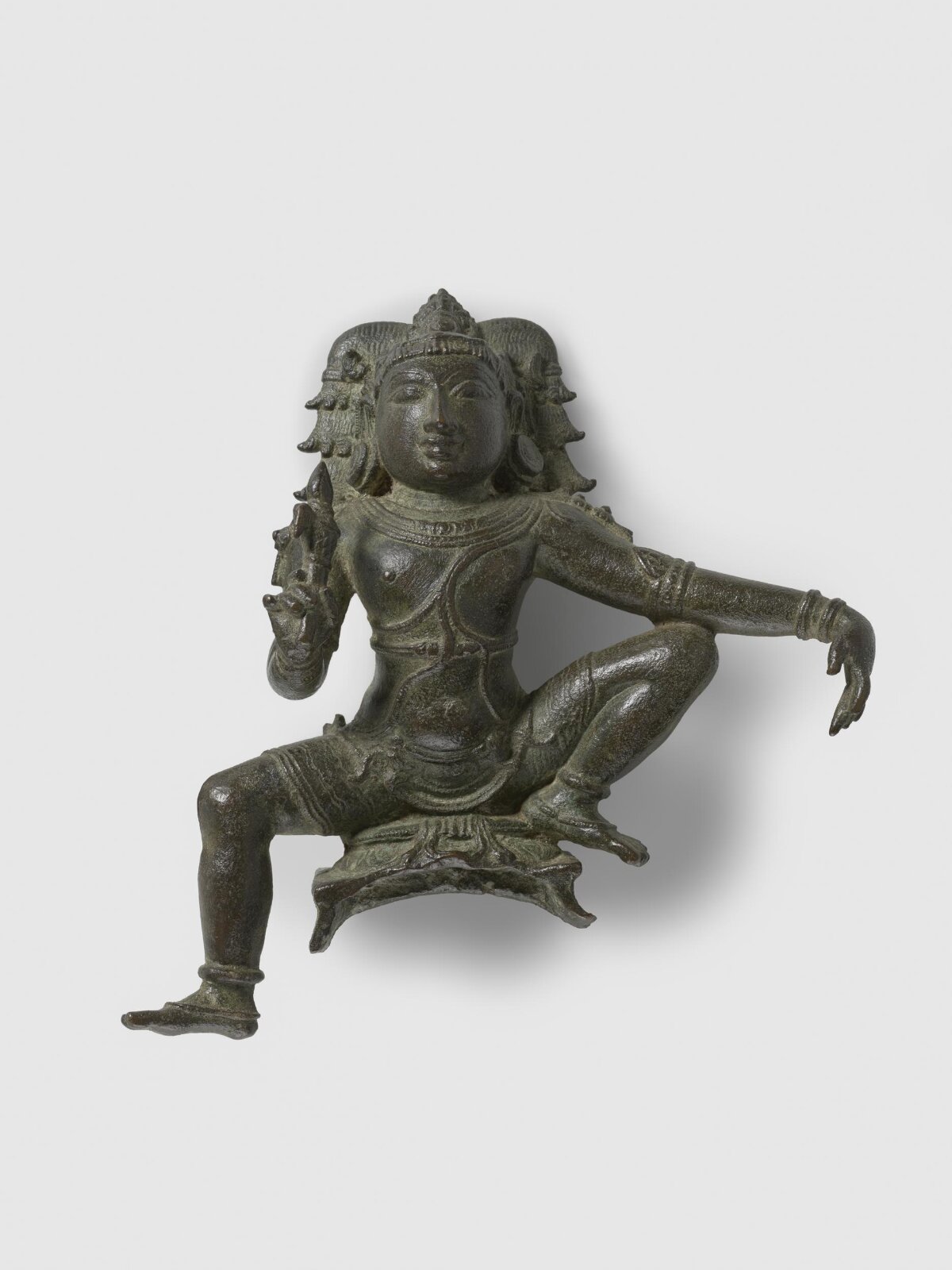
Ayannar or Sasta
Can I see it?
Not on view at present
Where is “Ayannar or Sasta” now? Collection: Victoria and Albert Museum, London. Not on view at present. Checked September 25, 2026.

London, United Kingdom
It belongs to the collection, but is not on display at present.
- Checked
- In this state since
- Source
- The museum
About the sculpture
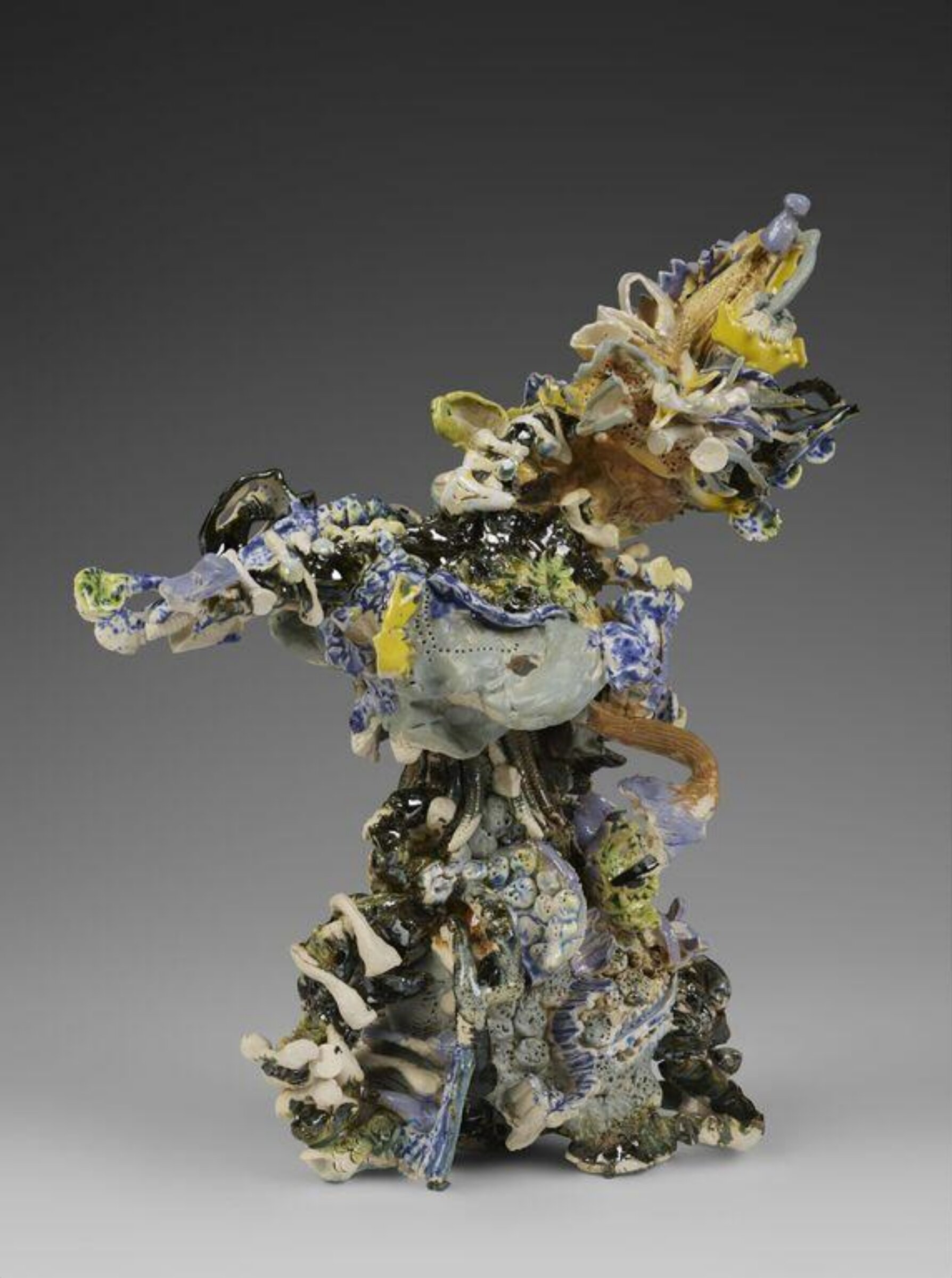
Ayannar or Aiyanar is one of the most popular folk-deities of rural south India where he serves as the principal protective deity of village communities, especially from the malevolent forces that abound at night. His shrines are usually found in the countryside, outside village or town boundaries. They are readily identified by the numerous painted terracotta horses found aound the site, which are offered to him by his devotees.
Read on
Ayannar is generally worshipped as the son of Shiva, though his origins undoubtedly stem from a local hero (vira) cult deity. Legend attributes his birth to a sexual union between Vishnu and Shiva. As Vishnu is said to have seduced Shiva by assuming his female form, Mohini, that of a beautiful woman. Due to Ayannar's parentage, he is revered by both followers of Shiva and Vishnu. He is also referred to by some devotees as Harahariputa, literally, the son of Hara (Shiva) and Hari (Vishnu). This reinforces the manner in which he bridges the two principle sects of Hinduism.
Ayannar is exceptional because he is a village guardian deity, who has been elevated and absorbed into the Hindu pantheon. Processional bronze images of him have been commissioned. He is seen here seated in a relaxed posture (sukhasana) holding an elephant goad (ankusa). His radiating hair mimicks that of Shiva in his ascetic-yogic forms, and inside the coils of his hair are a cobra and crescent moon. These two emblems emphasise and recall the close familial affiliation he has with Shiva. The figure would have ridden on an elephant similar to one in the V&A collection (Museum number IM.14-1938), which wears bell-garlands and a small howdah on which Ayannar sits. Behind him, holding on precariously is a smaller figure, presumably the elephant-keeper (mahout). This form of Ayannar where he is shown riding an elephant is called Sasta. A similar sculpture may also be seen at the Government Museum in Chennai.
Victoria and Albert Museum
Details
- Accession number
- IM.15-1939
What it shows
In the catalog
Sources
- Victoria and Albert Museum
- Image: Victoria and Albert Museum — © Victoria and Albert Museum, London