 Nicholas RoerichRussian, 1874–1947
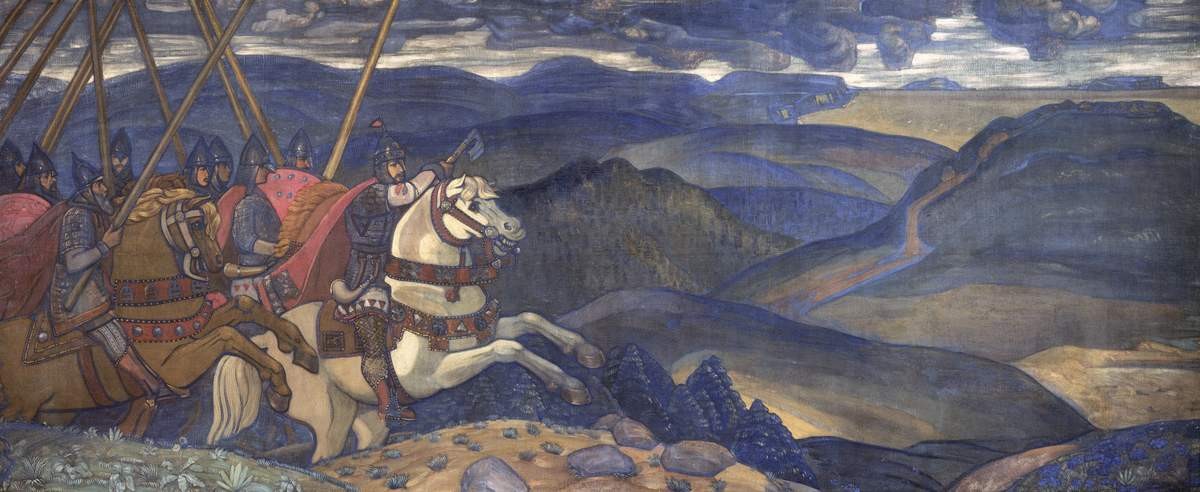
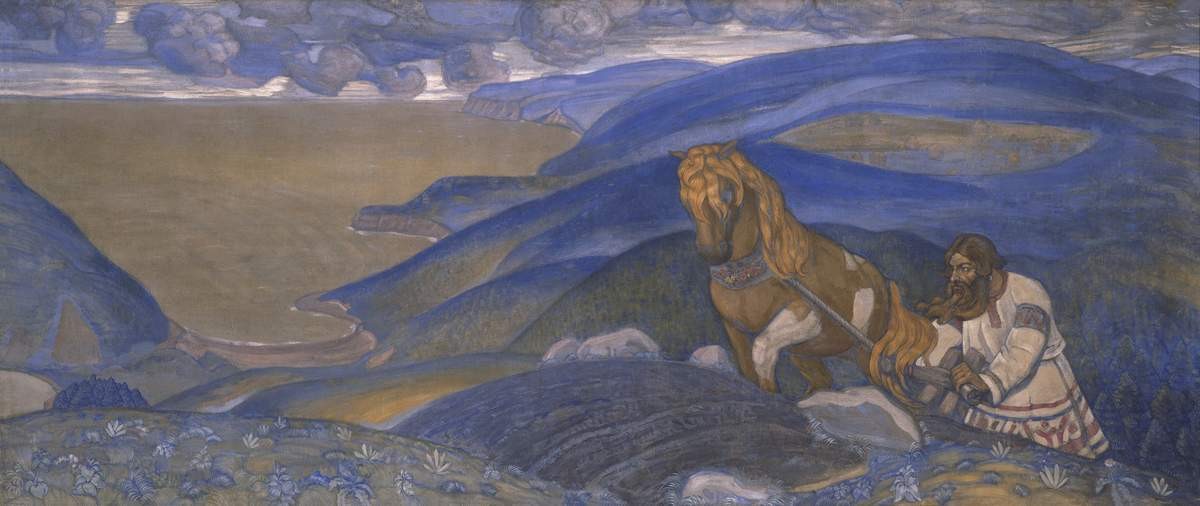
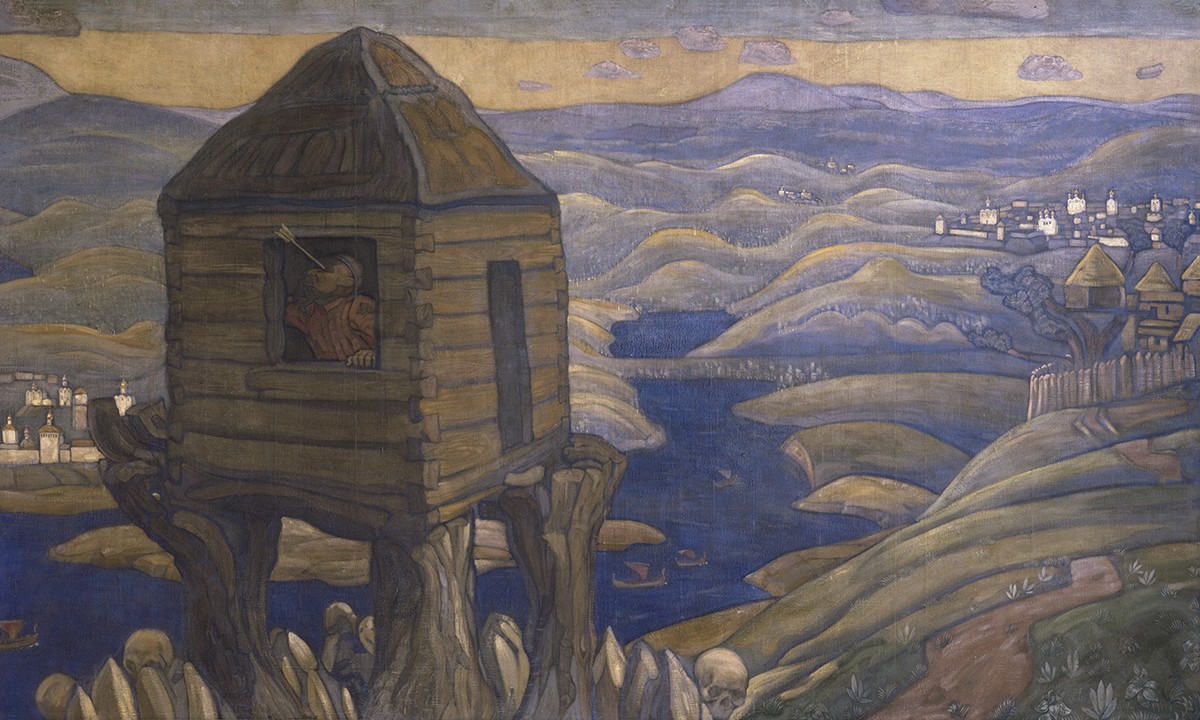
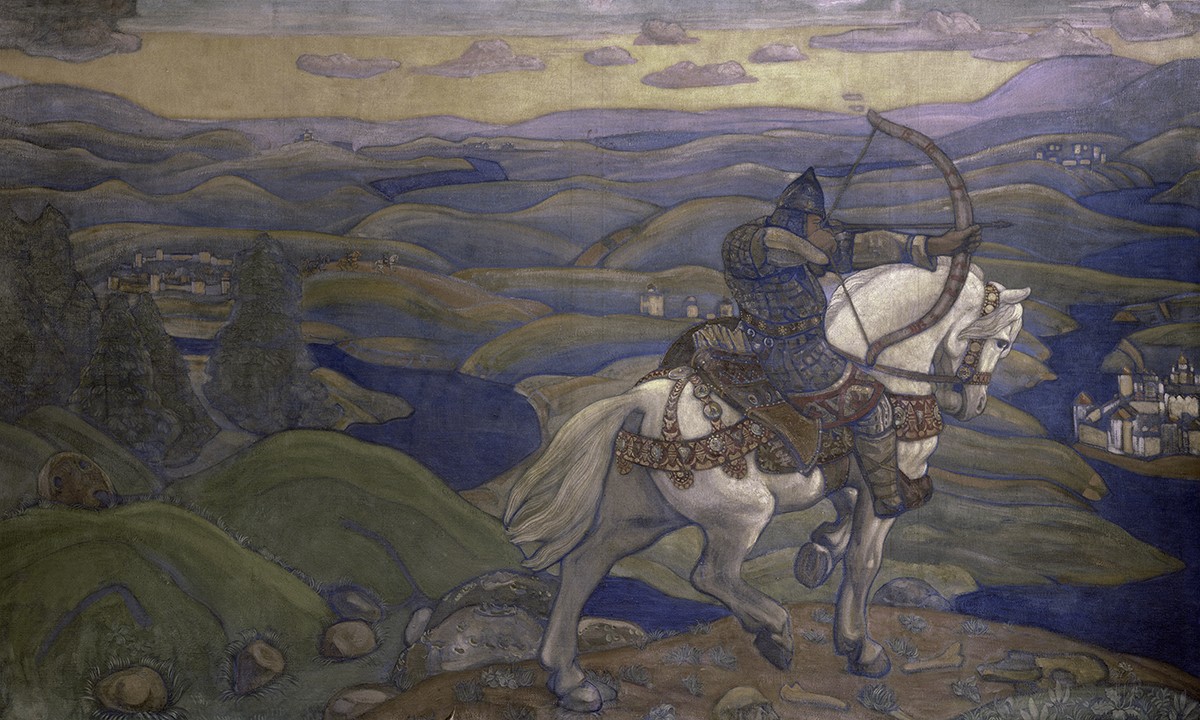
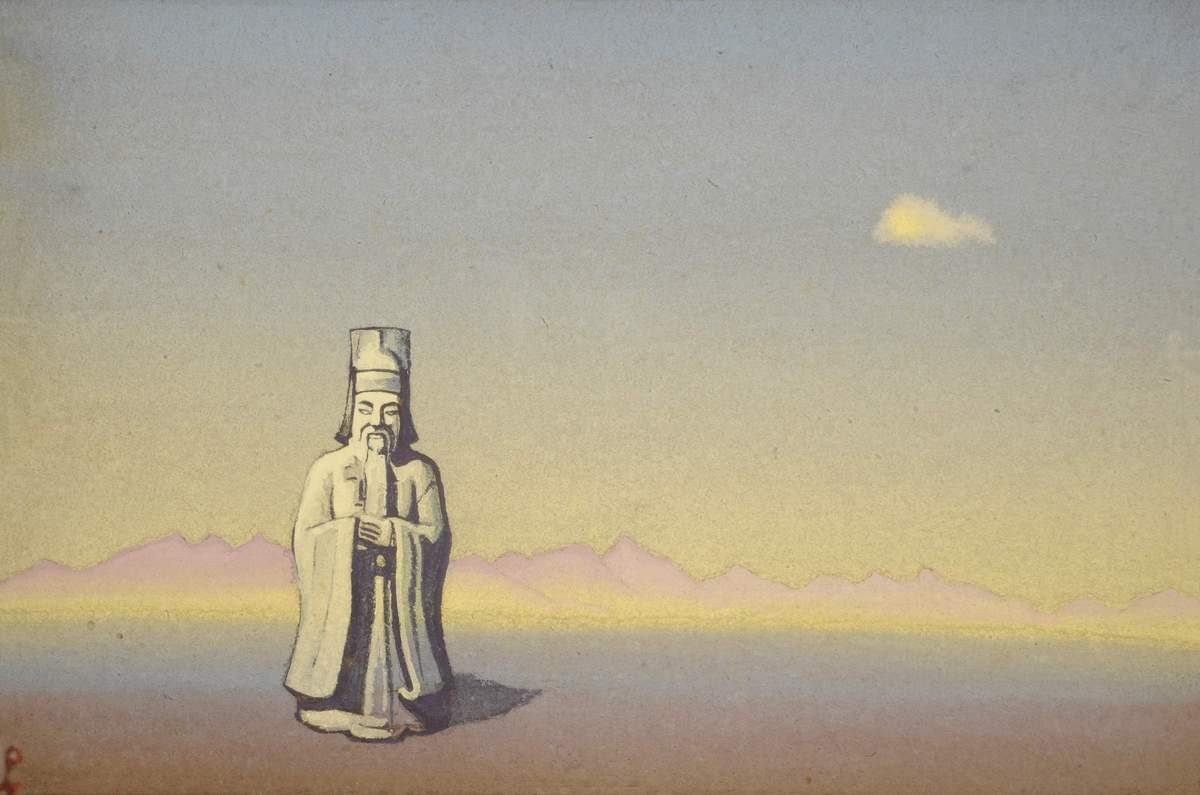
Архат
Can I see it?
Unknown
Where is “Архат” now? Collection: State Russian Museum, Saint Petersburg. Unknown.

Saint Petersburg, Russia
The owner is known; whether it is on view today is not.
- In this state since
- Source
- The museum
About the painting
Museum text in Russian
Архат, согласно повериям буддизма, — человек, достигший наивысшей степени просветления. Галина Кречина // Николай Рерих. В поисках Шамбалы. СПб, 2020. С. 109.
State Russian Museum
Details
- Accession number
- Ж-7155
In the catalog
Sources
- State Russian Museum
- Image: State Russian Museum — © State Russian Museum
In the life of Nicholas Roerich
The whole life28 April – 30 May 1934
The Manchurian expedition: from Seattle to Harbin
On 28 April 1934 Roerich and his elder son set out from Seattle for Yokohama: Henry Wallace, the US Secretary of Agriculture, who had befriended him in 1930, sends him to Manchuria and northern China to collect seeds of plants that protect the fertile layer of soil. In Japan he is received at the highest government level, and on 30 May the scientific part of the expedition begins in Harbin.
1934–1935
Results of the expedition: grasses, diaries, Stipa roerichii
The routes are the Greater Khingan range and the Bargan plateau (1934) and the Gobi, Ordos and Alashan deserts (1935). In 17 months Roerich writes 222 essays for his “Diary Leaves”; about 300 species of drought-resistant grasses are found, 2,000 parcels of seeds are sent to America, and one grass unknown to science is named in his honour — Stipa roerichii; Secretary Wallace will later report that almost all the seeds are of little or no value.
1934–1935
Harbin: the Pact committee, Alatyr and “The Sacred Watch”
Roerich founds the Russian Committee of the Roerich Pact in Harbin and the agricultural cooperative “Alatyr”, publishes his book “The Sacred Watch” — the whole print run is seized by Japanese censors — and becomes a prominent cultural leader of the Russian emigration. In public speeches he sets himself against both Fascists and Communists, calling Bolshevism a dark, destructive force.
15 April 1935
The Roerich Pact is signed at the White House
The United States and the 20 other nations of the Pan-American Union sign the Roerich Pact, an early international instrument protecting cultural property and the outcome of his idea of Pax Cultura, the “Red Cross” of art and culture.
June 1935
A Chicago Tribune scandal and the break with Wallace
In June 1935 the Chicago Tribune reports military preparations by the expedition near the Mongolian border, and Secretary Wallace breaks with the Roeriches, fearing for his reputation in the eyes of the voters. The expedition is ended early in Shanghai on 21 September 1935.
August 1935
The break with Louis Horch
From 1929 the commercial ventures of Roerich and Horch go badly, and the scandal around the Manchurian expedition undermines Horch's once boundless trust; in August 1935 a crisis breaks out and Horch finally slips out of Roerich's sway.