 Albrecht DürerGerman, 1471–1528
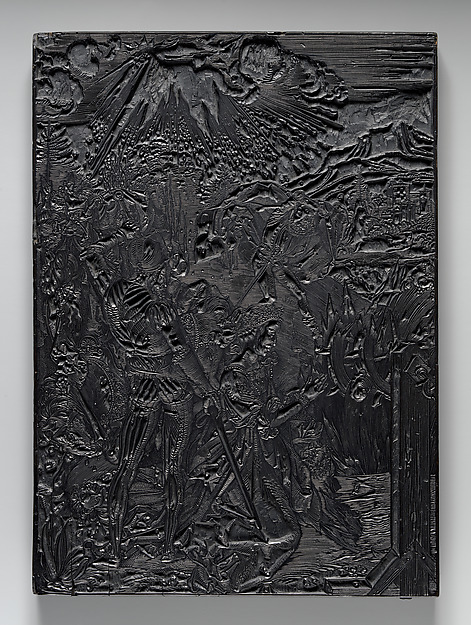
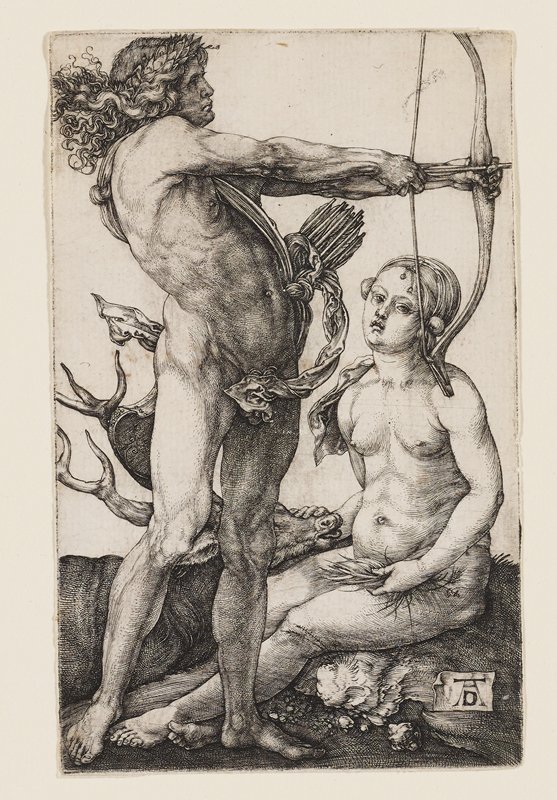
Apollo and Diana
Can I see it?
Not on view at present
Where is “Apollo and Diana” now? Collection: Minneapolis Institute of Art, Minneapolis. Not on view at present. Checked September 29, 2026.

Minneapolis, United States
It belongs to the collection, but is not on display at present.
- Checked
- In this state since
- Source
- The museum
About the work
Apollo and Artemis were the divine twins of the god Zeus and the Titaness Leto. Apollo, the Sun god, was a master musician who delighted the gods on Mount Olympus. He is also associated with prophesy, sickness and medicine. Artemis (later worshiped by the Romans as Diana) was the goddess of hunting and archery, as well as the Moon goddess. Apollo and Artemis shared the heavens, she beginning her journey across the sky in the evening, just as he finished hi day journey. Her attributes include the bow (here borrowed by Apollo) and the faun.
During this year Durer was making proportional studies of nudes, of which a number remain. The influence of Mantegna's hard-edged sculptural effects and characteristic responding curves is also evident.
Minneapolis Institute of Art
Details
- Accession number
- P.68.146
In the catalog
Sources
- Minneapolis Institute of Art
- Image: Minneapolis Institute of Art — public domain
In the life of Albrecht Dürer
The whole life1500
Jacopo de' Barbari and the secret of proportion
The Venetian Jacopo de' Barbari, whom Dürer had met in Venice, came to Nuremberg, and Dürer said he learned much from him about perspective, anatomy and proportion. Feeling that de' Barbari would not explain everything he knew, Dürer began studies of his own that became a lifelong preoccupation.
1501–1502
In the circle of Nuremberg's humanists
Through his lifelong friend Willibald Pirckheimer, Dürer entered the circle of Nuremberg's humanists. He engraved illustrations for Conrad Celtis's editions of Hrotsvitha (1501) and of his Four Books of Love (1502), and decorated 14 books in Pirckheimer's library with drawings.
1502
Death of his father
Albrecht Dürer the Elder died, and his son took on the care of his mother and his two younger brothers, Endres and Hans.
1504 · Workplace
Lutherstadt Wittenberg
1505
Second journey to Italy
Dürer set off for Italy again — perhaps not only to earn money but also to stop Marcantonio Raimondi from copying his prints. His stay in Venice is known from ten surviving letters to Pirckheimer.
1505–1507
Friendship with Giovanni Bellini
Dürer considered Giovanni Bellini “the best in painting”, the only Venetian master with whom he became friends. The Madonna of the Siskin may have been painted at Bellini's request.
![Madonna and Child [obverse], Albrecht Dürer, c. 1496/1499](https://api.nga.gov/iiif/878db7e6-10ae-4cae-ba5d-6d6f5c413ae8/full/!2400,2400/0/default.jpg)
![Lot and His Daughters [reverse], Albrecht Dürer, c. 1496/1499](https://api.nga.gov/iiif/7565a449-f82a-414b-9bda-c93f55a51b4d/full/!2400,2400/0/default.jpg)