 Emil NoldeGerman, Danish, 1867–1956
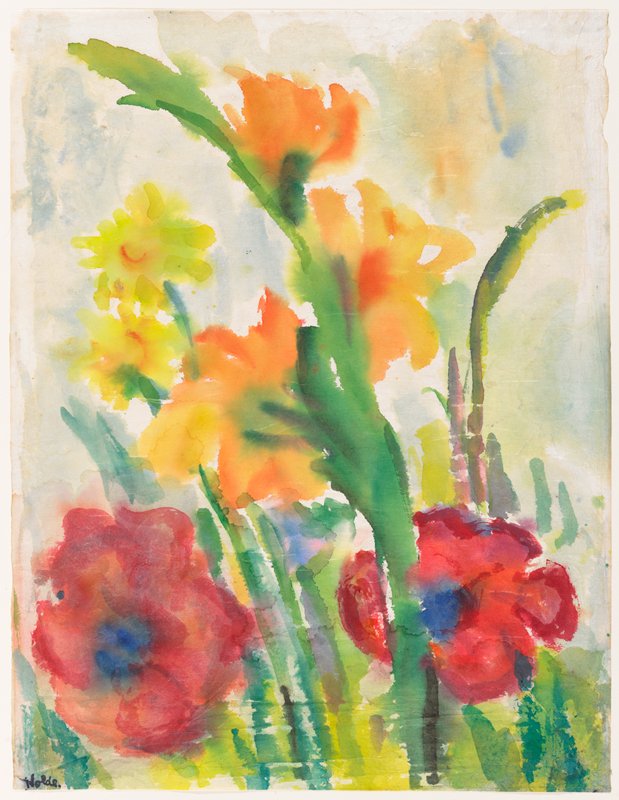
Anemonies and Gladiolas
Can I see it?
Not on view at present
Where is “Anemonies and Gladiolas” now? Collection: Minneapolis Institute of Art, Minneapolis. Not on view at present. Checked September 29, 2026.

Minneapolis, United States
It belongs to the collection, but is not on display at present.
- Checked
- In this state since
- Source
- The museum
Details
- Accession number
- 91.166
In the catalog
Sources
- Minneapolis Institute of Art
- Image: Minneapolis Institute of Art — © Nolde Stiftung Seebüll
In the life of Emil Nolde
The whole life1898
Leaves his post to become a free artist
In 1898, at the age of thirty-one, Nolde left his post as a drawing teacher at the school of the Museum of Industrial and Applied Arts in St Gallen, where he had worked since 1892, to pursue at last his dream of becoming an independent artist.
1899 · Education
Académie Julian
1906
A turn from Impressionism to religious subjects
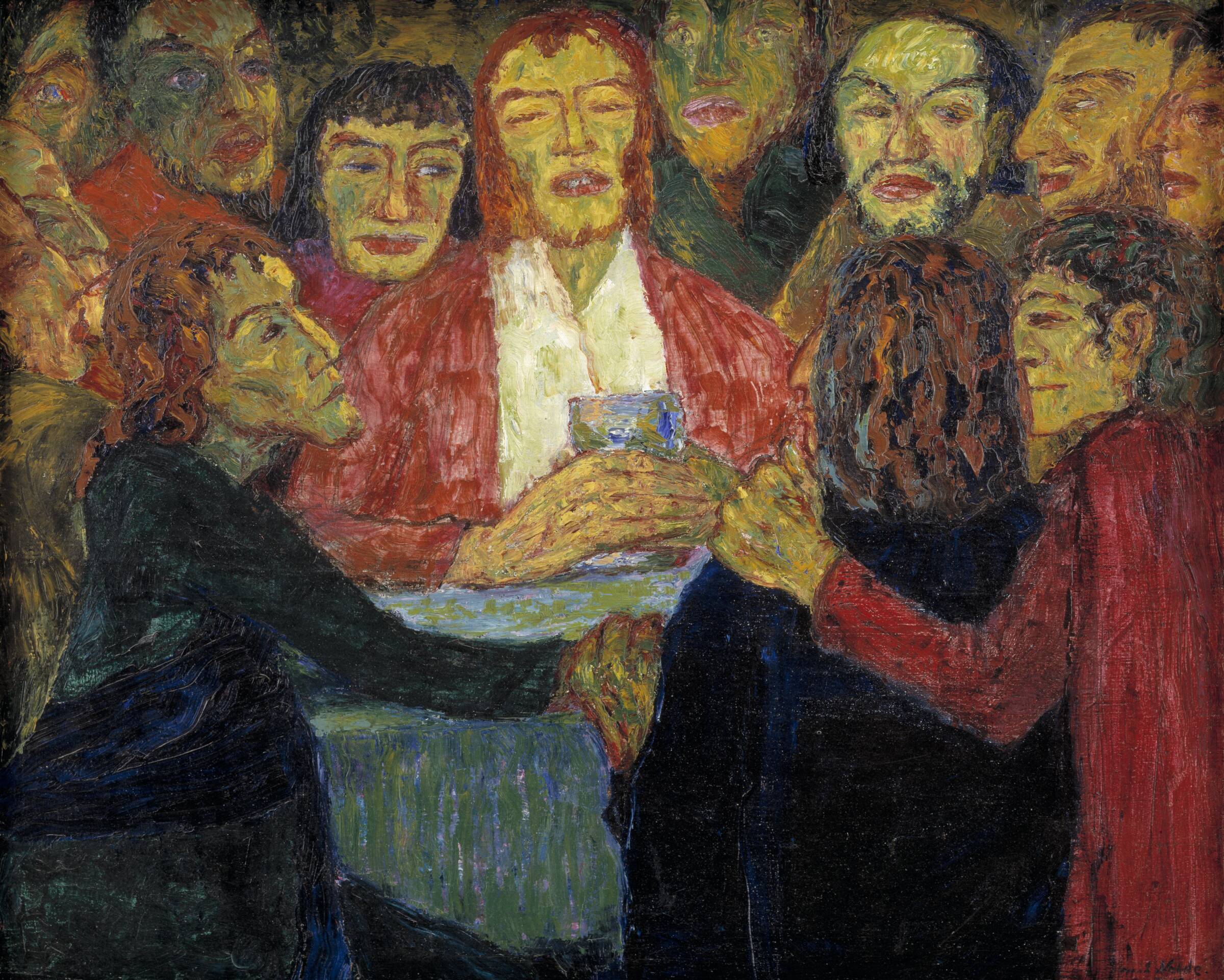
In 1906 Nolde, who had grown up in a small religious community near the German-Danish border and had read the whole Bible, turned from an Impressionist manner to religious subjects stressing the emotion of the moment, bright colours and two-dimensionality; in his early religious works (1900–1904) he had not yet found his own style and followed models such as Millet and Daumier.
1937
“Degenerate Art”: over a thousand works confiscated
The Nazis declared Nolde’s art degenerate: “The Life of Christ” became one of the central exhibits of the “Degenerate Art” exhibition (1937), and 1,052 of his works were removed from museums, more than those of any other artist; some of what was confiscated was sold and some destroyed.
1941
Forbidden to paint: the “Unpainted Pictures”
In 1941 Nolde was forbidden to paint, even in private; embittered, he withdrew to Seebüll and secretly made small watercolours, burying them in the ground. He made about 1,300 of them in all and called them his “Unpainted Pictures”.
13 April 1956
Died