ART WIKI33,040 on view
MapCollectionArtistsMuseumsExhibitionsJournal
Sign in

ART WIKI

Where the masterpiece hangs, and when they let you in.

Collections: Art Institute of Chicago, Getty Villa, Harvard Art Museums, Hirshhorn Museum and Sculpture Garden, J. Paul Getty Museum, Minneapolis Institute of Art, Musée du Louvre, National Gallery of Art, National Museum of Asian Art, National Portrait Gallery (Smithsonian), Pushkin State Museum of Fine Arts, Rijksmuseum, Smithsonian American Art Museum, SMK — National Gallery of Denmark, State Hermitage Museum, State Russian Museum, The Cleveland Museum of Art, The Metropolitan Museum of Art, The Museum of Modern Art, Tretyakov Gallery, Victoria and Albert Museum, Whitney Museum of American Art, State Catalogue of the Museum Fund of Russia (274 museums), Europeana (19 museums), Wikidata (6 museums), Paris Musées (12 museums), and Joconde, the French Ministry of Culture's museum database (495 museums). Images belong to their rights holders.

Sections

  • Map
  • Search
  • Collection
  • Masterpieces
  • On view now
  • Artists

More

  • Museums & galleries
  • Exhibitions
  • Journal
  • Where the data comes from
  • Privacy & cookies
HomeMapBrowse
  1. Collection/
  2. Musée du Louvre/
  3. Allégorie des Vertus
Allégorie des Vertus, Corrège
Antonio da Correggio, portraitAntonio da CorreggioItalian, 1489–1534

Allégorie des Vertus

Graphic arts

May one see it?

Unknown

Musée du Louvre

Paris, France

The owner is known; whether it is on view today is not.

In this state since
Sep 26, 2026
Source
The museum
On the mapMuseum page

About the work

The Allegory of Virtue is a tempera on canvas painting by Correggio dating to around 1531 and measuring 149 centimetres (59 in) by 88 centimetres (35 in). It and Allegory of Vice were painted as a pair for the studiolo of Isabella d'Este, with Vice probably the second of the two to be completed. This hypothesis is since only one (possibly non-autograph) sketch survives for Vice, unlike Virtue, for which two preparatory studies survive (in the Louvre), along with a near-complete oil sketch (attributed to Correggio in the 1603 inventory of the Aldobrandini collection and now at the Galleria Doria Pamphili) - this suggests Correggio had become more proficient after the difficult gestation of Virtue.

Read on

As usually interpreted, the central woman is Minerva, holding a read lance and a plumed helmet - the work may even be a continuation of Mantegna's 1502 Triumph of the Virtues, painted for the same studiolo and also featuring a Minerva with a red lance. (Others have interpreted the figure as Isabella herself, dressed as Wisdom.) Glory hovers above her holding a crown, whilst a seated female figure to the left is surrounded by symbols of the four cardinal virtues (a snake in her hair for Prudence, a sword for Justice, reins for Temperance, and Hercules's lion skin for Fortitude). Some interpret the seated black female figure on the right as Astrology, Science or Intellectual Virtue - she points outside the painting's space and thus (like the putto in Vice) draws the viewer's attention from one painting to the other.

After the studiolo's contents was dispersed, Virtue and the Mantegna were given to Cardinal Richelieu around 1627 and moved to Paris. There they were acquired by Eberhard Jabach in 1671, before being sold by him to Louis XIV - Virtue still hangs in the Louvre.

Wikipedia · CC BY-SA

Particulars

Accession number
INV 5926, Recto

In the catalog

Drawings & watercolors

Sources

  • Musée du Louvre
  • Image: Musée du Louvre — GrandPalaisRmn (Musée du Louvre) / Michel Urtado

More by Antonio da Correggio

All works
Madonna and Child, Circle of Andrea Mantegna, c. 1505/1510

Madonna and Child

c. 1505/1510 · National Gallery of Art

The Mystic Marriage of Saint Catherine, Correggio, 1510/1515

The Mystic Marriage of Saint Catherine

1510/1515 · National Gallery of Art

Salvator Mundi, Correggio, c. 1515

Salvator Mundi

c. 1515 · National Gallery of Art

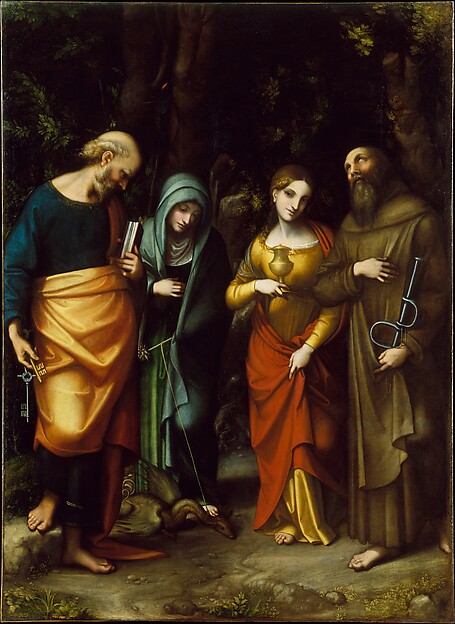
Saints Peter, Martha, Mary Magdalen, and Leonard, Correggio, ca. 1515

Saints Peter, Martha, Mary Magdalen, and Leonard

ca. 1515 · The Metropolitan Museum of Art

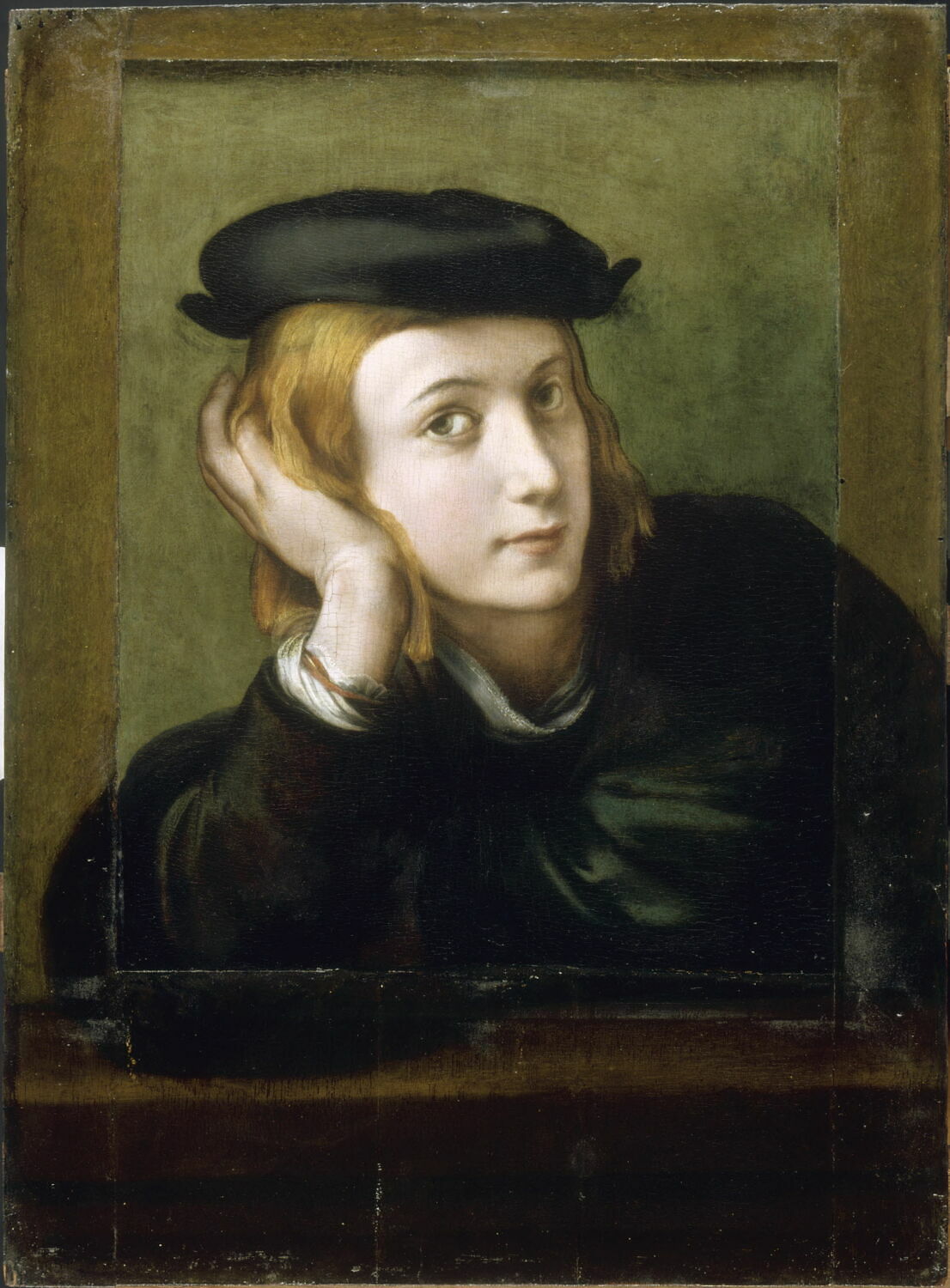
Portrait de jeune homme, Italie, XVIe siècle (?) (vers 1517 - 1520)

Portrait de jeune homme

16th century (c. 1517–1520) · Musée du Louvre

Virgin and Child with the Young Saint John the Baptist, Antonio da Correggio, c. 1515

Virgin and Child with the Young Saint John the Baptist

c. 1515 · Art Institute of Chicago

The Virgin and Child with Angels, Vivant Denon, after Correggio

The Virgin and Child with Angels

Not on view · National Gallery of Art

Assumption of the Virgin (copy of the plafond in Parma), Antonio da Correggio

Assumption of the Virgin (copy of the plafond in Parma)

Not on view · State Hermitage Museum

Neighbors at Musée du Louvre

Museum page
Portrait of Marten Soolmans, Rembrandt van Rijn, 1634

Rembrandt van Rijn

Portrait of Marten Soolmans, 1634

Portrait of Oopjen Coppit, Rembrandt van Rijn, 1634

Rembrandt van Rijn

Portrait of Oopjen Coppit, 1634

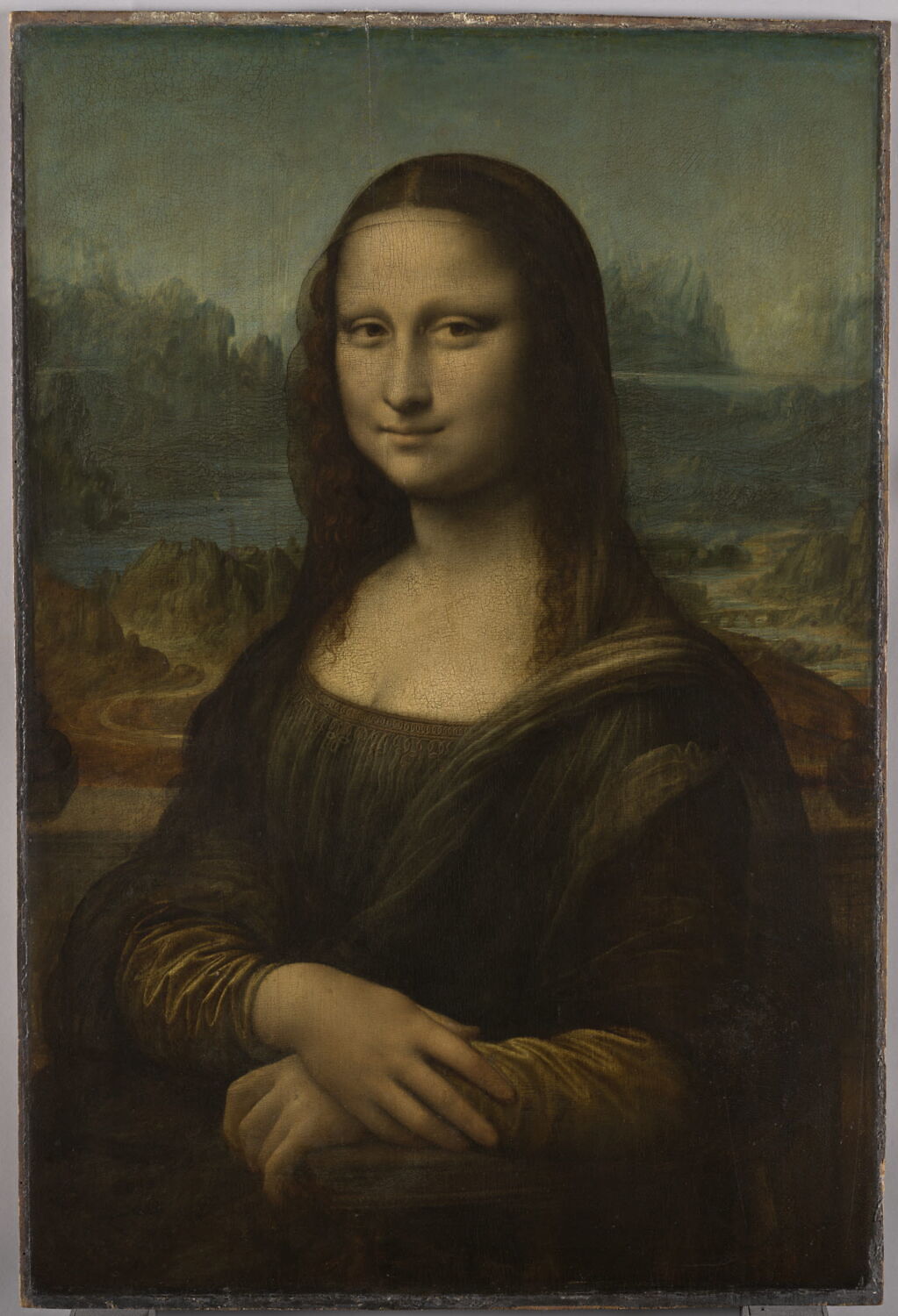
Portrait de Lisa Gherardini, épouse de Francesco del Giocondo, dit La Joconde ou Monna Lisa, Léonard de Vinci, 1e quart du XVIe siècle (1503 - 1519)

Leonardo da Vinci

Mona Lisa, first quarter of the 16th century (1503–1519)

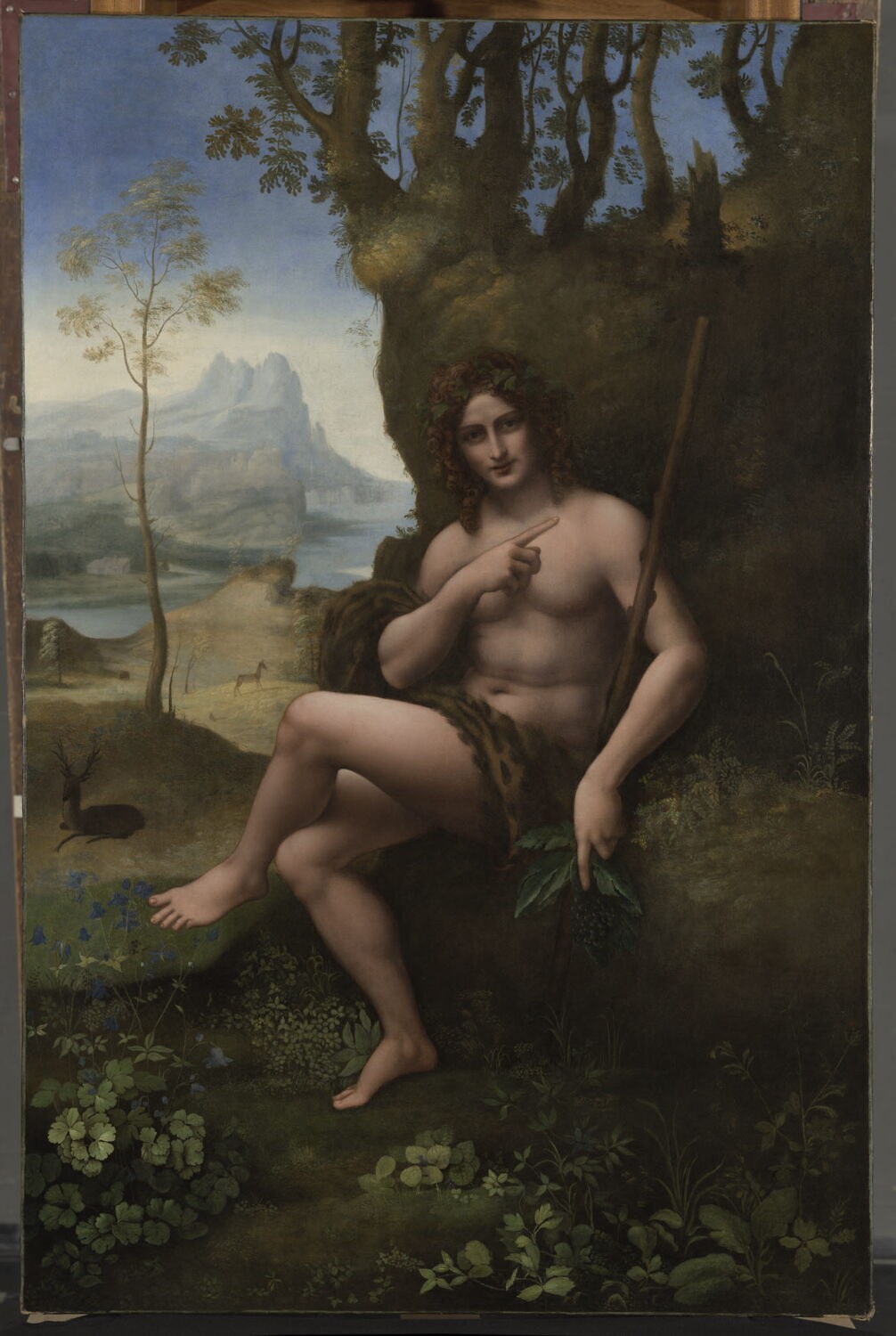
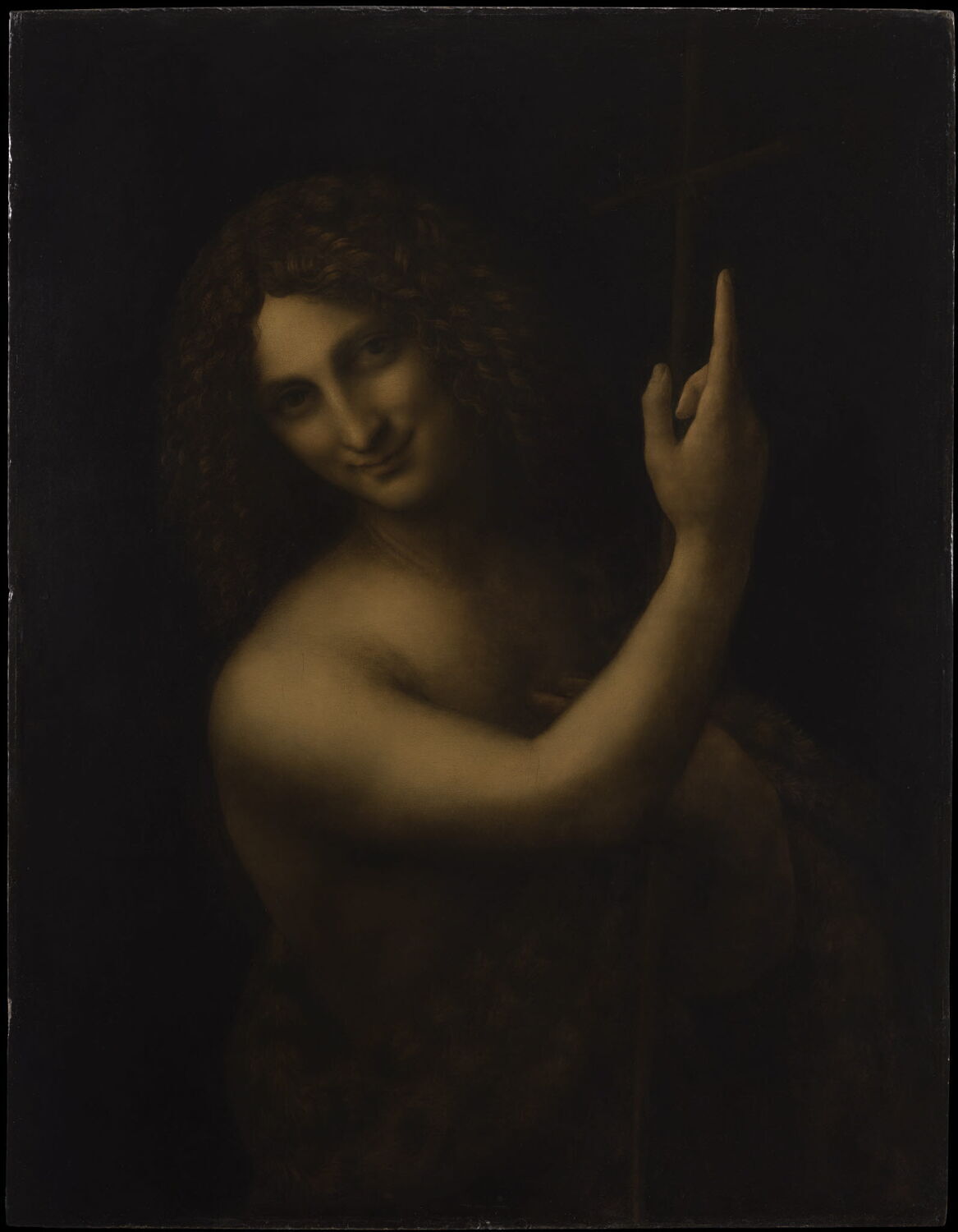
Saint Jean Baptiste, Léonard de Vinci, 1e quart du XVIe siècle (vers 1517 - 1520)

Leonardo da Vinci

Bacchus, first quarter of the 16th century (c. 1517–1520)

Saint Jean Baptiste, Léonard de Vinci, 1e quart du XVIe siècle (vers 1508 - 1519)

Leonardo da Vinci

Saint John the Baptist, first quarter of the 16th century (c. 1508–1519)

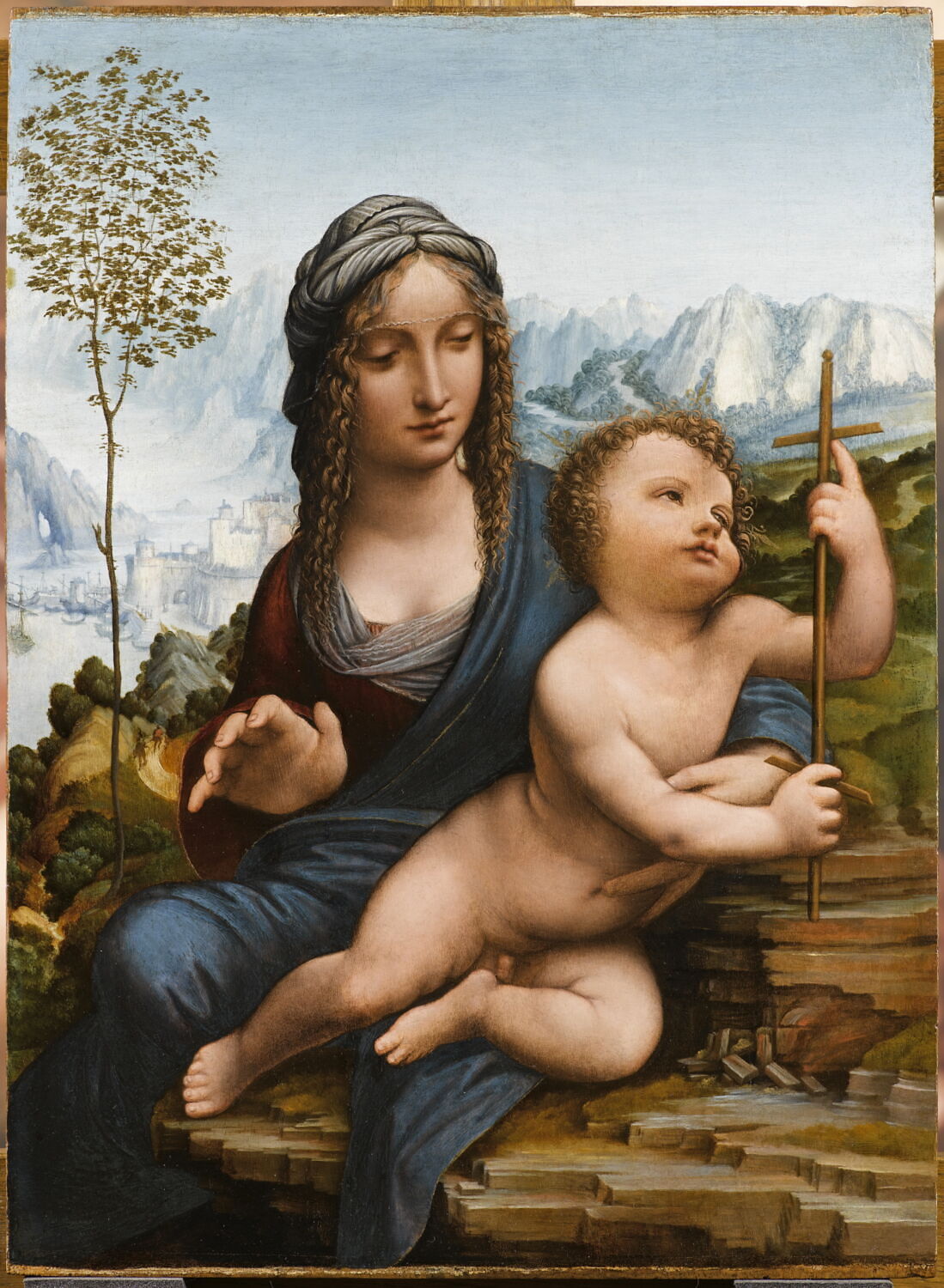
La Vierge et l'Enfant Jésus, dite Vierge au dévidoir ou Vierge aux fuseaux, Léonard de Vinci, XVIe siècle (vers 1505 - 1520)

Leonardo da Vinci

La Vierge et l'Enfant Jésus, dite Vierge au dévidoir ou Vierge aux fuseaux, 16th century (c. 1505–1520)

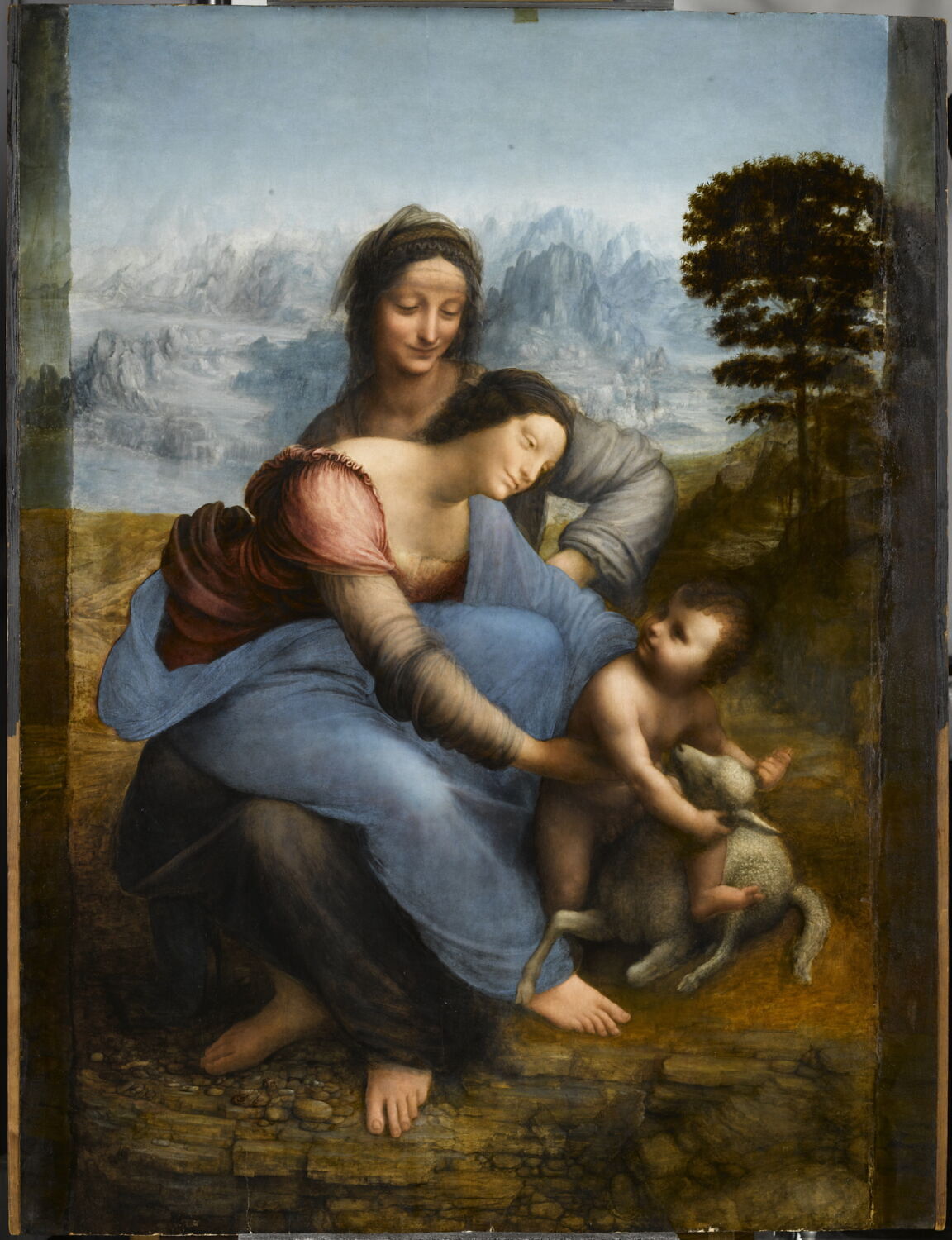
La Vierge, l'Enfant Jésus et sainte Anne, dit La Sainte Anne, Léonard de Vinci, 1e quart du XVIe siècle (vers 1503 - 1519)

Leonardo da Vinci

The Virgin and Child with Saint Anne, first quarter of the 16th century (c. 1503–1519)

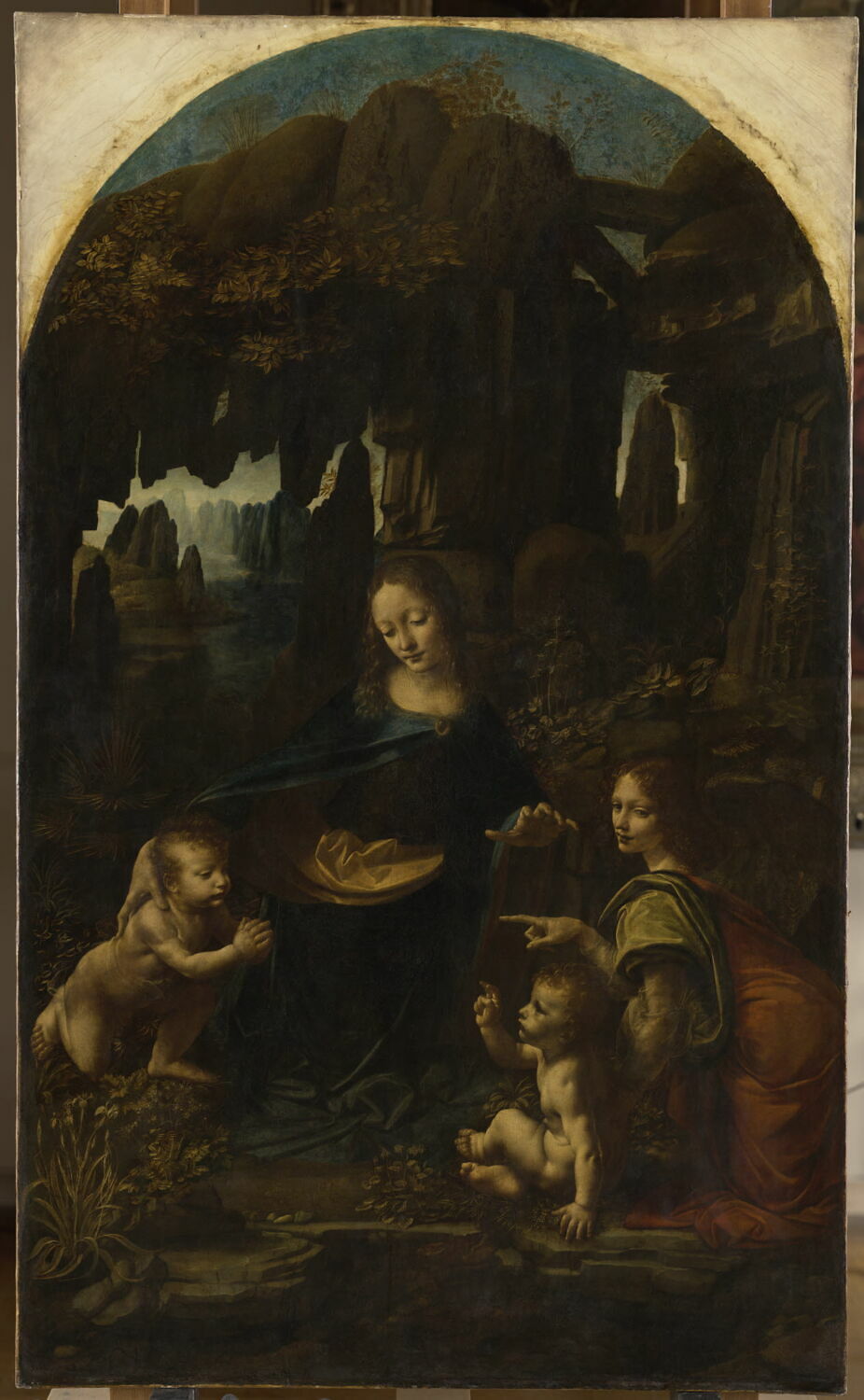
La Vierge, l'Enfant Jésus, saint Jean Baptiste et un ange, dit La Vierge aux rochers, Léonard de Vinci, 4e quart du XVe siècle (vers 1483 - 1494)

Leonardo da Vinci

La Vierge, l'Enfant Jésus, saint Jean Baptiste et un ange, dit La Vierge aux rochers, last quarter of the 15th century (c. 1483–1494)